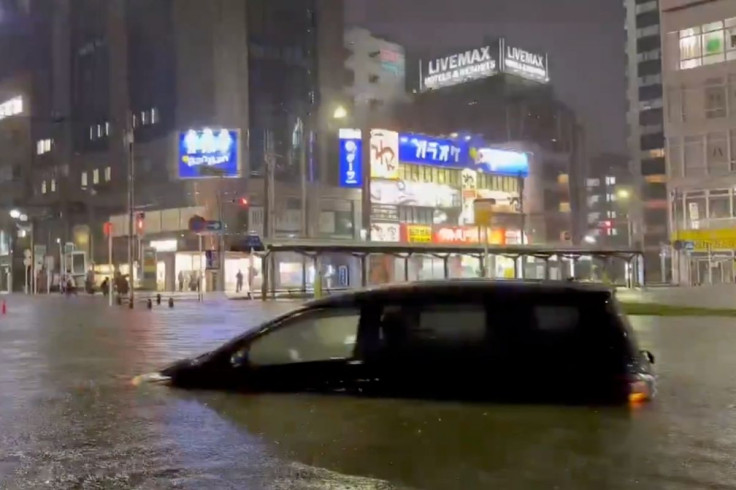
Thousands of travellers were forced to spend the night inside Tokyo's Narita International Airport after record-breaking rainfall paralysed transport links across eastern Japan, turning one of the country's busiest travel hubs into a makeshift shelter during a deadly flood emergency.
At least four people were killed after torrential rain battered Chiba Prefecture, east of Tokyo, triggering severe flooding, landslide warnings and widespread power outages. The disruption left around 7,000 passengers stranded overnight at Narita Airport as train services were suspended and major roads became impassable.
The extreme weather struck during Japan's Bon holiday period, one of the busiest travel weeks of the year, amplifying the impact on commuters and holidaymakers attempting to return home. Authorities described the rainfall as unprecedented, with some areas receiving more than 115 millimetres of rain in a single hour and more than 360 millimetres within 24 hours.
Narita Airport and the place is packed with people who already landed but still can’t leave.
— Fahad Naim (@Fahadnaimb) August 14, 2026
Record rain smashed Chiba last night. Trains and buses to Tokyo completely stopped. Expressways closed in sections. So even after your flight lands , there’s nowhere to go.
Around 7,000… pic.twitter.com/0KKndNz49r
Airport Becomes an Overnight Refuge
With rail lines suspended and highways submerged, thousands of passengers found themselves unable to leave Narita Airport despite flights continuing to operate largely as scheduled.
Images broadcast by Japanese media showed travellers sleeping on terminal floors beneath emergency blankets while airport staff distributed water, snacks and sleeping bags. Long queues formed as stranded passengers sought supplies and information about when transport services would resume.
The airport effectively became an emergency shelter, with many families and international visitors spending the night inside the terminals. Limited train services began resuming on Friday morning, easing congestion, but delays continued throughout the day.
Elsewhere in Chiba, approximately 1,700 people sought refuge inside government buildings, while thousands more were stranded at railway stations after floodwaters cut off access routes.
The heavy rain in Chiba has caused flooding, with water reaching thigh or even waist level in some areas.
— fsf.🇨🇳 Commentaire très conflictuel (@SharonBelmoo) August 13, 2026
The subway system, rivers, and drainage channels have effectively lost their capacity to handle the runoff, resulting in widespread urban flooding.#千葉県 pic.twitter.com/Nu60x7vhbf
Deadly Flooding Sweeps Across Chiba
The human toll mounted as emergency crews responded to flooding across multiple municipalities.
Among the victims was a man found on a flooded road in Ichikawa City and a 66-year-old woman whose vehicle became trapped in rising water in Sakura City. Other fatalities were linked to vehicles caught in floodwaters as rapidly rising water overwhelmed roads across the prefecture. Authorities also reported at least one person missing.
More than 400,000 residents were placed under evacuation orders or advisories at the height of the emergency, while tens of thousands of households lost electricity. Floodwaters inundated homes, roads and railway infrastructure, causing widespread disruption across the region.
The Japan Meteorological Agency issued its highest Level 5 warning for heavy rain and landslides in parts of Chiba Prefecture, the first time such an alert had been issued for the area.
Officials Warn of Growing Weather Extremes
Chiba Governor Toshihito Kumagai described the storm as unlike anything he had experienced during previous disasters, calling it an 'extremely unusual situation'. Emergency personnel, including members of Japan's Ground Self-Defense Force, were deployed to assist stranded residents and support evacuation efforts.
Although rainfall eased by Friday morning, officials warned that rivers remained swollen and the risk of flooding and landslides persisted. Residents were urged to continue monitoring evacuation advisories and weather updates.
The disaster has also renewed discussion about the growing frequency of extreme weather events in Japan. Meteorologists have warned that climate change is contributing to more intense rainfall events, increasing the risk of flash flooding and infrastructure disruption even in highly developed urban regions.