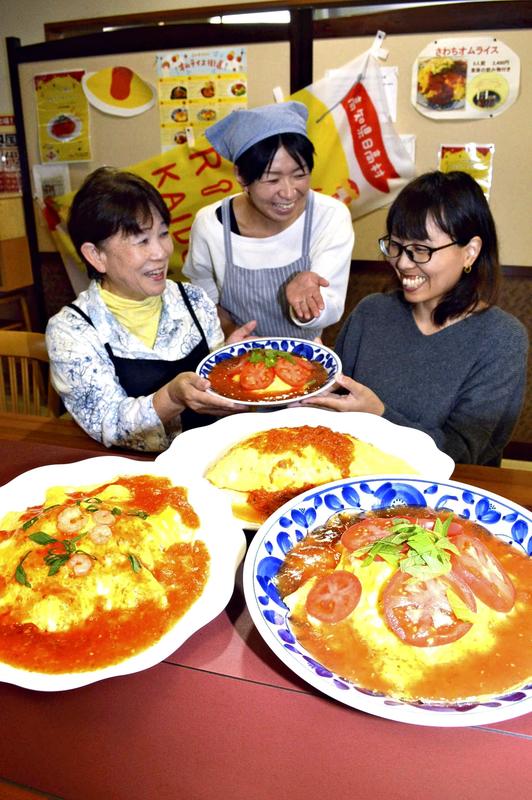
KOCHI -- Yoshoku is a style of Japanese cuisine composed of dishes influenced by Western cuisine and developed with Japanese twists since the Meiji era (1868-1912), and omuraisu -- a dish that uses fried rice as a filling for an omelet -- is a definitive form. It is said that the dish was invented by an Osaka cook during the Taisho era (1912-1926).
Hidaka, Kochi Prefecture, a village located 16 kilometers west of the city of Kochi, is home to an "omuraisu road," drawing the attention of fans from around the country.
This tranquil village, whose population stood at just 5,021 as of the end of September, has nine restaurants that serve omuraisu as their signature dish along National Highway Route 33. One popular establishment is Wanowa, a cafe run by a local nonprofit organization.
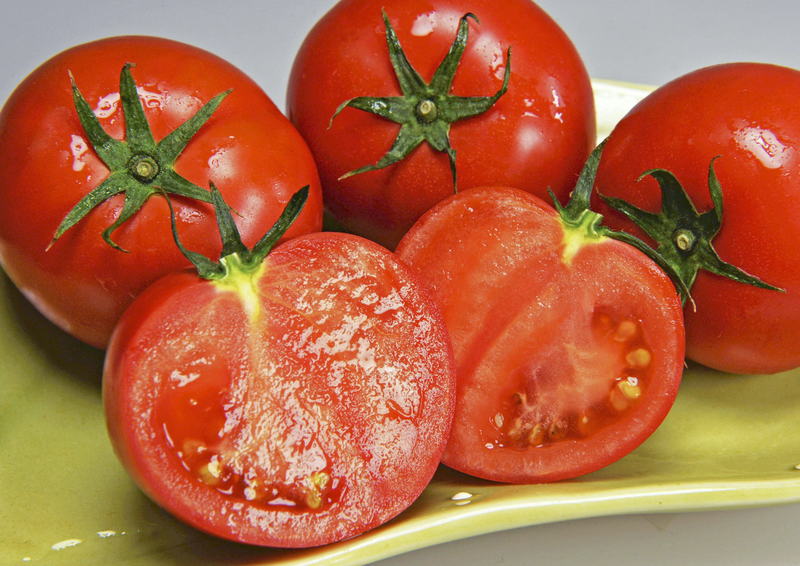
The cafe offers three kinds of omuraisu, including a spicy type with a Chinese twist. However, the signature dish has a generous topping of slices of what are called sugar tomatoes, a specialty in the village.
The dish is seasoned with dashi broth prepared with bonito, which complements the tomatoes' refreshing tartness. On weekends and holidays, customers from other prefectures visit the cafe for a taste of the treat.
"We're facing the challenge of aging and depopulation," said Chiharu Yasuoka, 59, manager of the cafe and secretary general of the NPO. "However, a lot of young customers visit here, which has lifted the atmosphere in the village."
Tomato farming has long thrived in Hidaka, where the surrounding mountains create large temperature differences between day and night. Sugar tomatoes, which have a fruity sweetness, were developed in 1985 after years of research.
Village officials and others explored the possibility of using the new variety to vitalize the local community, eventually landing on omuraisu, a dish that is popular across all generations.
Yasuoka's NPO initially worked on using tomatoes that did not meet the required standards to make sauces for pizza and pasta. Based on the expertise developed through this project, the organization developed in 2014 a puree for omuraisu with only sugar tomatoes and salt.
The following year, the organization held a culinary event with omuraisu as the main feature at the village's fortuitously named Omura Shrine. The event became known through word of mouth and online, because the name of the venue partly overlapped with the dish.
In 2014, there were six establishments serving omuraisu prepared with the village's tomatoes along the national highway, but the number has since increased to nine. One of the shops was chosen as a runner-up in a nationwide competition for the dish, an achievement that has inspired other establishments to improve their technique.
The nine restaurants sold a combined 68,500 servings of omuraisu during the last fiscal year, and the total harvest of tomatoes in the village, including sugar tomatoes, has increased to 393 tons, 25 percent more than five years ago.
In addition, omuraisu has helped strengthen community bonds. The village created a theme song for the omuraisu road in 2016 with help from a singer-songwriter living in the Kanto region. A promotional video was also created showing villagers dancing while singing the song.
In 2018, the village organized an illustrated book contest with omuraisu as the theme. The winning book is available at bookstores nationwide.
"One of the shrine's roles is to pray for rich harvests," said Mitsuo Yoshida, a 41-year-old priest at Omura Shrine, where the music video was shot. "I'm pleased that our village's tomatoes have become so popular they have enlivened the village."
To expand its reach, Yasuoka's NPO opened a guesthouse in November as a base for enjoying outdoor activities, and it also houses a cafe that offers light meals featuring tomatoes.
"Omuraisu has facilitated exchanges [with people from places other than the village]," Yasuoka said. "I'm glad if local kids can be proud of their hometown by watching how far this network of relationships has expanded."
Read more from The Japan News at https://japannews.yomiuri.co.jp/