MATSUYAMA -- In 1991, women wearing a shoulder-padded jacket were seen walking down a street while running their fingers through their hair. Such a typical scene from the final days of the bubble economy is depicted in the TV drama series based on a manga "Tokyo Love Story."
The climax of the final installment of the drama series recorded its highest audience rating of 32.3% in the Kanto region, according to a survey by Video Research Ltd.
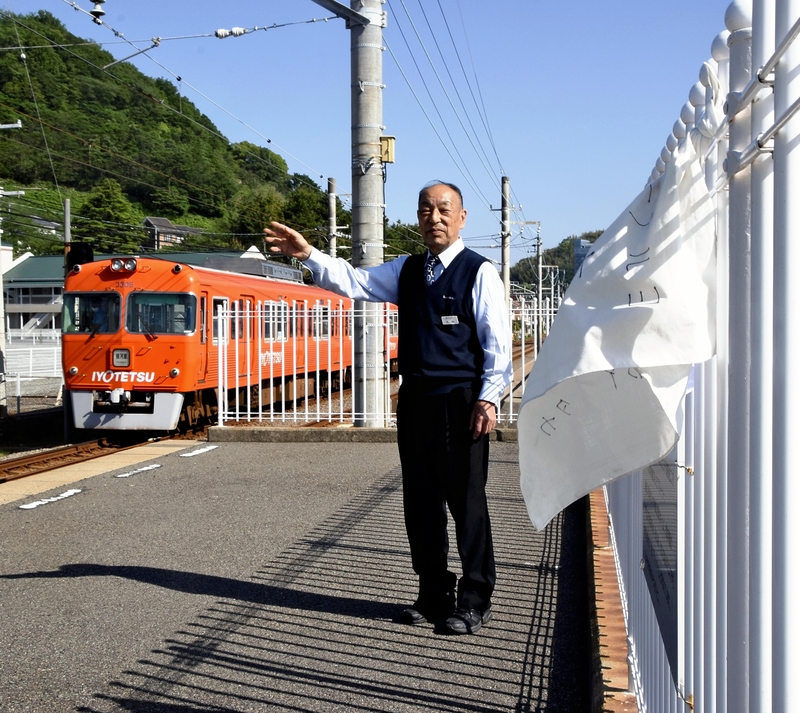
Main character Kanji Nagao, played by Yuji Oda and nicknamed "Kanchi", moved to Tokyo from Ehime Prefecture looking for his ex-girlfriend Rika Akana, played by Honami Suzuki, with whom he broke up in Tokyo and later ran into at Baishinji Station on Iyo Railway's Takahama Line in Matsushima. Located just beside the Seto Inland Sea, the aroma of the sea surrounds the train platform.
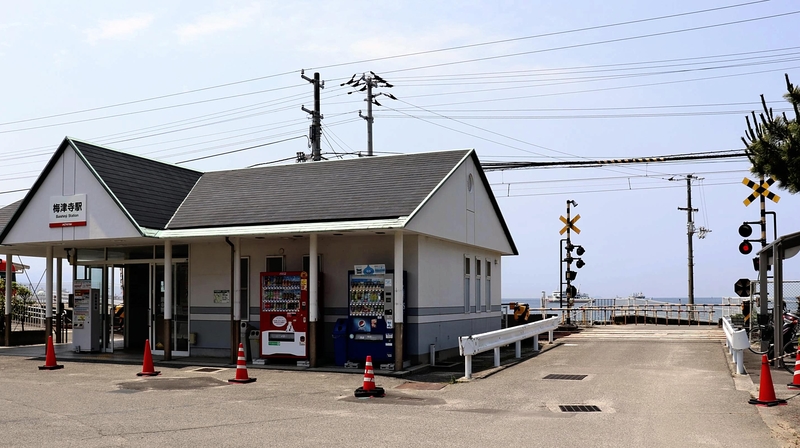
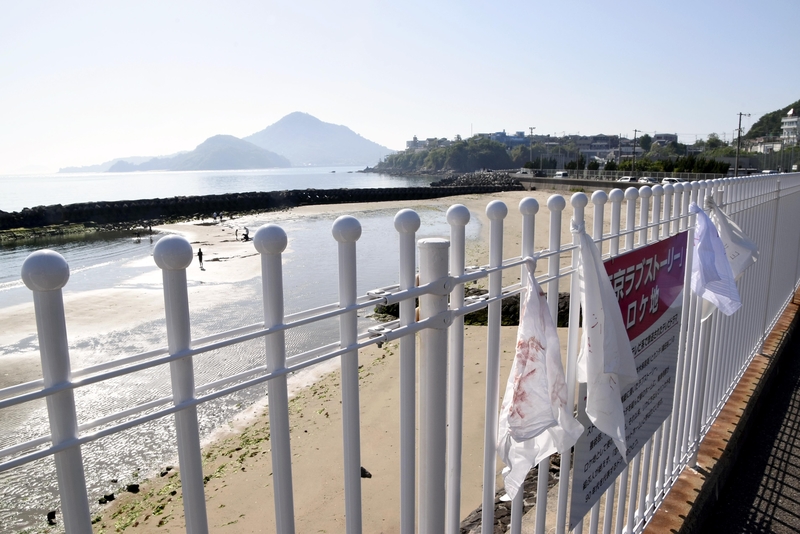
"Bye-bye Kanchi," was the message written in lipstick on a white handkerchief, that was tied to the platform's fence, bowing in the wind. Rika boarded the train just before the one they'd agreed to take together and left, shedding tears as she realized the end of a love that she did not want to give up on. The sea gleaming in the light of the sunset was in the background.
Although this scene did not appear in the original manga series, it beautifully depicts the painful misunderstanding between the two. The members of the production staff visited various well-known parts of the country and after falling in love with this area, chose it as the location for this scene.
The filming took place at the end of February 1991. "Junior high school and high school students, who had heard rumors about the filming, cheerfully gathered in front of the ticket gate," recalled Noriyuki Obayashi, 75, who was a station officer at the Baishinji Station at the time and still works at the station even after reaching retirement age.
The station originally opened in 1899 as a temporary station for sea-goers. In 1963, an amusement park called "Baishinji Park," which later closed in 2009, opened next to the station and the area was crowded with people who brought along their families.
About 70 people involved with the production, including actors and staff, gathered on the day it was filmed. Girls went wild with cheers as Oda ran out from the ticket gate to the platform a few times in the rehearsal, according to Obayashi.
After the scene was broadcast, fans from across the country visited the small station. There was no end to the number of people who tied a handkerchief to the fence just as Rika did in the scene, and there was even an urban legend that said people who had a train ticket from the station would find a good match.
As time passed, a nearby resort hotel closed down, and the number of passengers at the station declined. Even so, couples who seem to have watched the drama series in their younger days visit the station on weekends clutching a handkerchief in their hands. Handkerchiefs bearing messages written in Chinese are sometimes tied to the fence as well, probably due to the drama being broadcast overseas.
"Despite the fact that the scene depicts a break-up, the station somehow became an iconic place for lovers," Obayashi said with a smile.
Now, lovers find it difficult to see each other because of the need to avoid the "Three Cs"--closed spaces, crowding and close-contact settings. Even though they can connect through other means, such as the LINE app or video telephone calls, there must be feelings frustration these days, but they need to be patient for just a little while longer. Just on the other side of the station building that has watched over many lovers and the development of their relationships, the unchanging calm sea spreads out toward the horizon.
The drama series Tokyo Love Story is based on the manga series written by Fumi Saimon, who hails from Tokushima, and was broadcast on the Fuji TV network in 1991. Kanji Nagao, or Kanchi, an Ehime Prefecture native, finds a job working for a Tokyo-based sporting goods manufacturer. The drama depicts the love affairs of characters, including Rika Akana, Nagao's passionate and free-spirited coworker, Satomi, a former high school classmate of Nagao portrayed by Narimi Arimori and Mikami portrayed by Yosuke Eguchi. On Monday nights during its original broadcast, it was said to be so popular among women that they wouldn't be seen out and about in town. The drama series was filmed also in Ozu and Kumakogen, both in Ehime Prefecture. Its theme song is Kazumasa Oda's "Love Story wa Totsuzen ni (literally, 'Sudden love story.')"
Read more from The Japan News at https://japannews.yomiuri.co.jp/