The spread of the novel coronavirus has had a great impact on study abroad programs, making it difficult for students in Japan and overseas to travel and obliging students already studying abroad to return home.
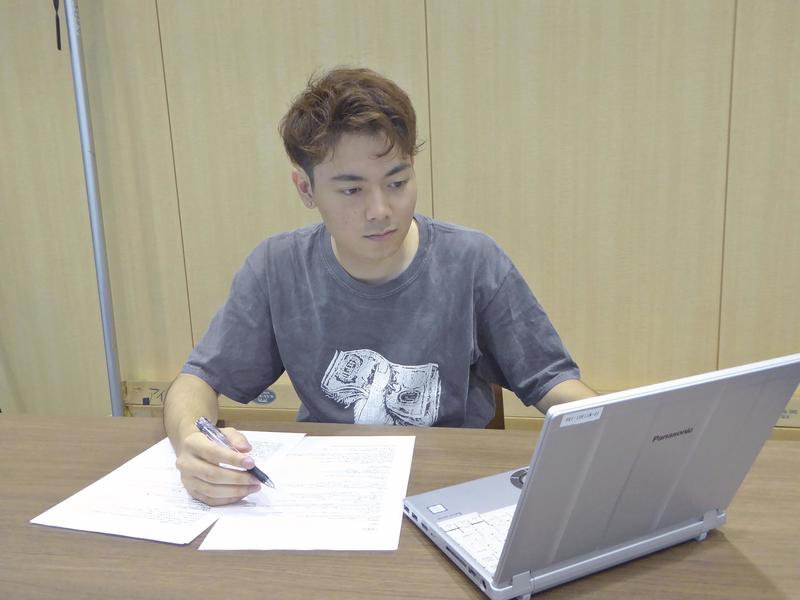
"I could have been in the United States [by now] and I don't know when I can go there to study," said Kota Yamamoto, 18, looking uncertain. After graduating from a private high school in Tokyo this spring, he was scheduled to study at the Wharton School at the University of Pennsylvania from September.
Yamamoto has worked hard to improve his English ability since he was a third grader at junior high school, with the aim of studying abroad, and later decided to study business administration at an overseas university alongside students from a wide variety of countries. He was notified in March that he would be admitted to the Wharton School, but thereafter the impact of the coronavirus began to grow. Given that university lectures will be provided online from September and there would be various constraints on daily life in the U.S. such as a ban on leaving university dormitories, he postponed his plan to travel.
He felt down at one point because he had been looking forward to living in the United States and making friends there. However, the university aims to begin face-to-face classes from early next year, so he hopes to go around that time. Currently, he communicates with other foreign freshmen via the Zoom online conferencing system.
"I want to learn on campus as soon as possible," he said.
-- Website encourages students
Every spring and summer, many Japanese students leave to study in foreign countries. But this year a lot of them have been forced to stay in Japan.
Under the Tobitate! (Leap for Tomorrow) Study Abroad Initiative that has been jointly promoted by the Education, Culture, Sports, Science and Technology Ministry and the private sector to encourage Japanese students to study abroad, scholarships including donations from businesses are provided for university and high school students to help them study overseas.
According to an office running the program, about 500 students were scheduled to go to about 60 countries and regions from this April onward. But all of them have postponed their scheduled trips.
All of these countries and regions are categorized as Level 2 or higher in the Foreign Ministry's four-level Travel Advice & Warning on Infectious Diseases. Level 2 calls for refraining from nonessential and nonurgent travel. Therefore, the schools these students are enrolled in in Japan have banned them from traveling overseas or they themselves have canceled their trips in view of online lessons being available and life being restricted in the places they were heading to.
Some students have abandoned plans to study abroad due to such factors as the timing of their graduation, but many students are waiting for the day when they will be able to go.
The office has made arrangements to make it possible to postpone the start of studying abroad until the end of March 2022 and has established a special website called #Tobitatsu hi made (Until the day you leap) for students who have suspended such plans. The website displays things like messages from those who have studied or are studying overseas to encourage them to make preparations, including language study.
According to Ryugaku Journal Inc., which helps students find destinations for studying abroad, more than 1,000 students and others seeking to study abroad have been forced since the spring vacation to abandon or suspend plans to study overseas.
-- Substitute steps
An increasing number of universities have made it mandatory to study abroad, and these institutions are now looking into postponing programs or substitute measures.
Nagasaki University's School of Global Humanities and Social Sciences, which makes it mandatory for all freshmen to study abroad for about three weeks, is studying a substitute plan to carry out a camping program for English study.
At Rikkyo University in Tokyo, about 140 sophomores of its College of Intercultural Communication are required to study abroad, in principle, for six months to one year. As a substitute measure, the university has postponed the study abroad program until they become juniors. For students who cannot take part in the program at all due to it being postponed, the university has prepared special subjects in English such as anthropology that they can study in the current academic year ending next March.
At Showa Women's University in Tokyo, all students in its three departments in two faculties, including the Faculty of International Humanities, are required to take part in a study abroad program. As a substitute, the university was to begin an online program in September run by foreign teachers from its U.S. campus. Mari Kano, director of the Center for International Exchange said, "We will work toward preventing students who enter this university to study abroad, among other purposes, from losing chances to study."
-- No. of students declines
To foster human resources with a global perspective, the government in 2013 set a goal to double the number of Japanese university students studying in foreign countries to 120,000 in 2020 and has thus promoted study abroad programs.
According to the Japan Student Services Organization, about 115,000 Japanese students were studying abroad in fiscal 2018, the biggest number ever recorded. Those studying for less than one month topped the list at about 66%, followed by those with a duration of six months to less than one year at about 11%. The number of students studying overseas has increased year after year, but future prospects remain uncertain.
The number of foreign students studying at Japanese universities and Japanese-language schools, on the other hand, reached a record high of 310,000 last year. This means that the government achieved the goal it set in 2008 to double the number of foreign students to 300,000 by 2020.
Behind this is the fact that the increase in the number of students coming from other Asian countries to study at Japanese language and vocational schools contributed to boosting the number of foreign students. But the number is expected to decline in the future as cases have emerged one after another of newly enrolled Asian students not being able to visit Japan due to entry restrictions.
Read more from The Japan News at https://japannews.yomiuri.co.jp/