Get all your news in one place.
100’s of premium titles.
One app.
Start reading
Reuters
Reuters
Business
Hideki Kato

Japanese scientists invent floating 'firefly' light

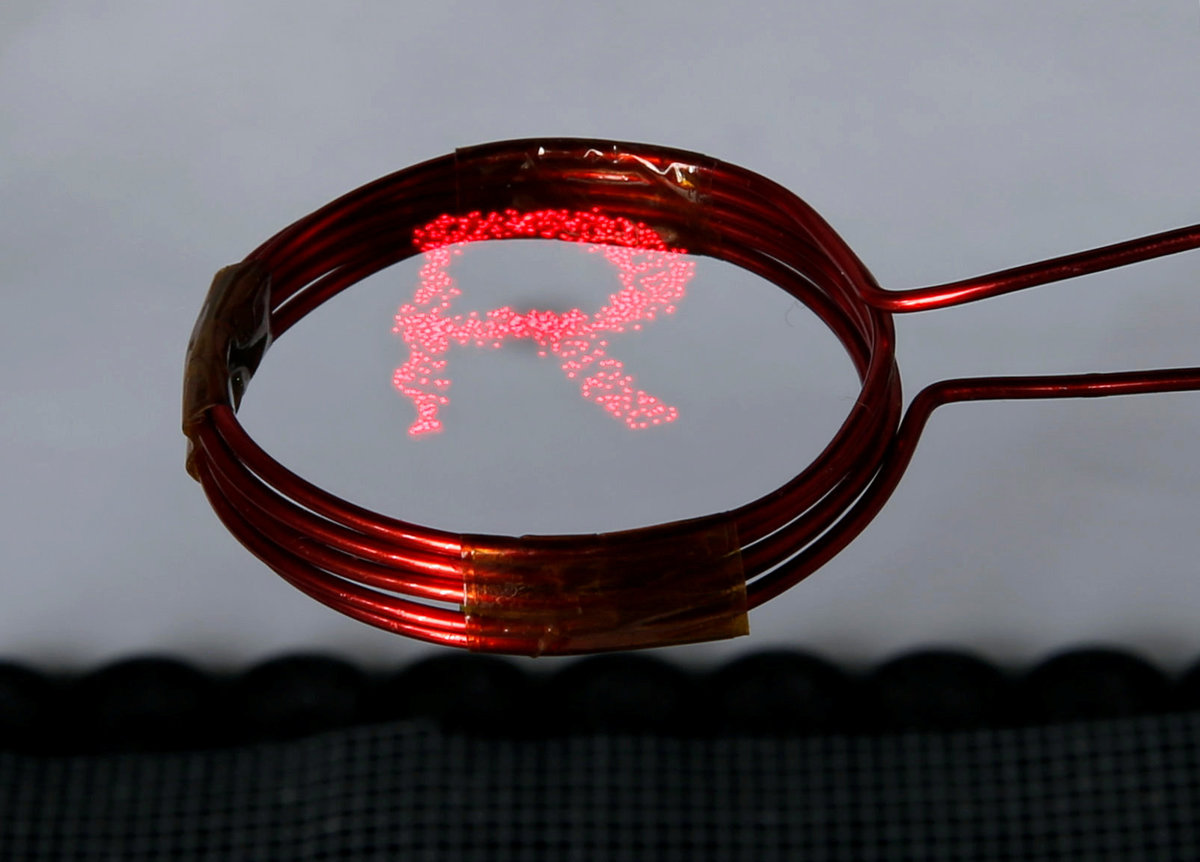
ERATO Kawahara Universal Information Network Project's 'Luciola', miniature floating LED light aptly named after fireflies, draws the letter 'R' during its demonstration at the University of Tokyo, Japan February 20, 2018. REUTERS/Toru Hanai

TOKYO (Reuters) - Japanese engineering researchers say they have created a tiny electronic light the size of a firefly which rides waves of ultrasound, and could eventually figure in applications ranging from moving displays to projection mapping.

Named Luciola for its resemblance to the firefly, the featherweight levitating particle weighs 16.2 mg, has a diameter of 3.5 mm (0.14 inch), and emits a red glimmer that can just about illuminate text.
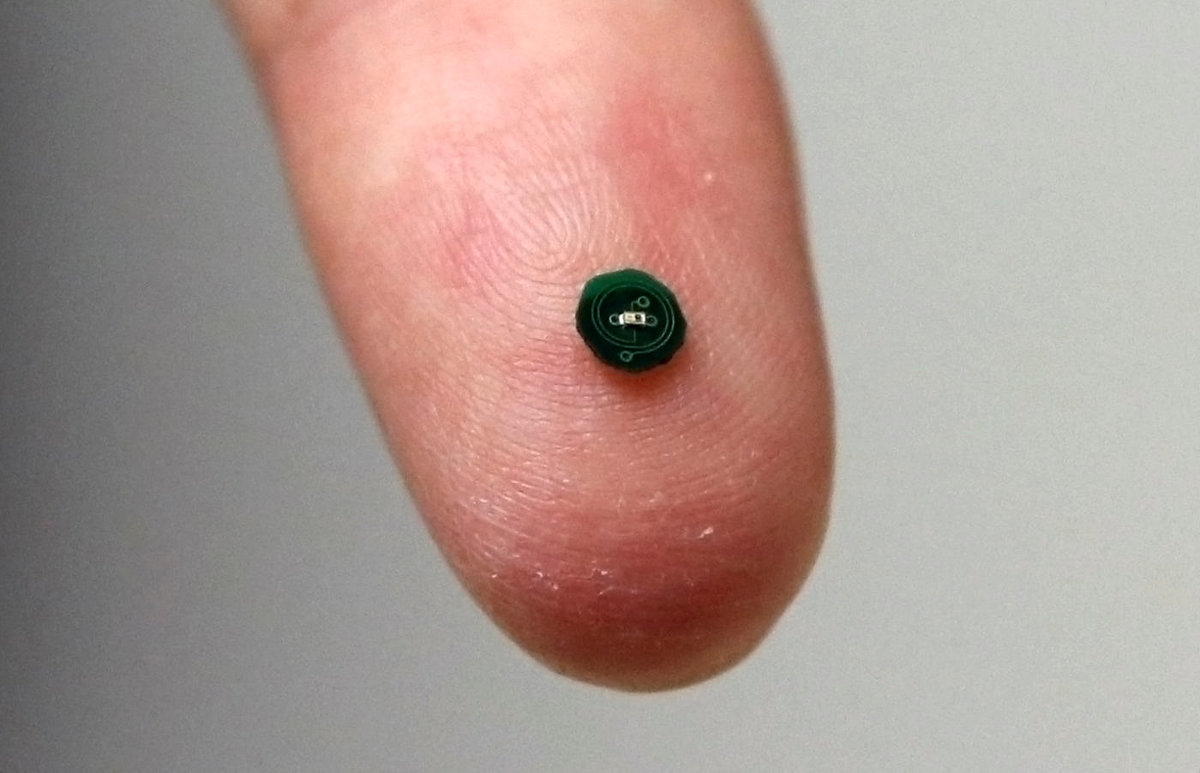
Makoto Takamiya, Associate Professor of the University of Tokyo, shows ERATO Kawahara Universal Information Network Project's 'Luciola', miniature floating LED light aptly named after fireflies, during a demonstration at the University of Tokyo, Japan February 20, 2018. REUTERS/Toru Hanai

But its minuscule size belies the power of the 285 microspeakers emitting ultrasonic waves that hold up the light, and have a frequency inaudible to the human ear, allowing Luciola to operate in apparent total silence.

It took two years for Luciola to get this far, said circuit design specialist Makoto Takamiya, a member of the Kawahara Universal Information Network Project that developed the device.

"Ultimately, my hope is that such tiny objects will have smartphone capabilities and be built to float about helping us in our everyday lives in smarter ways," said the University of Tokyo professor, who hopes it will be commercially viable in five to 10 years.
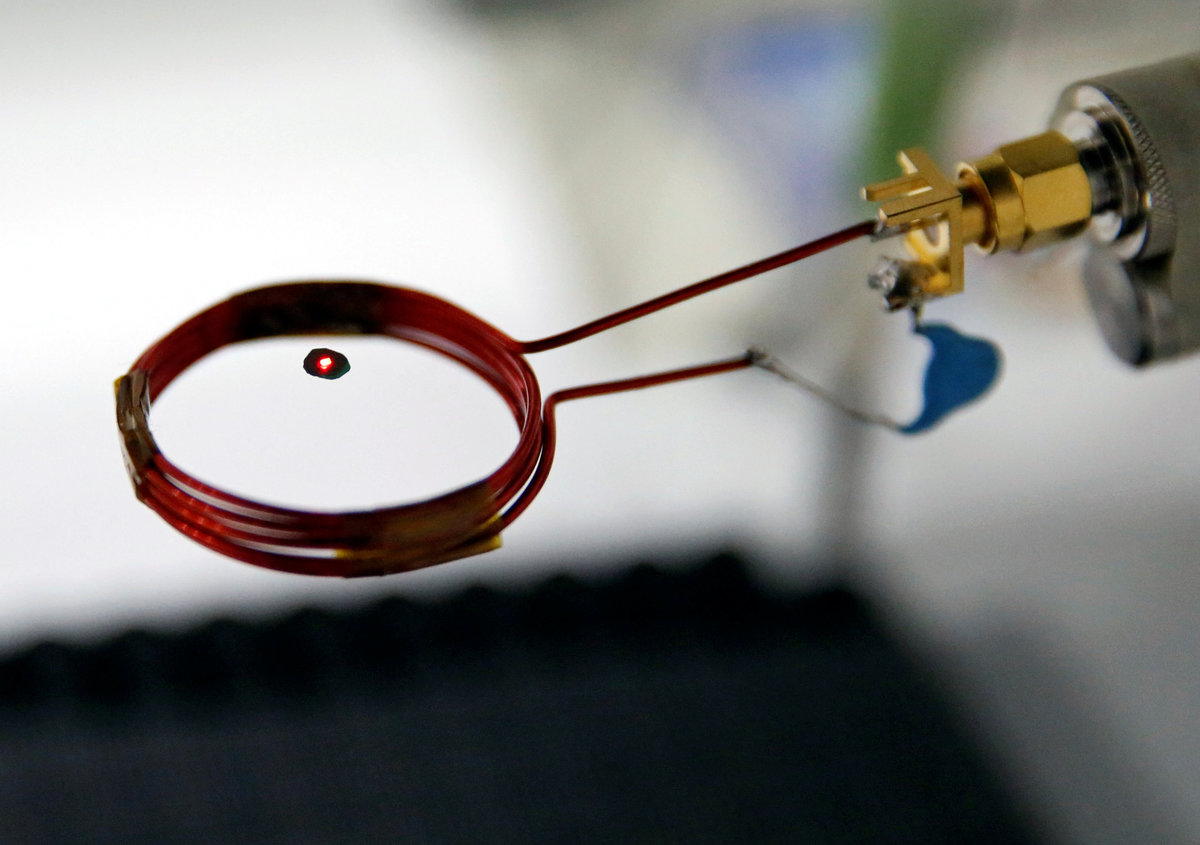
ERATO Kawahara Universal Information Network Project's 'Luciola', miniature floating LED light aptly named after fireflies, is seen during its demonstration at the University of Tokyo, Japan February 20, 2018. REUTERS/Toru Hanai

The developers expect Luciola to find applications in the so-called Internet of Things, in which regular objects, such as cars, or domestic appliances such as air-conditioners, are connected to networks to send and receive data.

Equipped with movement or temperature sensors, Luciola could fly to such objects to deliver a message or help to make moving displays with multiple lights that can detect the presence of humans, or participate in futuristic projection mapping events.

The Kawahara Universal Information Network Project is a government-funded program that is part of the Japan Science and Technology Agency and explores advances in information and communication technology.
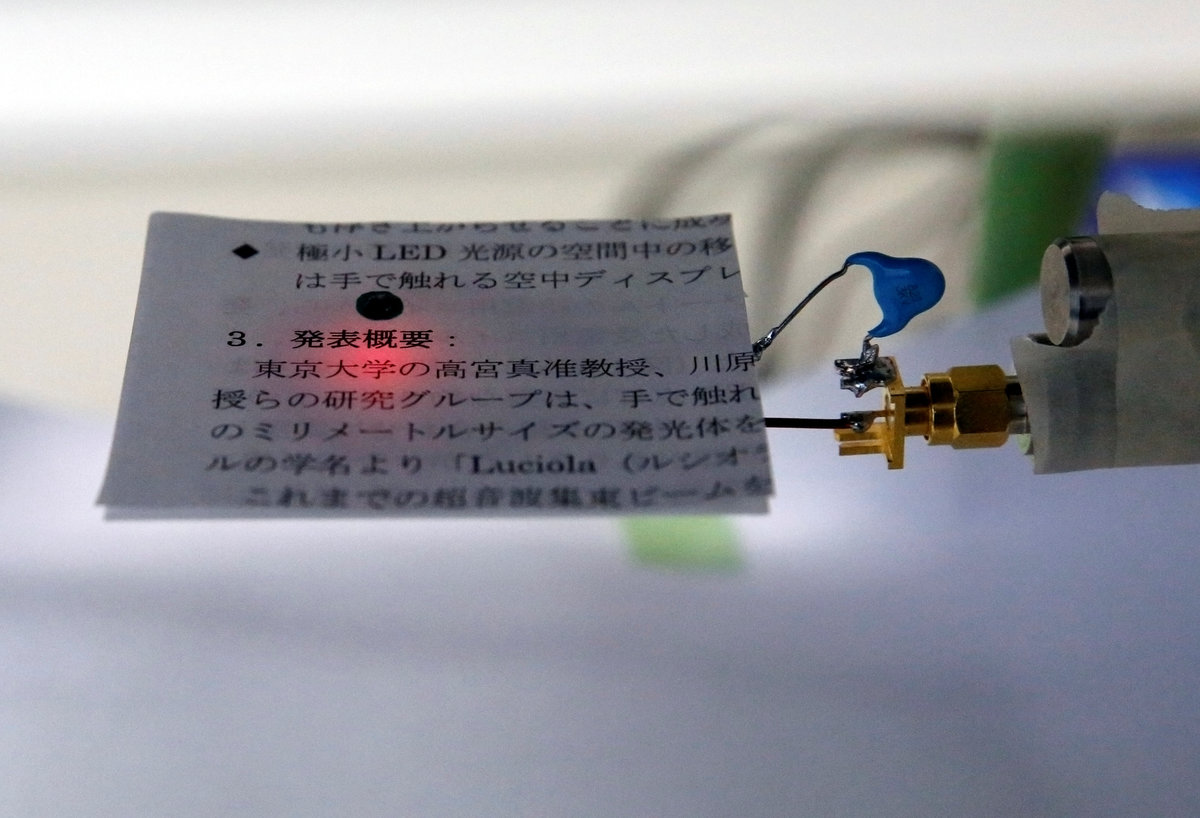
ERATO Kawahara Universal Information Network Project's 'Luciola', miniature floating LED light aptly named after fireflies, lights on written text during its demonstration at the University of Tokyo, Japan February 20, 2018. REUTERS/Toru Hanai

(Reporting by Hideki Kato; Writing by Karishma Singh; Editing by Clarence Fernandez)
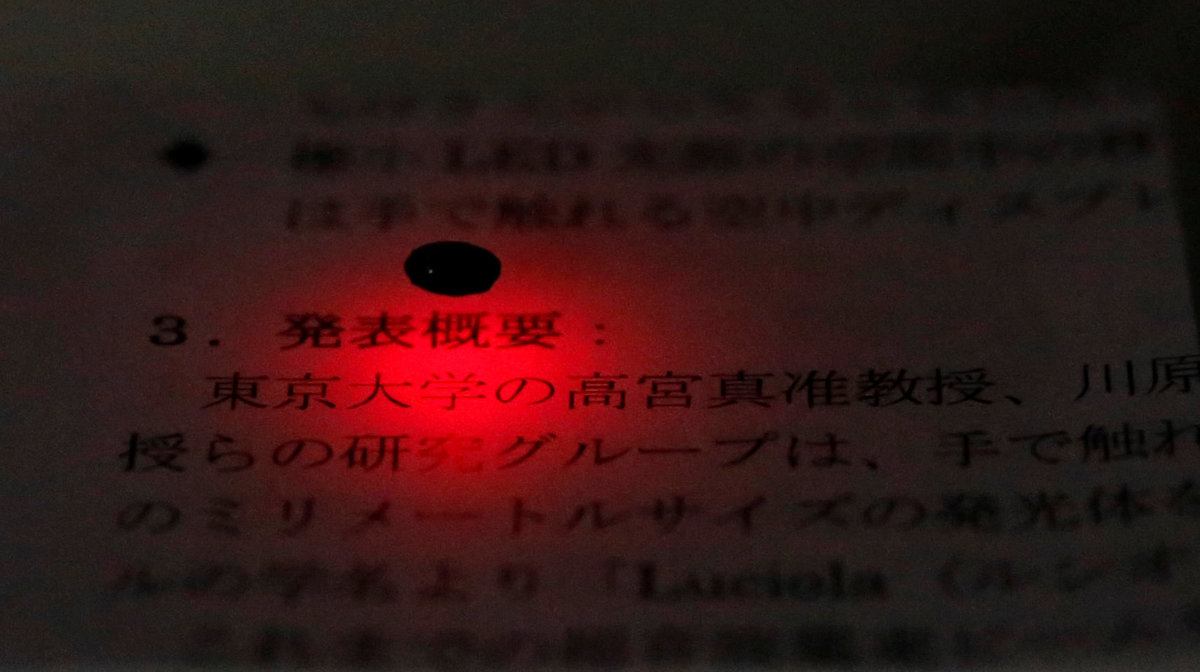
ERATO Kawahara Universal Information Network Project's 'Luciola', miniature floating LED light aptly named after fireflies, lights on written text during its demonstration at the University of Tokyo, Japan February 20, 2018. REUTERS/Toru Hanai
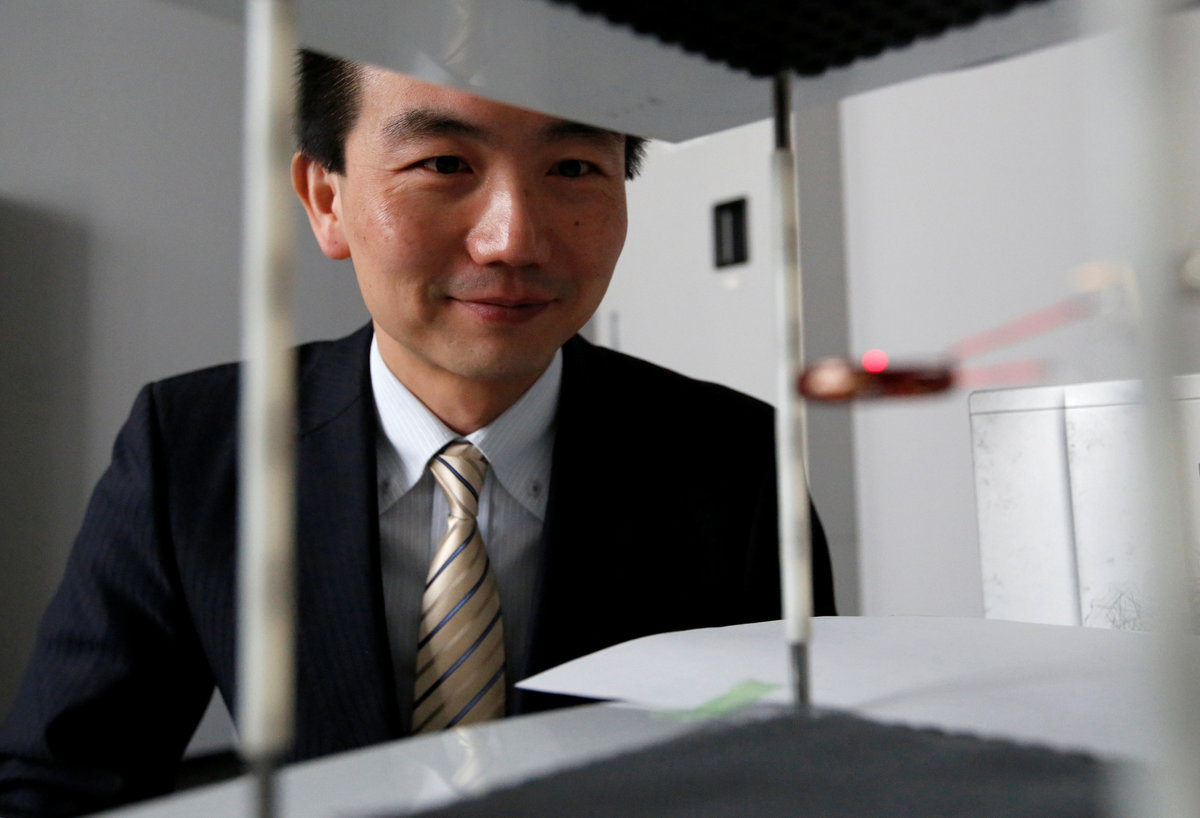
Makoto Takamiya, Associate Professor of the University of Tokyo looks at ERATO Kawahara Universal Information Network Project's 'Luciola' (red dot), miniature floating LED light aptly named after fireflies, during a demonstration at the University of Tokyo, Japan February 20, 2018. REUTERS/Toru Hanai
Sign up to read this article
Read news from 100’s of titles, curated specifically for you.
Already a member? Sign in here
Related Stories
Top stories on inkl right now
One subscription that gives you access to news from hundreds of sites
Already a member? Sign in here
Our Picks
Fourteen days free
Download the app
One app. One membership.
100+ trusted global sources.