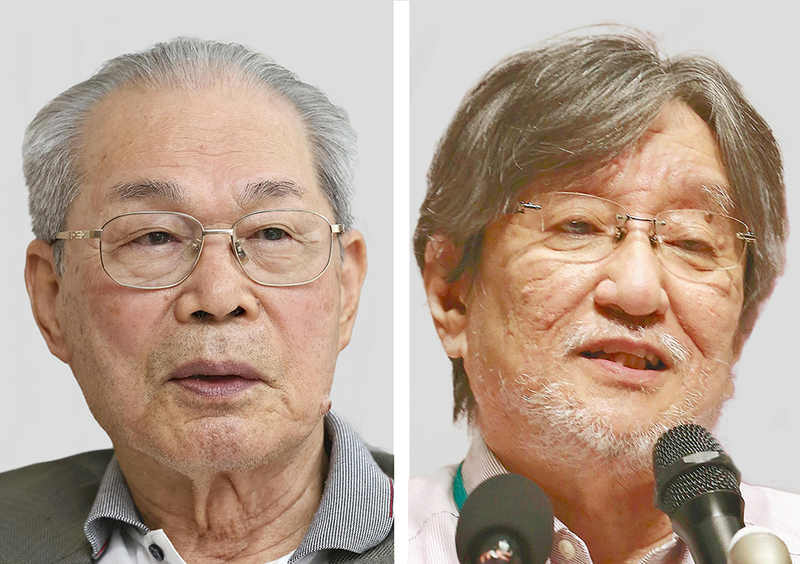
This year's Nobel Prize in Chemistry went to the development of genome editing technology CRISPR/Cas9, which is an achievement based on the research of two Japanese scientists, Atsuo Nakata and Yoshizumi Ishino, who expressed excitement over the news on Wednesday night.
The prestigious award went to Emmanuelle Charpentier of France and Jennifer Doudna of the United States.
The research, which was conducted over 30 years ago by Nakata, a 90-year-old professor emeritus at Osaka University, and Ishino, a 63-year-old Kyushu University professor, was mentioned in materials released by the Royal Swedish Academy of Sciences in the award announcement.
"I want to thank the two scientists who paid attention to my research, which was already dozens of years old at the time," Nakata told reporters in Toyonaka, Osaka Prefecture.
"I once dined with Ms. Doudna," Ishino said, when he spoke to reporters at Kyushu University in Fukuoka. "She said that she respected me."
He added he would like to offer his heartfelt congratulations to the two women.
When conducting research at Osaka University in 1986, then-assistant professor Nakata and then-researcher Ishino, discovered an unusual structure that repeated at regular intervals, while decoding the genetic sequence of Escherichia coli.
The discovery provided the foundation for the development of CRISPR/Cas9 genetic scissors. Nakata, Ishino and other researchers released the finding in a 1987 paper, adding that they could not understand the biological purpose of it.
"Even though I couldn't win the Nobel Prize, I think I had a great influence on the research [conducted by the two winners]," Nakata said.
"I'm satisfied with the result of my research and have no regrets," Ishino said.
However, he also added: "Dr. Nakata was the supervising researcher for the paper. We would have been ecstatic if he had won the award."
Read more from The Japan News at https://japannews.yomiuri.co.jp/