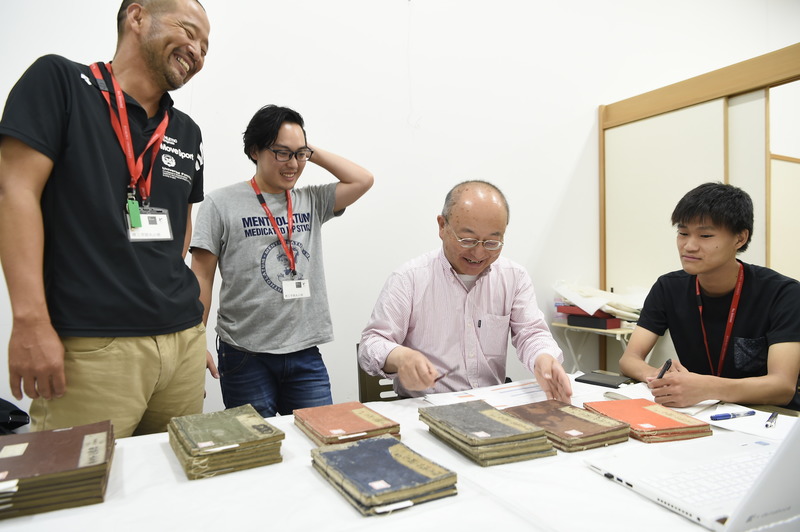
Students who work in the laboratory of Atsushi Maruyama, a 45-year-old associate professor at Ryukoku University's Faculty of Advanced Science and Technology in Otsu, Shiga Prefecture, have a daily routine. They go to the campus library or to a used book store and if they find old books from the Edo period (1603-1867), they will either borrow or purchase the books and return to the lab.
The students are researching the eating habits of ordinary people during the Edo period. However, the purpose of this research is not reading and interpreting the contents of these books. They scour the books to find hair samples in the pages from people in the Edo period, and the students carefully remove the hairs using tweezers and analyze them.
The culture of publishing flourished during the Edo period. In Edo (present-day Tokyo), Osaka and Kyoto, which were the three largest cities at that time, such books as ones featuring kabuki actors, which are similar to present-day weekly magazines, were available. However, for some reason, pieces of hair are often found on the back of book covers. Was hair used to reinforce paper at the time? It is still a mystery. The lab has so far examined 40,000 books, and with permission, has collected hair samples from about 20,000 of them.
Where and when these books were published is already known, and the ingredients of food that people ate can be found by analyzing the hairs. By studying the trend in diets and comparing it with information written in books, it is possible to elucidate the changes in dietary habits in accordance with regions and certain times, even in the Edo period.
Take carbon for example. Compared with rice, miscellaneous grain, such as foxtail millet and barnyard millet, contains more carbon 13, which is slightly heavier than regular carbon atoms. According to the lab's research, hairs found in books printed in Edo contained more carbon 13 compared to books published in the Kansai region. This suggests that people in Edo ate more miscellaneous grain than those in the Kansai region.
Nitrogen also offers an important clue. The number of isotopes for nitrogen 15 increases when the food chain, in which organisms eat and are eaten, is repeated. Marine fish tend to accumulate nitrogen 15. The ratio of nitrogen 15 contained in the hairs gradually increased for about 200 years from the late 1600s, so it is thought that people increasingly ate more fish over that period. It is also possibly attributed to an increase in the use of fish as fertilizer to produce rice and other products.
Maruyama is currently analyzing metallic ions, such as magnesium, in the hairs.
"I want to figure out how many people [in the Edo period] consumed minerals found in vegetables and water," he said.
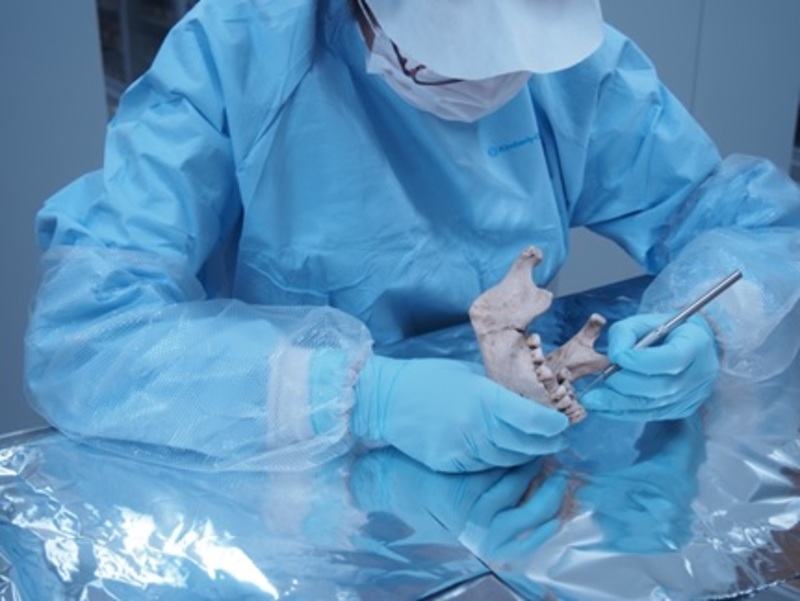
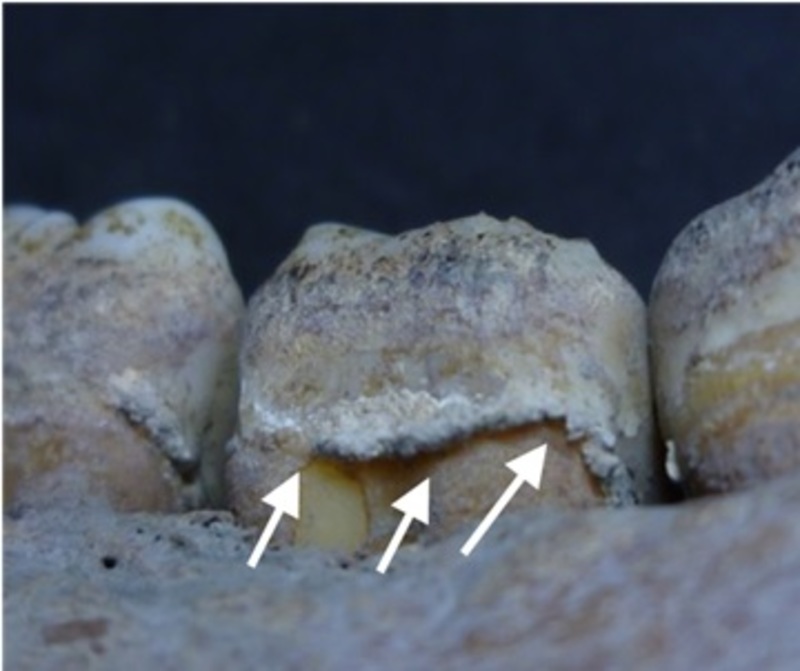
Studies are also underway to research specifically, what kinds of food people ate more. Rikai Sawafuji, a 31-year-old research fellow at the Japan Society for the Promotion of Science who is based at the Graduate University for Advanced Studies, has focused on DNA in tartar taken from the teeth of people in the Edo period. The tartar from these teeth are calcified and hardened food remains. Most of the DNA collected is from bacteria in the mouth, but a very small amount of DNA from food can found on the teeth.
DNA samples from tartar were extracted from the teeth of 13 human bodies found during renovation work at a temple in the Fukagawa area in Tokyo and preserved at the University of Tokyo. Sawafuji narrowed down the species of plants that these people had eaten by amplifying some of the DNA that the plants have in common using the PCR (polymerase chain reaction) method.
The results showed that people from the Edo period had eaten plants in seven families and 10 genera, such as the Apiaceae family, which includes carrots, and the Perilla and Allium genera. Sawafuji also found DNA from a Nicotiana plant and a plant grown in Malaysia, used as a raw material for toothpaste. These findings indicate that smoking and brushing teeth were common in Edo. Tartar has been found to be useful to elucidate the customs and foreign trade at that time.
"It is useful as a way to gain information about a person's daily life in the Edo period, and I want to reconstruct what life was like at the time," Sawafuji said.
Sawafuji now hopes to conduct a DNA analysis on tartar to look into the differences in eating habits among warriors, townspeople and farmers as well as infectious diseases they contracted, among other topics.
Read more from The Japan News at https://japannews.yomiuri.co.jp/