Against the backdrop of fireworks festivals being canceled one after another due to the novel coronavirus pandemic, a pyrotechnician has continued to light up the night sky in areas devastated by the 2011 Great East Japan Earthquake.
The 52-year-old pyrotechnician, Satoshi Saiki, president of fireworks manufacturer Marugoh Co., said: "I want to encourage those who are depressed by launching fireworks."
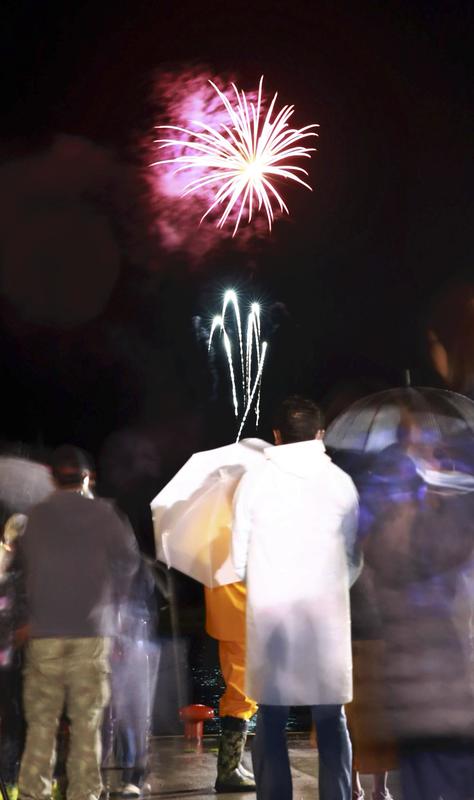
He is preparing for the Sanriku Fireworks Festival, which will be held in the city of Rikuzentakata, Iwate Prefecture, at the end of this month.
Saiki's company is based in Yamanashi Prefecture's Ichikawamisato, a town thriving with fireworks manufacturers and said to be the origin of fireworks where production has developed as a regional industry. The town was home to a beacon used during the warring states period (late 15th century to late 16th century), in which warlord Takeda Shingen controlled the area that includes present Yamanashi Prefecture. .
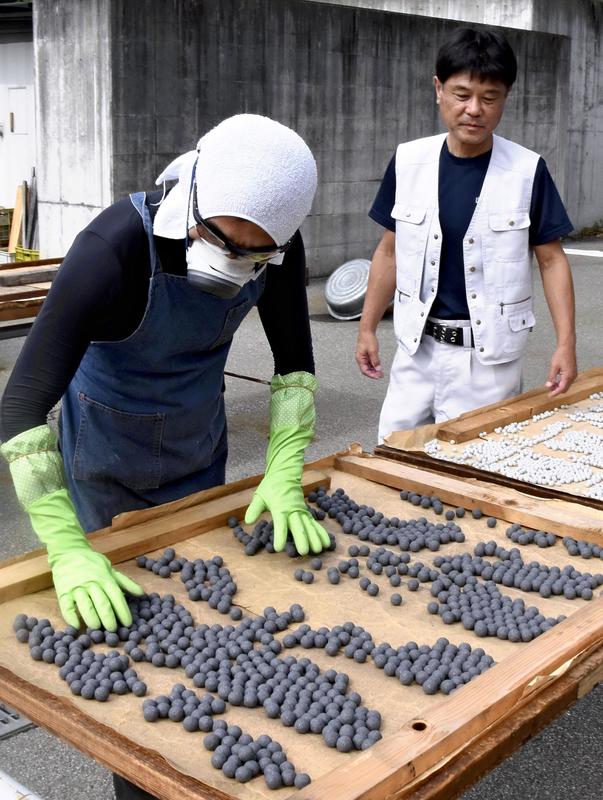
In early September, in a big drum rotated at the Marugoh factory, gunpowder was sprinkled over black pellets, which dertermine the colors of fireworks. In the factory, 25 Marugoh employees are making fireworks. About 10,000 fireworks will be launched at the Sanriku Fireworks Festival.
Saiki began to associate with disaster-damaged areas in September 2011, six months after the huge earthquake and tsunami. He first helped remove debris on a remote island of Kesennuma, Miyagi Prefecture. As he continued volunteering, a person who had learned of his profession, said, "We want to see fireworks."
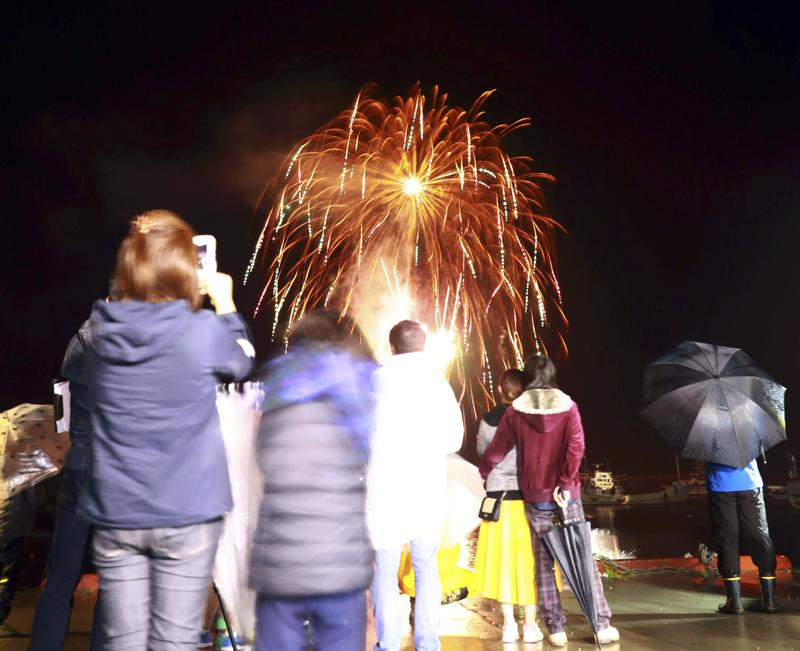
Thinking that it may be his responsibility to encourage the locals, Saiki organized a fireworks show on the island in March 2012, and launched 200 fireworks to extend condolences to disaster victims.
One of those encouraged by the event is Takeshi Komatsu, 45, who farms oysters and scallops at the island.
"With my house and factory having been swept away by the tsunami [which was triggered by the earthquake], I lost sight of my goal in life [at the time]," he said.
After seeing the fireworks, he was strongly moved. "People in Yamanashi, far away from our island, had not forgotten about us," he said.
This made him look forward to the future and motivated him to revive his business and have his oysters eaten by many people.
Saiki has launched a total of 60,000 fireworks every year at more than 300 locations across the nation. But his company's sales have dropped by 70% compared with previous years because festivals have been canceled in various parts of the country due to the pandemic. Despite that, he has continued to launch fireworks in disaster-damaged areas regardless of profitability. He has provided fireworks for more than 20 festivals over a period of 8-1/2 years, launching 70 to 600 fireworks each time.
This year he launched fireworks in March and August in Rikuzentakata, in July on the island of Kesennuma, and in September in Oshu, Iwate Prefecture. The festivals were held on a small scale and the general public wasn't informed so "close and crowded" situations could be avoided. Like previous festivals, virus prevention measures will be thorough at the Sanriku Fireworks Festival set for Oct. 31. Those who are not feeling well will be asked to refrain from coming. Visitors will also be asked to wear facial masks and practice social distancing.
"I didn't realize at the time, but launching fireworks for disaster victims has become something to live for," Saiki said with a smile.
Read more from The Japan News at https://japannews.yomiuri.co.jp/