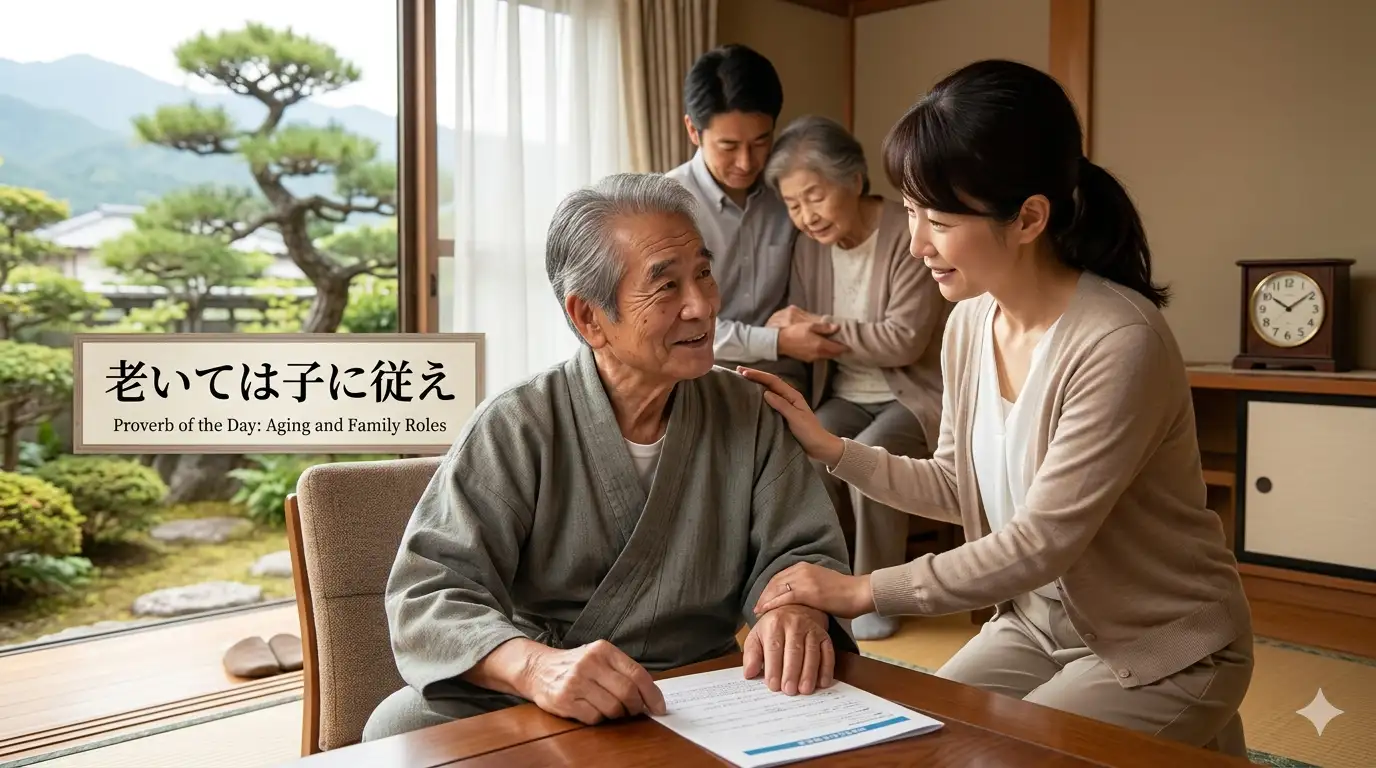
Japanese proverb of the day : Aging and family relationships are deeply connected, especially when it comes to how responsibilities shift between generations. As parents grow older and children become adults, roles within the household often change in ways that require adjustment, understanding, and mutual support. Japanese culture has long reflected on these natural transitions through traditional sayings that capture both the emotional and practical realities of family life.
Japanese Proverb of the Day Today on Aging and Family Roles
Today’s Japanese proverb is, " 老いては子に従え」 (Oite wa ko ni shitagae)," which translates to, “ When you get old, you have to follow your children, ” as per Tenko.
The proverb highlights the idea that as people age, they may gradually rely more on their children for support, direction, and decision-making in daily life.
What This Japanese Saying Means
The saying reflects the natural shift of responsibility that can occur within families over time.
As parents grow older, they may depend on their children for help with important aspects of life such as health care, finances, and everyday decisions. The proverb suggests that accepting this transition with humility and openness is part of the natural cycle of life.
Why Family Roles Change Over Time
One key lesson within the proverb is that change between generations is unavoidable.
Children grow into independent adults, while aging parents may experience limitations that require assistance. This leads to a gradual reversal of roles in certain areas, where children take on more responsibility within the family structure.
Japanese Proverb of the Day June 18: Lessons on Humility and Adaptation
Traditional Japanese wisdom often emphasizes respect, balance, and harmony within relationships. This proverb reflects those values by encouraging individuals to adjust gracefully to life’s natural changes.
In modern society, where independence is highly valued, the message becomes even more relevant. It reminds families that roles are not fixed but evolve over time in response to changing needs.
The Connection Between Aging and Mutual Respect
Another important message within the proverb is that respect flows across generations.
Parents guide children in early life, and later, children may guide and care for their aging parents. When handled with understanding and empathy, this role shift can strengthen family bonds rather than weaken them.
The proverb presents aging as a transformation rather than a decline.
Life Lessons From the Japanese Saying of the Day
The proverb teaches that accepting change is essential for healthy family relationships.
Families who embrace shifting responsibilities often build deeper trust and emotional connection. Instead of resisting change, the saying encourages flexibility, patience, and mutual care.
The saying reminds us that aging is not an ending of roles, but the beginning of new forms of connection and support.
Inspiring Japanese Proverbs
Here are a few more Japanese proverbs.
- You can't catch a tiger without entering its den, as per Tenko.
- After victory, tighten your helmet cords, as per Tenko.
- A kite does not give birth to a falcon, as per Tenko.
- Start with politeness, end with politeness, as per Tenko.
- The mouth is the source of misfortunes, as per Tenko.
- Swift as the wind, silent as the forest, fierce as fire, still as the mountain, as per Tenko.