What is happiness? Here is a singular engineer who seeks to get at this proposition that has been posed since the days of Greek philosopher Aristotle more than 2,300 years ago.
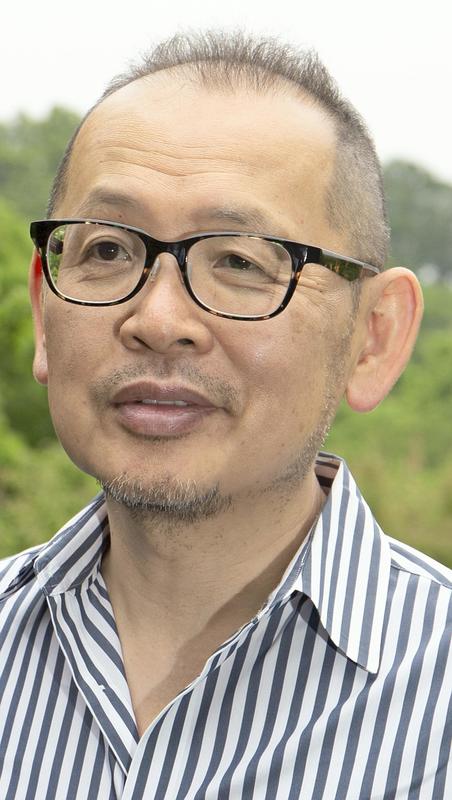
Takashi Maeno, a professor at the Graduate School of System Design and Management at Keio University, gives his take on how people might live happily, even a little, in the new normal of life with the coronavirus.
"Is everyone taking care of their happiness?" I sometimes put this question to the audience during off-campus lectures.
Many people do take care of their health. Both the words "kenko" (healthiness) and "kofuku" (happiness) are in one and the same term in English: "well-being." But there are some who assert that, unlike healthiness, happiness is something that people feel as a consequence, rather than something that can be obtained by aiming for it. There are also those who think that the pursuit of happiness is something to be tackled in the realms of philosophy and religion.
But well-being studies researchers believe that a sense of well-being can be enhanced with the intent to do so. They even have the scientific backing for this belief.
For instance, one report says that taking part in some voluntary work once a month helps people enhance their sense of happiness by as much as if their income doubled. There is also a research finding that people spending each day lifting the corners of their mouth from time to time increase their sense of well-being, which also improves their immune system. It has also been known that there are many other primary factors in the rise and fall of our sense of well-being.
Until the age of 33, I was an engineer at Canon, Inc. I was involved in the development of a camera in which a motor was mounted, and it is still being used across the world. After I started a new career as a university professor, I was engaged in robotics, having crafted algorithms for the mind of a robot with the ability to laugh and rejoice.
The objective of our robotics research was to make our living more convenient and to understand us human beings. I used to believe that, in an island country lacking natural resources, science and technology and the industrial might of the country would make our life prosperous and bring about happiness.
In actuality, as Japan's real gross domestic product per capita made a sixfold increase over the 50 years between 1960 and 2010, making Japan one of the most prosperous countries in the world, a survey by the government found that during the same period the degree of livelihood satisfaction among Japanese people has not risen at all, hovering around the same level.
How does our sense of well-being increase? I have come to think that I want as many people as possible to feel their happiness, by elucidating straightforwardly the mechanism of the human mind that feels happiness, rather than by understanding human beings through the research on robotics.
What, then, is the mechanism? It has become clear that the sense of happiness that can be obtained through the increase in barometers that are easier to compare to that of others -- such as income, assets and social status -- is transient and will not last long. On the other hand, the sense of happiness that is obtained when the mind and body and society are in good condition highly persistent. To be specific, such matters as connections with others, health, affection, freedom, environment and so on, these have the characteristics of being hardly able to compare them to those of another person.
We call the former the sense of happiness induced by tangible assets and the latter the one induced by intangible assets . Tangible assets alone would not be sufficient, but it is also not a matter that could be solved if there are enough intangible assets only. As a prerequisite for obtaining a high sense of happiness, it is very important that both are well-balanced in people's minds, as if they are mutually necessary.
--Intrinsic happiness
At the present time when people across the world are troubled with the battle against the novel coronavirus, there is a possibility that the bipolarization in happiness has been occurring among people. I am apprehensive about the likelihood that when something beyond expectations or extraordinary happens, the gap between those who feel happiness and those who cannot feel happiness tends to widen further.
Those who have a high sense of happiness are intrinsically capable of seeing things from a comprehensive perspective, tend to be altruistic and have various friends and colleagues. Even amid the coronavirus epidemic, they will take a broad view and try to help each other, all together. Their sense of happiness may even be enhanced further.
Conversely, as those people who are not happy tend to be pessimistic and narrow-minded, with their sense of unease stoked excessively, they would become even more unable to take any action. With little connection with others, they also tend to have difficulty exercising their creativity. They would end up being at a loss as to what they should do amid sudden change.
I created a study group in the autumn of 2017 on corporate management in which everyone can stay happy. I called upon employees and corporate managers of several domestic companies, including Kao Corp., Japan Tobacco Inc., and Suntory Holdings Ltd. This group conducted an emergency survey before and after this year's Golden Week holidays, covering a total of 450 members and non-members, inquiring as to changes in their degree of happiness and work style experienced after the state of emergency was declared.
Answers sent back have also been bipolarized, as expected, from those saying that "I have become very happy" to those saying that "I have become very unhappy." Those who said "I have become very happy" seem to have been affected by the increase in time they can spend together with their family, thanks to the spread of working remotely.
Among them, there is even such a person who said: "I have set myself to doing a new type of work online. Now is the time for new business opportunities." Taking on a big target and trying to grow further is also an important factor in the enhancement of the sense of happiness.
Although it is necessary to observe closely whether it is just a temporary phenomenon, it can be safely pointed out that it is highly likely for the discrepancy in the sense of happiness felt among people to have increased further amid the coronavirus situation.
--Internet haven
To conquer the bipolarization in terms of happiness and live a happier life than ever in an era with the novel coronavirus, what shall we do? One of the keywords I would like to share from my knowledge of well-being studies is "tsunagari" (connections).
To consciously engage in a conversation; to raise spirits, help and thank each other; and to not ignore those who are likely to be isolated -- such person-to-person connections will bring about a sense of reassurance, which will help stir up creativity and vigor among people even in times of crisis.
Amid the coronavirus epidemic, we are being asked to practice social distancing appropriately and avoid the so-called Three Cs: closed spaces with poor ventilation, crowded places with many people nearby and close-contact settings. There can be those who feel that these connections among people will be rather exposed in such a crisis; for instance, activities to watch over elderly people had been suspended.
We have, however, encountered the coronavirus situation in circumstances where we are most blessed in human history with a tool that helps us be connected with each other, something that can be considered a bright spot in this tragedy. That is the development of the internet.
Even when people thoroughly engaged in "stay-at-home" measures in the midst of the global pandemic, it's possible to say that the number of those who fell into a state of complete loneliness and isolation has been held down, compared with times when infectious diseases spread in bygone days.
Provided that people are ensured of the minimum amount of tangible assets, person-to-person connections are essentials of life for the mind. The central and local governments should further advance their support to those people and places that are likely to be deprived of connections with others, including elderly people, in tandem with their support through financial tangible assets.
On our part, each of us should work things out in our own heads to contrive ways for us to be connected with our family, relatives and community. The so-called "online homecoming," which has drawn attention recently, can be one such way. An acquaintance has begun what is called "partaking meals online," which makes it possible to have meals with a mother who lives far away over the internet.
If we can wield our creativity and show wisdom together, there can be many new ways for us to be "connected." Rather than complaining of not being able to be connected because of the coronavirus, taking on the challenge of new things is what matters most.
--Takashi Maeno, 58, received a master's degree in mechanical engineering from the Tokyo Institute of Technology and then worked for Canon, Inc. from 1986 to 1995. During his time at Canon, he received his Ph.D. in mechanical engineering from the Tokyo Institute of Technology. After serving as professor at the Faculty of Science and Technology at Keio University, Maeno has been a professor at the Graduate School of System Design and Management at Keio University since 2008. He is the author of books including "Mechanism of Happiness: Practical Study of Happiness for Beginners" published by Kodansha Ltd.
Read more from The Japan News at https://japannews.yomiuri.co.jp/