When and how should the name of a business where coronavirus infections have been discovered be revealed to the public?
In the debate over releasing the names of these businesses, the parties involved have entered a new phase in trying to determine how best to disseminate information to prevent the spread of the virus.
A woman who runs a restaurant in eastern Japan said she shivered when she received a phone call from an acquaintance overseas asking if things were all right.
In mid-June her business had been the source of a cluster of infections, and the woman had agreed to release the name at the request of the local public health center. "I couldn't believe the name of our restaurant had spread overseas," she said.
Customers were infected after the woman reopened the restaurant following the lifting of the state of emergency. She had had about 50 customers around that time, but had no way of contacting more than half of them.
Knowing it would be a major problem if the virus spread among her customers, she agreed to release the name of her business. The customers contacted the public health center, which was able to get in touch with all of them. PCR testing found 10 infections, including the woman.
"I had a hard time in the hospital. I thought it was really important to identify customers and get them tested and treated. I'm glad I released my shop's name," she said, though she remains anxious about the future.
Still, she has experienced a flood of inquiries and no small amount of vilification. "The impact of releasing my shop's name was too much. I don't know if customers will return even if I reopen. Maybe I'll just give up," she said.
In February, the Health, Labor and Welfare Ministry notified prefectural governments that should cases of Ebola hemorrhagic fever or other diseases occur in Japan, "The names of facilities used by an unspecified number of people should be released if it is not possible to determine who has been in contact with infected individuals."
During the current pandemic, municipal governments have generally followed this guideline and only released the names of businesses if they provide consent.
Yet businesses that agree to release their names have lost customers. Only some agree to release their names, and identifying customers and gathering other information has been difficult.
Facing a burgeoning crisis, on July 28 the ministry sent out a nationwide notification that the names of businesses could be released even without consent. This is now reverberating throughout the country.
If the name of a business is released without its consent, authorities can gather information on its customers. However, this could upset the business and they may refuse to help in testing or contact tracing. This is the dilemma municipalities are facing.
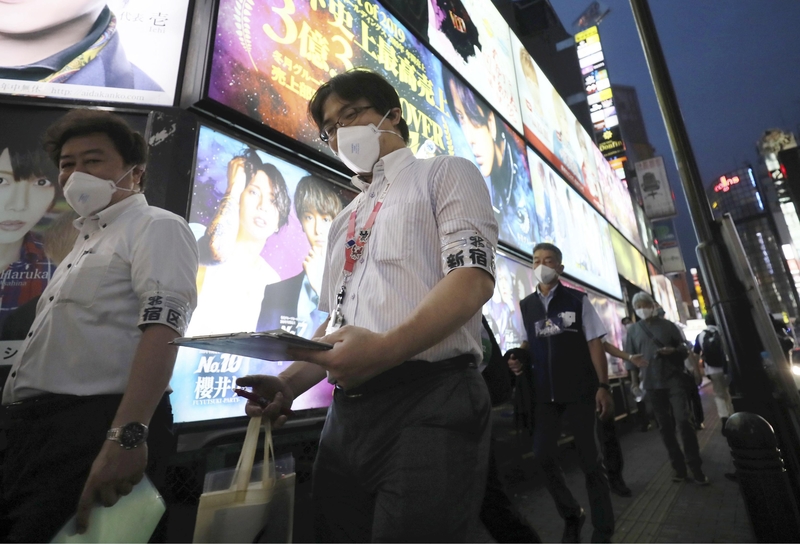
Shinjuku Ward, Tokyo, which is home to the Kabukicho entertainment district, said it will not release the names of businesses, regardless of whether they provide consent.
"Business operators will cooperate in the testing and surveying of employees if we promise not to disclose their names," an official in charge of the matter at the ward's health center said.
In April, more than 40 people were infected at a nightclub in Gifu City. The city released the name of the business with its consent.
"We were successful in building trust with the business and its customers by carefully explaining the need to release its name to prevent the spread of the virus," said the director of the community health division of the city health center.
Local governments have also been exploring systems of cooperation that avoid direct conflict with businesses. The governments of Osaka Prefecture and Chiba City have created systems that give 1 million yen to entities that agree to release their names, while Hiroshima Prefecture provides 50,000 yen.
--Lessons learned
Clusters have occurred at karaoke parlors, schools, hospitals and elsewhere. The investigations that have followed by working with these entities are providing valuable lessons based on the unique characteristics of each instance.
For example, day-time karaoke bars are places where people gather to sing for long periods without masks on. And at one athletic club all the patients were women who had used the same changing room.
On July 30, the ministry's advisory body, which is made up of infectious disease experts and others, released a collection of case studies by analyzing past clusters.
Takaji Wakita, director of the National Institute of Infectious Diseases, stressed the significance of the study at a press conference, saying, "We have clarified the specific circumstances involved in clusters."
In what appears to be a long battle against the coronavirus, the question is now what should be done to prevent new infections and analyze infection trends while working with businesses and facilities.
Hideyuki Hirakawa, a professor of risk communication at Osaka University, said, "Local governments have to determine in advance why the names of businesses need to be released and what the social significance of cooperating with surveys is, so they can explain themselves properly to businesses where infections appear. Having regular exchanges with industry groups could also be effective."
Read more from The Japan News at https://japannews.yomiuri.co.jp/