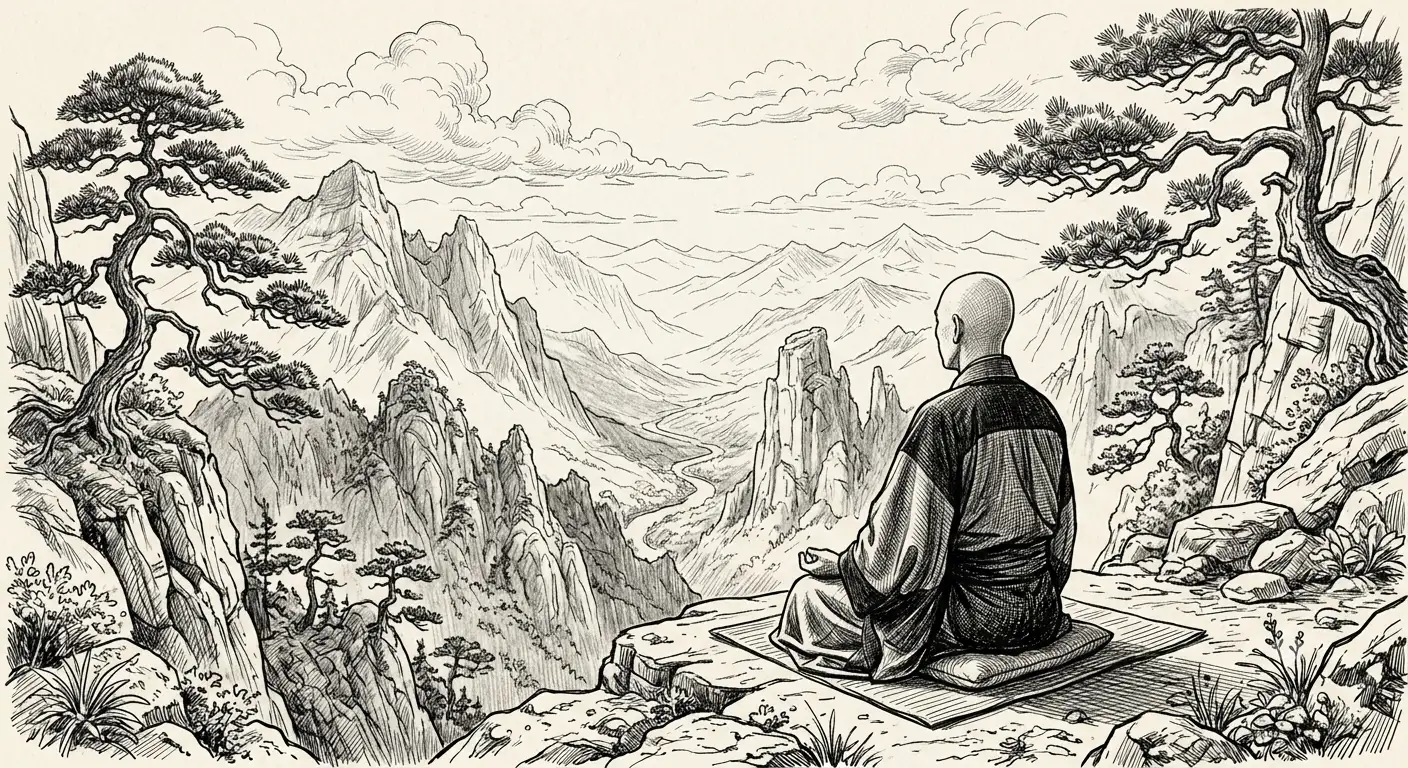
Japanese mindset of the day by Shunryu Suzuki : Change is one of the few constants in life, yet it is also one of the hardest realities for people to accept. Relationships evolve, careers take unexpected turns, health changes, and even the routines that once felt permanent eventually shift. Despite knowing that change is inevitable, many people struggle to let go of what was or fear what lies ahead. This resistance often creates stress, disappointment, and anxiety. Zen teacher Shunryu Suzuki believed that peace does not come from trying to make life stay the same but from learning to accept its constant flow.
Japanese mindset of the day: Shunryu Suzuki's life lesson on accepting change
Today's Japanese life lesson by Shunryu Suzuki is, " Without accepting the fact that everything changes, we cannot find perfect composure. Unfortunately, although it is true, it is difficult for us to accept it. Because we cannot accept the truth of transience, we suffer ," as per BrainyQuote.
What does Shunryu Suzuki's quote about change and suffering mean
The quote reminds us that suffering often comes not from change itself but from resisting it. People naturally become attached to familiar routines, relationships, achievements, and expectations. When those things change, the desire to hold on to them can create emotional pain.
Why accepting change can lead to inner peace
Suzuki's words encourage people to recognize that change is a natural part of life rather than something to fear. Accepting impermanence does not mean giving up or becoming indifferent. Instead, it means understanding that every experience, whether joyful or difficult, will eventually pass.
The lesson also encourages resilience. By accepting that life is constantly changing, people can become more adaptable when facing setbacks, uncertainty, or unexpected challenges. Instead of being overwhelmed by circumstances, they can respond with greater calm and clarity.
Suzuki's teaching highlights to focus on the present instead of trying to control what cannot be controlled. While change may be unavoidable, the way we respond to it remains within our control.
Who was Shunryu Suzuki
Shunryu Suzuki-roshi was born in Japan in 1904. He became a respected teacher in the Soto Zen tradition and later served as the abbot of his father's Buddhist temple, as per a Shambhala report.
Shunryu Suzuki's journey to America
In 1959, at the age of 54, Suzuki-roshi moved to San Francisco after accepting a temporary position to serve the Japanese-American community in Japantown.
Shunryu Suzuki and the San Francisco Zen Center
Suzuki-roshi recognized the dedication of Americans interested in Zen, which led to the founding of the San Francisco Zen Center, as per the Shambhala report. In 1967, he and his students established the Tassajara Zen Mountain Center in Big Sur, the first Buddhist training monastery built outside Asia.
Shunryu Suzuki's books and legacy
Suzuki-roshi died in 1971. Today, more than 60 Zen centers and groups in North America continue his Soto Zen lineage. His teachings have been published in books including Zen Mind, Beginner's Mind, Not Always So, and Branching Streams Flow in the Darkness: Zen Talks on the Sandokai. A biography, Crooked Cucumber, was published in 1999, followed by a shorter version titled Crooked Cucumber Comes to America, as per the Shambhala report.
Inspiring quotes by Shunryu Suzuki
Here are a few more quotes by Shunryu Suzuki.
- "If your mind is empty, it is ready for anything. In the beginner's mind there are many possibilities; in the expert's mind there are few," as per BrainyQuote.
- "If you think your body and mind are two, that is wrong; if you think that they are one, that is also wrong. Our body and mind are both two and one," as per BrainyQuote.
- "If you cannot bow to Buddha, you cannot be a Buddha. It is arrogance," as per BrainyQuote.
- "Preparing food is not just about yourself and others. It is about everything!" as per BrainyQuote.