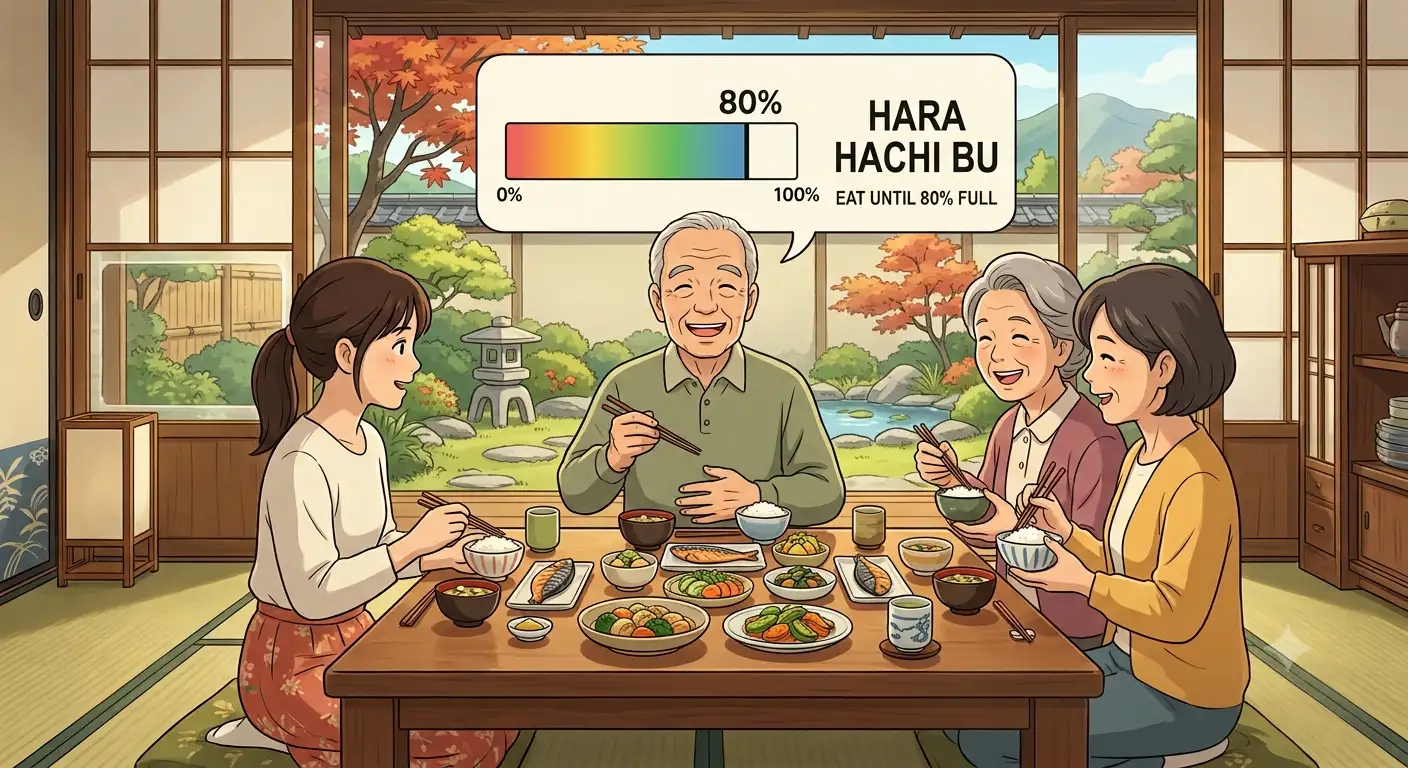
Japanese Mindset: In a world where oversized portions and rushed meals have become the norm, the Japanese have long embraced a very different approach to eating. Instead of eating until they're completely full, many people in Okinawa follow a simple principle that encourages moderation, mindfulness, and gratitude at every meal.
Japanese Mindset: Hara Hachi Bu
It's called Hara Hachi Bu (腹八分), a centuries-old Japanese wellness philosophy that means "eat until you're 80 percent full."
Far from being another diet trend, Hara Hachi Bu is a mindful way of eating that has become closely associated with Okinawa, a region famous for its remarkable number of centenarians and long life expectancy. Combined with traditional Japanese tea drinking, this philosophy has become a daily wellness habit that supports healthy digestion, balanced eating, and a more thoughtful relationship with food, as per Senbird Tea.
What is Hara Hachi Bu?
"Hara hachi bu" is a Japanese phrase that literally translates to "eat until you're 80 percent full." The philosophy encourages people to stop eating before they feel completely full, allowing the body time to recognize satiety naturally.
Rather than focusing on calorie counting or strict food rules, Hara Hachi Bu teaches moderation. The goal isn't to deprive yourself but to avoid overeating by paying closer attention to your body's signals. This simple habit encourages slower eating, greater awareness, and more appreciation for every meal.
The Okinawan Secret to Healthy Aging
Hara Hachi Bu originated in Okinawa, Japan, a region widely recognized for its exceptional longevity. For generations, many Okinawans have practiced eating until they are only about 80 percent full instead of continuing until they feel stuffed.
Historically, Okinawa has had one of the world's highest concentrations of people living to 100 years or more, along with relatively low rates of illnesses such as heart disease, cancer, and stroke.
While healthy aging depends on many factors, Hara Hachi Bu is often considered one of the lifestyle habits that has contributed to the region's reputation for longevity.
More Than a Weight Loss Trend
As Hara Hachi Bu has gained global attention, many people have viewed it as a strategy for losing weight. However, that misses its deeper purpose. This philosophy isn't about restrictive dieting or denying yourself food. Instead, it encourages people to develop a healthier relationship with eating by slowing down and becoming more aware of when they feel comfortably satisfied. According to psychologist Susan Albers, PsyD, this approach can be especially helpful for people learning to recognize fullness cues, as per Cleveland Clinic.
Rather than eating until discomfort, Hara Hachi Bu teaches people to stop when they feel only slightly full, making it easier to avoid habitual overeating.
The Role of Mindfulness and Gratitude
One of the most meaningful aspects of Hara Hachi Bu is the mindset behind it. Meals become more than fuel. They become opportunities to slow down, savor each bite, and appreciate the nourishment being provided.
When paired with traditional Japanese tea drinking, the experience naturally encourages people to eat more slowly and mindfully, helping them become more aware of their body's signals instead of rushing through meals.
The philosophy transforms eating from a habit into a moment of presence.
The Lasting Lesson of Hara Hachi Bu
The beauty of Hara Hachi Bu is that it doesn't ask us to eliminate our favorite foods or follow complicated rules. Instead, it encourages a simple shift in awareness.
- Eat a little more slowly.
- Listen to your body.
- Stop before you're completely full.
By practicing moderation instead of excess, we learn to enjoy food without overindulging, appreciate each meal more deeply, and build habits that support long-term well-being. Perhaps that's why this timeless Japanese philosophy continues to inspire people around the world. Sometimes, better health isn't about eating less. It's about eating with greater intention.