Do you know there are basically two main styles in Japanese cuisine? One is washoku: traditional dishes such as sushi, eel or udon that you see at many Japanese restaurants.
Another is yoshoku, such as kani (crab) cream croquette, tonkatsu pork cutlet or omuraisu (rice omelet). Yoshoku is a term for dishes influenced by Western cuisine and developed with Japanese twists since the Meiji era (1868-1912).
As washoku has become popular in the United States over the past 20 years, you can find sushi restaurants everywhere, and boxes of sushi even in typical American grocery stores. On the other hand, you don't see many yoshoku places.
I was therefore surprised to find that there are at least two restaurants specializing in yoshoku in New York City, where I live now.
At these yoshoku restaurants, it seems omuraisu is one of the most popular items on the menu. It's a delicious comfort food, as omelet and ketchup flavors are familiar to Westerners. But it's more that the presentation is very special, as the waiter brings it out and cuts open the omelet that coats the ketchup-flavored rice with a knife in front of the customers, and it finally opens completely when demi-glace sauce is poured over it. Many people say it's soft and fluffy, but some people say it's expensive for just ketchup, rice and eggs, and doesn't feel like "Japanese food."
In my cooking class, kani cream croquette is always a hit and I get the most requests for it, and katsudon, a bowl of rice topped with pork cutlet, is another favorite.
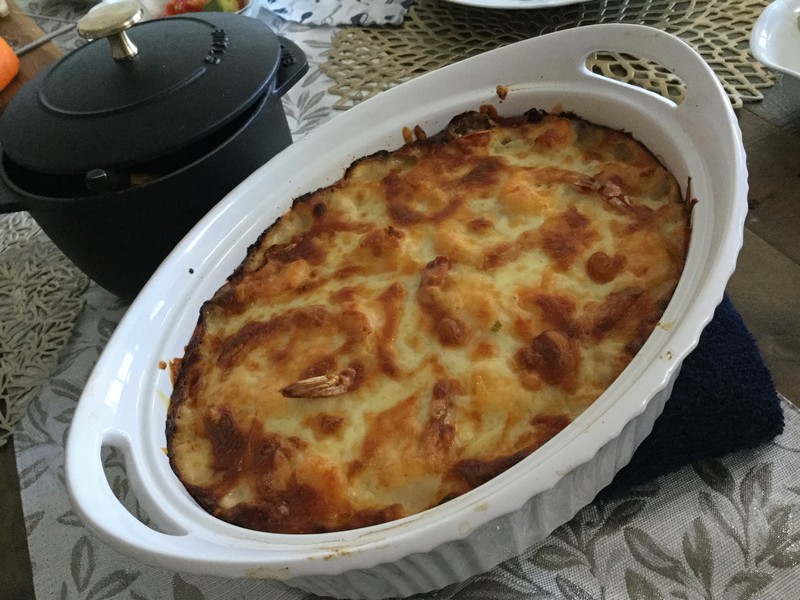
My favorite is doria, which is a sort of Japanese rice casserole. The rice at the bottom of the dish is usually seasoned with butter or ketchup. It can also be seafood pilaf, or even curry-flavored or tomato-flavored with chicken. The dish is covered with a bechamel sauce topped with melted cheese and oven-baked.
In Western countries, there are many types of gratin based mostly on potatoes with cream, but this rice-based gratin is very Japanese, yet a comfort food for anyone.
There are a few ways to make doria. You can make pilaf or seasoned rice first, and then cover it with plain bechamel sauce and cheese. Or place the plain cooked rice (or buttered rice or ketchup rice) in a plate, then make bechamel sauce cooked with onion and chicken or seafood, and top it with cheese. Either dish is quite simple to make, and you can easily freeze them.
My favorite, as the recipe accompanying this article shows, is making shrimp pilaf with a rice cooker -- easy! -- so I can enjoy it by itself on the first day, then make only bechamel sauce on the following day, using leftover pilaf to make the doria. If you like pilaf, I recommend you make double!
Mari's favorite doria
Ingredients (serves 4):
300 grams white rice
1 tbsp butter
200 grams shrimp
1/2 cup chopped onions
1/2 cup chopped carrots
1/2 cup canned corn
360 ml chicken broth
1 cup shredded mozzarella cheese
Bechamel sauce:
20 grams salted butter
2 tbsp flour
400 ml milk, room temperature
salt
Directions:
1. Wash the rice and soak it in water for 30 minutes. Drain the water well.
2. Place the butter in a pan, then sautee all the vegetables and shrimp for a few minutes with a pinch of salt. Add the rice. Sautee until the rice becomes almost translucent. Add to the chicken broth in a rice cooker and cook as usual (or you can cook it in a regular pot as you normally would with plain white rice).
3. Making bechamel sauce: Melt the butter in a pan over low heat. Stir the flour and mix until smooth. Add the milk in small quantities, whisking with each addition until it is completely incorporated. Adjust the taste with a pinch of salt.
4. Layer the shrimp pilaf, bechamel sauce and shredded mozzarella cheese in an oven-safe serving plate. Bake in the oven at 180 C for 10 minutes or until the cheese browns.
To find out more about Japan's attractions, visit http://the-japan-news.com/news/d&d
Read more from The Japan News at https://japannews.yomiuri.co.jp/