People in Japan sleep much less than people overseas. It has long been considered a virtue in Japan to cut back on one's sleep for the sake of work or study.
However, it has recently become better recognized that lack of sleep leads to poor performance and even illness. The question of how to sleep well has become a topic of growing interest. As the coronavirus has caused a paradigm shift in our lives, now is a good time to rethink our sleep habits, which are the basis of managing our physical condition.
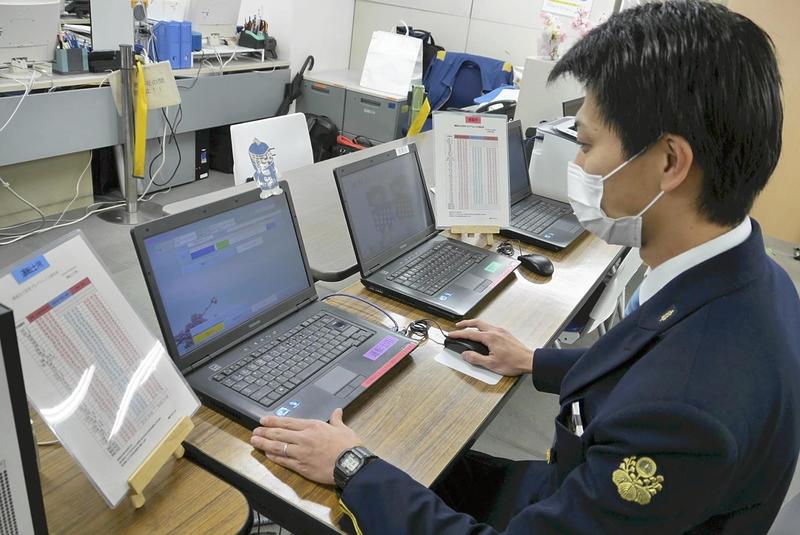
At 8 a.m., Yuta Koike headed to his computer as soon as he arrived at the Central Japan Railway Co. (JR Tokai) office inside Tokyo Station. Koike, 34, is in charge of training drivers on the Tokaido Shinkansen bullet trains, and it is his routine to put data into a "sleep-management program."
He entered the times he went to sleep and woke up, his working hours and his degree of sleepiness into the program and received a summary of his sleep conditions over the past 10 days, which come with an evaluation on a 100-point scale. He then receives such advice as "Don't vary the time you wake up each day by more than two hours," if his sleep habits need to be improved.
"There were times when I didn't get enough sleep because of my irregular work shifts. But, when I wake up at a consistent time and take naps as advised, I become less sleepy in the daytime," he said.
JR Tokai focused on sleep as one of its health management strategies for its employees. The sleep-management program, developed in collaboration with sleep experts, was introduced in 2010.
"Crew members work irregular hours and tend to get sleepy on duty when they work in the same posture for a long time," said Hiroyoshi Kaneko, an assistant stationmaster who does both day and night shifts. "Overseas, it has been reported that sleep deprivation has caused serious accidents. Sleep management is essential to prevent accidents."
Since the company cannot directly intervene in someone's sleep habits, which are a personal matter, it introduced this system to help its employees become aware of their sleep conditions and change their habits if necessary. Currently, JR Tokai recommends the program to about 7,200 employees, including train drivers, conductors and station staff.
Companies are increasingly focusing on sleep. In 2018, Mitsubishi Estate Co. introduced a nap time into its labor regulations. Its in-house experiment showed that a 30-minute nap increased concentration. In 2019, Sompo Holdings Inc. established a nap space within the buildings of its group companies. In 2019, Rohto Pharmaceutical Co. introduced a sleep improvement program on a trial basis to help its employees get better sleep.
Behind this movement is the paucity of sleep among the Japanese people. According to a 2018 survey by the Organization for Economic Cooperation and Development, Japan had the shortest average hours of sleep among the member countries, at seven hours and 22 minutes. According to the National Health and Nutrition Survey conducted by the Health, Labor and Welfare Ministry, the percentage of people who sleep less than six hours on average increased from 29% in 2007 to 38% in 2018.
Studies in the United States have shown that after 10 days of six-hour sleep, a person's concentration and attentiveness are reduced to the same level as those of a person after staying up all night, although they are not aware of this.
Stanford University Prof. Seiji Nishino, a pioneer in sleep research, said: "When sleep deprivation accumulates, it becomes a 'sleep debt' leading to a drop in work efficiency, plus critical accidents and an increase in the risk of life-threatening diseases. Lack of sleep is a social problem."
There are signs of change, though. Tokyo-based sleep consulting firm Brain Sleep conducted a survey in April on changes in work style and sleep patterns among 1,000 employed people in seven prefectures where a state of emergency was first declared due to the outbreak of the new coronavirus. The survey found that 56% of the respondents had changed their working styles, including teleworking and staggered hours, and 28% of them said they were getting more sleep, exceeding the percentage of respondents who said they were getting less at 17%.
Nishino said: "The survey showed some worrisome points, such as that many of them have shifted to a nocturnal lifestyle. Even so, the survey presented a possibility that changes in work style may improve sleep.
"In Japan, where the population is declining, improving the productivity of each worker and maintaining their good health so they can stay active for a long time are major issues. At a time when society is beginning to change in response to the coronavirus, it is important to change the way we treat sleep."
Read more from The Japan News at https://japannews.yomiuri.co.jp/