The employment situation has deteriorated severely for many Japanese-Brazilians in this nation, due to the spread of the novel coronavirus.
Thirty years have passed since the revised Immigration Control and Refugee Recognition Law came into force in 1990, allowing Japanese-Brazilians to settle here. However, many work as non-regular employees, and are treated like an "adjustment valve" for employment during economic crises. Then and now, their position is precarious.
-- Contracts not renewed
"We have no money for rent or food if we can't find new jobs," said a second-generation Japanese-Brazilian woman, 38, in Iwata, Shizuoka Prefecture.
The woman came to Japan last November in search of a stable life. She worked as a temporary staffer at the same motorcycle parts factory as her husband, 45, who had come to Japan earlier. The couple's monthly take-home pay was about 400,000, yen enough to live in an apartment in the city with their 16-year-old son.
However, the spread of the novel coronavirus has upended their lives. Since mid-April, factory jobs have decreased and their monthly income has been cut in half. Their contract, which ran through the end of May, was not renewed.
Employment insurance and special cash payments of 100,000 yen per person are not enough to live on. There are days when they have no main dish for their meals.
"We don't know when the effects of the virus will subside. We're the first to be fired if something happens; it's like we're disposable," the woman said.
The coronavirus disaster forced a third-generation Japanese-Brazilian man, 51, in Chiryu, Aichi Prefecture, to change jobs and lose revenue. He came to Japan in 1993 and worked as a temporary staffer at an electronics parts factory in Ibaraki Prefecture.
About 15 years ago, he moved to a car parts factory in Aichi Prefecture. His monthly income used to be about 300,000, yen but has since dropped to a third of that as he has worked at an agricultural cooperative corporation in Chiryu for the past month.
"I'm not young enough to choose my job. I want a stable job and a stable life," the man said.
-- 4,000 consultations
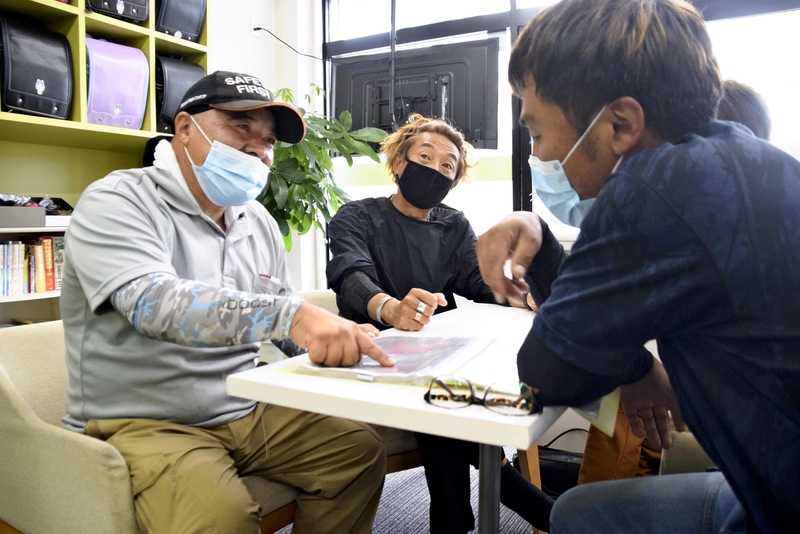
Zenkoku Ippan Tokyo General Union, a labor union of foreign workers, has received about 4,000 labor consultations from foreign nationals including Brazilians since February.
More than 95% of the union's members are non-regular workers, and the most common complaints have been "I can't get on-leave allowances" and "my employment contract was not renewed."
A union official said, "If infections spread again, there could be even more cases of people being fired or not renewing contracts."
The spread of the coronavirus has also affected Japanese-Brazilian children. A Brazilian school named Escora Alegria de Saber in Hamamatsu, Shizuoka Prefecture, has about 170 children enrolled, ranging from babies to high school students. Six families in which the parents lost their jobs or were forced to reduce their work have consulted the school about how to reduce tuition.
Transferring to a Japanese school is unnerving for the children because they don't have enough knowledge of the Japanese language. "At this rate, some students will have to leave school. If the number of students decreases, management of the school will become impossible," a company official said.
Read more from The Japan News at https://japannews.yomiuri.co.jp/