The Japanese government faced many challenges in its crisis management related to the new coronavirus. This article examines the difficulties in securing enough hospital beds for patients.
"Although coronavirus infections have not spread either nationwide or rapidly as things stand now, we don't have time to spare, given the fact that there are communities where the medical care system is threatened."
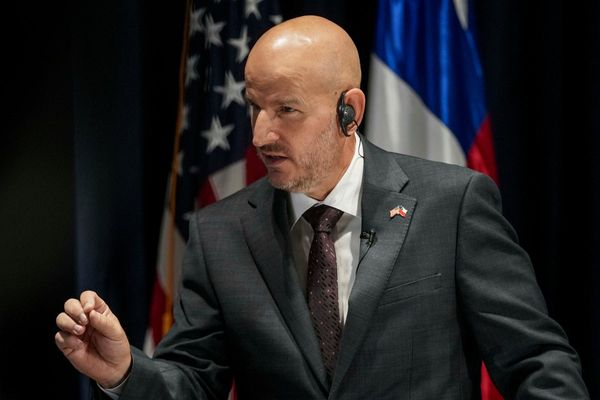
Saying this, Prime Minister Shinzo Abe declared a state of emergency on April 7, based on the revised law on special countermeasures against new strains of influenza and other infectious diseases.
The government had heightened the sense of crisis especially toward the situation in Tokyo.
The number of outpatients in the metropolis was forecast to reach about 45,400 per day at the peak of the outbreak, while the number of inpatients would be about 25,000, about 700 of them seriously ill.
The predictions, based on a model compiled and released by the Health, Labor and Welfare Ministry, came as a shock to government officials. The number of sickbeds capable of accepting coronavirus patients at medical institutions designated for treatment of infectious diseases was reckoned to be about 100. The reality of those estimates translated in a worst case into a collapse of medical services.
Then, as the number of newly infected people began to soar in the capital, the metropolitan government's response was visibly slow. Irritation heightened among Abe's close aides, with one of them saying: "The metropolis has not provided information to the government. We have no idea of what operations it is conducting, either."
Unless patients to be hospitalized were limited to those seriously ill, medical institutions had little hope of getting the outbreak under control. Taking this assessment into consideration, the government incorporated, in its basic policy on countermeasures decided on April 28, a plan to have those showing no symptoms and not seriously ill recuperate at home or lodging facilities.
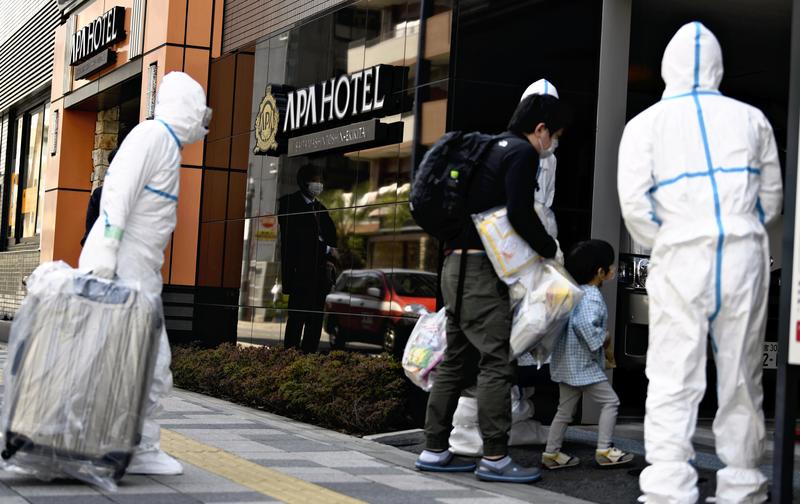
Abe, for his part, acted on his own initiative to secure hotels that could accept those not seriously ill. This is because he thought that any hotel would not voluntarily offer to accept them out of fear of being stigmatized.
Obtaining a phone number via a third-party contact, Abe rang up Toshio Motoya, the president of APA Hotels & Resorts, and persuaded him to pledge "10,000 beds" at the major Japanese hotelier. This gave Abe some breathing room.
The special countermeasures law stipulates that hotels can be expropriated for use as stationing facilities for immigrants in times of new influenza outbreaks overseas.
In preparation for cases of emergency, the health ministry had sounded out the hotel industry in advance on the use of hotels, asking hotel operators "to cooperate in accepting [immigrants], because hotels can be used forcibly [under the law] in times of emergency." But in fact, almost no hotel responded favorably to the request. If hotels were to be used for that purpose, it would require the cooperation of hotel staff to carry out day-to-day operations.
"We can't force this even if the law does grant us compelling power. The hotels agreed to accept those not seriously ill this time, because it was a top-down decision," a senior health ministry official said, reflecting on the situational tightrope the ministry had to walk in order to secure hotel space.
A different issue altogether occurred regarding sickbeds.
During a liaison meeting held in late March at the Prime Minister's Office, a health ministry official in charge reported that there were "3,800 beds" available nationwide to accept those infected with the coronavirus. When hearing this figure, senior government officials who were present could hardly believe it.
According to nationwide estimates compiled by the health ministry, hospitalized patients would total about 222,000 at the peak of infections. The number of sickbeds available was far fewer than this figure.
Not only this, it was found that the ministry obtained replies to its medical facilities questionnaire from less than 30 of the nation's 47 prefectures. Furthermore, in the case of Aichi Prefecture, which reported "zero" due to an entry omission, the prefecture had already announced the number in a news conference. Those in attendance were astounded by the shoddy content of the report. The "3,800 beds" estimate, which the ministry had been scheduled to release, was shelved.
While criticizing the ministry's sloppy data compilation, one government source concerned presumed the internal conditions of municipal governments, as follows: "Many prefectures did not reply because municipal governments have a tendency to not give details [to the central government]. They likely don't want to report a situation in which they are not yet ready to cope with."
Reticence like this by individual municipalities holds back accurate information needed to ensure public safety and makes light of the basics of crisis management.
Read more from The Japan News at https://japannews.yomiuri.co.jp/