WASHINGTON -- The summit between Prime Minister Yoshihide Suga and U.S. President Joe Biden in Washington on Friday was expected to yield a formal statement on the security situation regarding Taiwan, according to Japanese and U.S. government sources.
It would be the first time a joint statement between Japanese and U.S. leaders included the Taiwan issue since a 1969 meeting between Prime Minister Eisaku Sato and U.S. President Richard Nixon.
Concerns are growing in the Biden administration due to the mounting military pressure China is applying on Taiwan. Japan and the United States are eager to demonstrate their willingness to stand together for the sake of peace and stability in the Taiwan Strait.
A senior U.S. official speaking to reporters on Thursday about the significance of the bilateral relationship said, "I think the United States and Japan seek to play a steady, careful role to underscore our mutual commitment in the maintenance of peace and stability, and to take steps to calm tensions and to discourage provocations."
In addition to the Taiwan issue, the joint statement will also include a stipulation that Article 5 of the Japan-U.S. Security Treaty -- which obliges the United States to defend Japan -- applies to the Senkaku Islands in Okinawa Prefecture. The move is aimed at deterring China Coast Guard's ships from intruding into Japanese territorial waters around the islands.
In the economic field, the two countries are likely to reach an agreement on developing supply chains aimed at reducing their dependence on China for rare earth metals and pharmaceuticals.
Suga and Biden will discuss a wide range of issues, including North Korea's nuclear capabilities and missiles, and measures to tackle issues such as climate change and COVID-19.
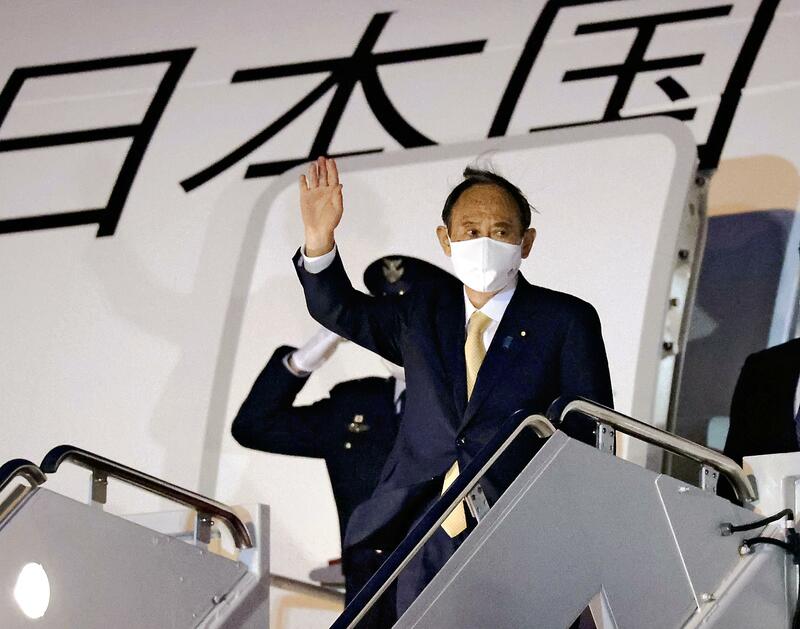
The prime minister arrived at the Joint Base Andrews near Washington on a Japanese government aircraft on Thursday night. The summit was to be held at the White House and a joint press conference was scheduled to be held after the summit.
During the visit, Suga is staying at Blair House, the president's guest house near the White House. Vice President Kamala Harris had been staying at the residence temporarily until early April.
-- Warm welcome amid pandemic
Despite the ongoing pandemic, Suga was likely to receive extremely generous treatment as the first foreign leader to be hosted by Biden since his inauguration.
The U.S. government has been paying close attention to coronavirus measures since Biden's inauguration on Jan. 20, on account of his advanced age of 78. Summit diplomacy has been limited to telephone talks and online meetings, and only a handful of Republicans and Democrats have been invited to the White House.
The United States remains on high alert over the pandemic. Despite such circumstances, Biden chose Suga as the first foreign head of state to meet in person, indicating the president aims to bolster security and economic cooperation with Japan to counter China, which Biden regards as America's "most serious competitor."
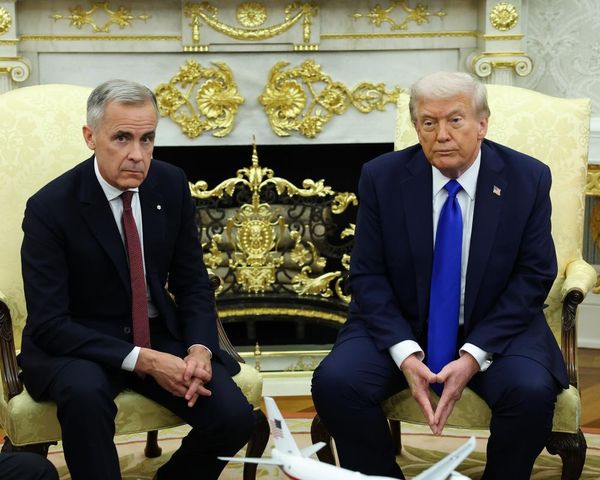
For the first hour of the summit, the two leaders were scheduled to hold a meeting at the Oval Office in a small group. The two leaders will then move to a different location for a larger meeting. A joint press conference was scheduled to be held in the Rose Garden of the White House.
Coronavirus measures hampered arrangements to coordinate Suga's visit to the United States. According to sources, the bilateral meeting was postponed from April 9 to April 16 because Washington had asked Tokyo for more time to prepare for the talks, including seating arrangements at venues and measures to regulate the flow of attendees.
Washington also asked Tokyo to reduce the size of Suga's entourage. The size of the delegation was reduced to about 80 people, 20-30% less than usual. The number of senior government officials at the talks was also minimized.
At the request of the United States, Suga and all members of the delegation received two doses of the coronavirus vaccine ahead of departure. Negative test results from PCR tests were also needed to enter the country.
The reporters accompanying the delegation are also subject to strict restrictions. In principle, they are only allowed to leave their hotels to conduct interviews.
Read more from The Japan News at https://japannews.yomiuri.co.jp/