OSAKA -- People without heirs are increasingly making bequests to organizations committed to the public interest, as a new way of contributing to society.
The recent trend appears to be fueled by the growing number of people living alone, and heightened interest in preparations for the end of one's life. It has drawn the attention of groups struggling to pay their operating costs, and consultation services are opening up across the nation to offer information and advice to people who wish to make such bequests.
"I wanted to decide where to donate the money I worked to save, in a way I'll be happy with," said Sayoko Ito of Tennoji Ward, Osaka.
This spring, Ito, 68, drew up a will that included her decision to donate her property to the Japanese Red Cross Society. Ito divorced when she was in her 30s and has no children. After many years running an eatery that served takoyaki octopus dumplings, she retired at 58 and participated in volunteer activities.
About three years ago, Ito became ill, which prompted her to start preparations for the end of her life. During that process, she found out about making bequests.
She chose the Japanese Red Cross Society because she was rescued by a Red Cross member when her family house was flooded due to a typhoon when she was an elementary school student.
"I hope my money can contribute to helping as many people as possible when natural disasters occur in this country one after another," Ito said with a smile.
By writing a notarized will or using other formats, the testator of a will can leave his or her property to a third party who is not the person's legal heir, such as a spouse or child would be.
According to the Cabinet Office, there were about 5.9 million households in which a person aged 65 or older lived alone in fiscal 2015. The figure is estimated to reach about 7.6 million in 2035.
If there is no one to inherit an estate, it goes into the state coffers. The amount of such estates increases year by year. According to the Supreme Court, about 44 billion yen in assets went to the state in fiscal 2016, about 6.5 billion yen more than the figure in fiscal 2012, when such data was first kept.
Under such circumstances, the option of making bequests in which givers can decide how their property is to be used has come under the spotlight. According to a survey conducted by Doctors without Borders (MSF) Japan in June, half the respondents in their 70s gave affirmative responses to making bequests.
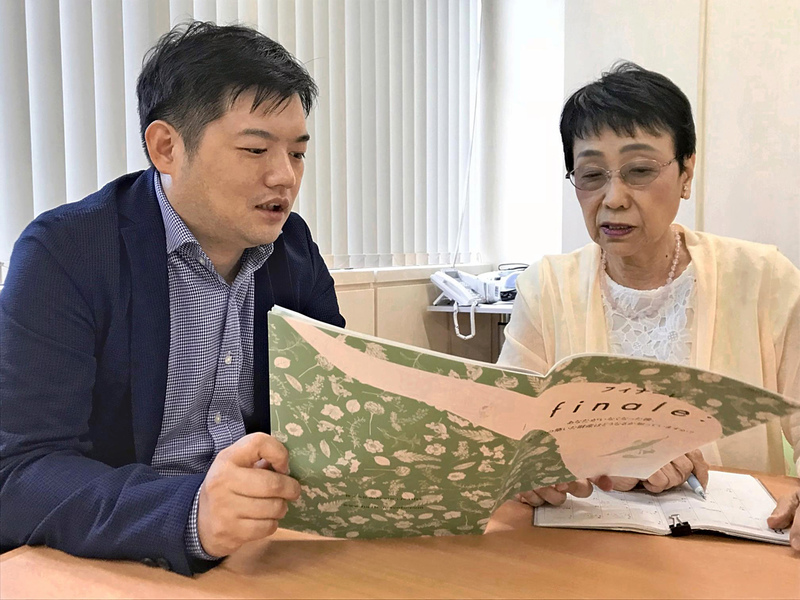
Shinichi Kitamura, a member of the Osaka Bar Association, in 2015 began a project to introduce potential recipients to those who wish to make bequests.
On its website, about 34 entities, including environmental conservation organizations and a research institution, are listed as possible candidates. "We receive consultations not only from wealthy people, but also members of the general public who want to make good use of their money," Kitamura said.
The Japan Legacy Gift Association has 16 places across the nation where people wishing to make bequests can ask questions and seek advice. According to the Tokyo-based organization, at least one of these consultation services saw the number of consultations double in a year.
The number of bequests also has been growing. The Japanese Red Cross Society in the last fiscal year received 62 bequests, 20 more than the figure five years ago. Taking this into consideration, the organization this spring assigned an official who concentrates on handling these issues to improve the system for receiving bequests.
The Kyoto Foundation for Positive Social Change also received bequests worth about 2 million yen in 2014. The Kyoto-based foundation subsidizes specified nonprofit corporations and other groups that support eateries that provide meals to children and those that conduct community development projects.
"With many citizen groups struggling to operate, we feel deeply grateful [for bequests]. We want to use the money in a way that reflects the wishes expressed in people's wills," said Ta-kuma Kani, a senior director of the foundation.
Family's consensus needed
Even if a person wants to make a bequest to a highly public group, there may be problems after the giver's death if they did not discuss the matter thoroughly with their family in advance, or if they left an insufficient will.
The Civil Code guarantees the basic right for a spouse and children to inherit their legally reserved portion. If the spouse or children of the deceased person do not agree with the donation, the recipient group may receive a demand for the money to be reimbursed.
Real estate can be donated. However, many public groups do not accept such bequests because they often find real estate difficult to sell.
In some cases, donors' proffered assets are rejected due to a group's insufficient knowledge about the bequest.
"The number of people wishing to donate after their death will increase further due to the aging of society," said Miyagi University Associate Prof. Yu Ishida, an expert in donation practices.
"It's necessary to improve a system to mediate between donors and groups, in order to make use of donors' property in a community and in society. At the same time, the groups must disclose in detail how they use those estates."
Read more from The Japan News at https://japannews.yomiuri.co.jp/