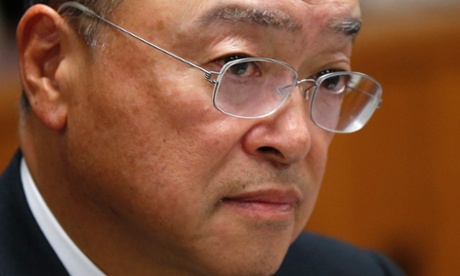
Japan’s government is reeling from its third scandal in a week after the trade minister, who oversees nuclear energy, faced questions over his shares in the company that runs the wrecked Fukushima Daiichi nuclear power plant.
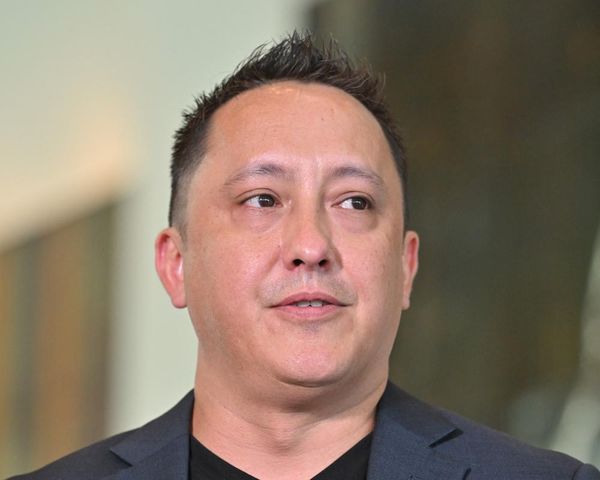
Yoichi Miyazawa had already faced embarrassment on Thursday when it was revealed that members of his staff had claimed expenses for a visit to a bondage bar. On Friday, Miyazawa denied there was any conflict of interest over his shares in Tokyo Electric Power (Tepco), saying he had decided to place them in a trust rather than sell them.
Miyazawa was appointed only days ago after his predecessor, Yuko Obuchi, resigned over a political funding scandal involving her support groups. Hours after Obuchi quit, the justice minister, Midori Matsushima, resigned amid claims that she had violated election laws by distributing paper fans bearing her image to constituents.
The double resignation, combined with the furore over Miyazawa’s shares, have dealt a significant blow to the prime minister, Shinzo Abe, as he nears a decision on an unpopular tax rise and attempts to win public support for the restart of a small number of nuclear reactors.
Miyazawa attempted to brush off criticism of his ownership of 600 Tepco shares – worth more than $1,800 – which he reportedly bought before the March 2011 triple meltdown at Fukushima Daiichi. Japan’s remaining nuclear reactors were switched off after the disaster. “Keeping [the shares] means I’m supporting Tepco as the minister in charge,” Miyazawa told reporters.
Senior colleagues closed ranks around the embattled minister. “I don’t think there is any problem at all,” the chief cabinet secretary, Yoshihide Suga, said. “If someone is sworn in as a minister, the rules say he or she should refrain from trading shares during their term and entrust those shares to a trust bank … minister Miyazawa has already started on that process,” he added.
Miyazawa said he had spoken to the staff who had claimed ¥18,230 in expenses for a 2010 visit to a Hiroshima sex bar, where male customers pay to whip tied female employees. Miyazawa stressed that he had not visited the bar. “I have scolded my people and ordered them to pay back the cost” of the visit, he said.
Abe had hoped that by acting quickly over the alleged spending irregularities involving Obuchi and Matsushima he could quickly regain the political momentum that saw his first cabinet last almost two years without a reshuffle or resignation.
Instead, he is confronting uncomfortable reminders of his first term as prime minister, from late 2006, which ended after just a year. Four of his ministers resigned, and one killed himself.
Atsuo Ito, a political analyst, said even if the share controversy did not force Miyazawa out, it was a distraction. “It takes energy away from the administration’s difficult policies, such as raising the sales tax and restarting nuclear reactors,” he told Reuters. “The ruling party wants to avoid further resignations. But this could be a repeat of the first Abe administration that was heavily criticised by the public when he defended his ministers for a long time, even after scandals.”