The Fisheries Agency has begun coordination to propose an increase in catch quotas for Pacific bluefin tuna at an international conference to be held as early as October.
A recovery trend has been seen in the stocks of parent bluefin tuna, a favorable factor for Japan's move. But the spread of the novel coronavirus is expected to limit opportunities for relevant talks significantly, making coordination among countries and regions more challenging than usual.
In 2015, the Western and Central Pacific Fisheries Commission (WCPFC), an international body comprising 26 countries and regions including Japan and the United States, introduced catch regulations for the first time. It set an interim target to restore stocks of adult bluefin tuna to about 40,000 tons by 2024.
According to the latest survey by an international organization that conducts research on fishery resources, stocks were estimated at 28,000 tons in 2018. The figure remains low compared with its peak of 156,000 tons in 1961, but has steadily recovered from 11,000 tons in 2010. It can be said that the regulations have produced a certain effect.
In light of this, Japan plans to propose a quota increase at a WCPFC subcommittee, which consists of 10 countries and regions, this year. Currently, annual catch quotas for Japan are set at 4,007 tons for small Pacific bluefin tuna weighing less than 30 kilograms and 4,882 tons for larger tuna weighing 30 kilograms or more. Even though the quotas are sought to be raised by 10%, it is projected that the interim target can be achieved fully, meeting the criteria for the WCPFC to consider increasing the quotas.
Japan proposed such a quota increase at the WCPFC subcommittee's meeting in September 2019, but failed to reach a consensus necessary for the change due to opposition from the United States and other countries that believed the increase was too soon. As a temporary measure for 2020 alone, Japan reached a deal to receive 300 tons of large bluefin tuna from Taiwan's quota.
WCPFC meetings usually run into rough waters because member countries and regions have conflicting interests. The coronavirus pandemic is likely to cast a shadow on this year's meeting. This year's subcommittee meeting was initially scheduled to be held in Japan in September, but has been postponed. According to the agency, the meeting is expected to be held online as early as early October.
When coordination becomes difficult at the WCPFC, negotiations and behind-the-scenes arrangements are often made between meetings and on other occasions. At last year's meeting in which Japan acquired the catch quota of 300 tons from Taiwan, such behind-the-scenes efforts are believed to have been the key.
However, such maneuvering is seen to be difficult with an online-only meeting. "If we meet only over the screen at a plenary session, we can't convey our real intentions and official stance tactfully. Negotiations will be impossible," a Fisheries Agency official said.
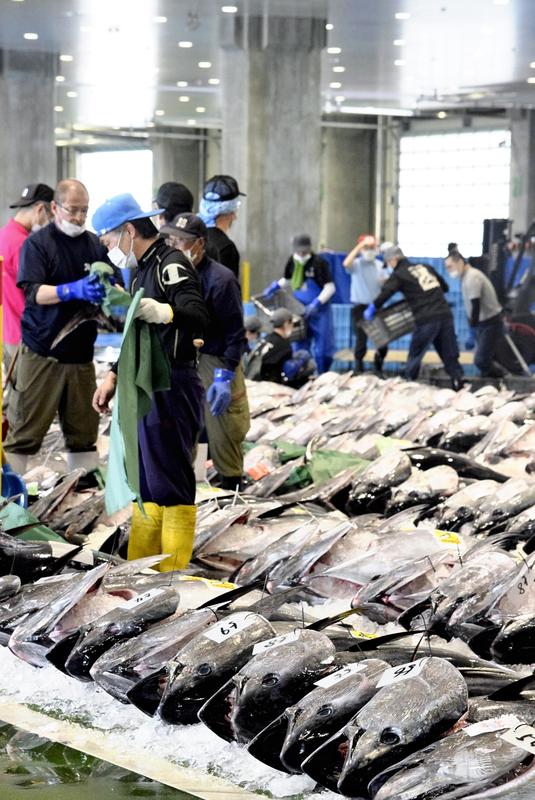
About 80% of bluefin tuna caught around the world are believed to be consumed in Japan, where the fish is often used for high-end sushi. However, as the number of foreign tourists to Japan, mainly from China, is certain to drop drastically this year amid the pandemic, global consumption of the fish likely will be affected. Japanese fishing boats also have been forced to scale down their operations due to difficulty in paying crew members. The impact of the coronavirus outbreak is spreading in various ways.
Read more from The Japan News at https://japannews.yomiuri.co.jp/