The National Tax Agency will revamp its tax information management system for the first time since fiscal 2001, aiming to launch a revised system in fiscal 2026, sources close to the agency has said.
There will be a significant review of the system's design, which is based on the assumption that tax returns are filed on paper. The idea is to switch to a digitalized system to improve efficiency and convenience for taxpayers.
Design and development work for the new system are scheduled to begin this summer, the sources said.
--Reduce burden on staff
The main goal of the upgrade is to reduce staffers' workload through digitization and compensate for a lack of manpower.
Development of the current system began in 1990, and it was implemented in 2001. To digitize tax-related data, agency staff members are currently required to load each document into a special device. It is also necessary to check with a human eye whether all the characters and numbers on the digitalized data are correct.
Data in the current system also cannot be viewed on smartphones or personal computers for security reasons. During on-site tax inspections, staff members have to print out the data and bring it with them to the place they will be visiting.
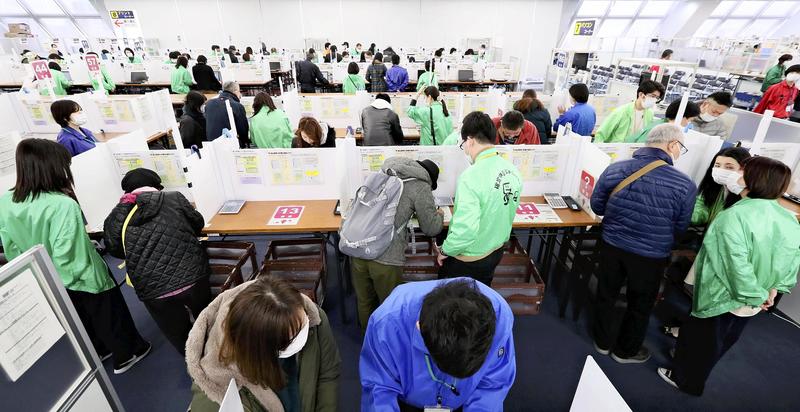
The number of tax returns filed by individuals has been rising, due to an increase in people with second jobs and the spread of the tax-deductible donation program known as furusato nozei. Compared with 30 years ago, filings for income tax returns have increased by about 30%.
Revision of the Companies Law and other changes have made it easier to start a business. As a result, the number of corporations has increased by more than 30%, and the number of filings for corporate taxes is also on the rise.
In contrast, the agency had a peak staffing capacity of 57,000 in fiscal 1997 but this had been reduced by 2% by fiscal 2020, increasing the workload of frontline staff members.
Implementation of the new system is expected to greatly reduce the amount of simple work, allowing the agency to devote more personnel to priority issues such as the detection of tax evasion.
--AI support envisioned
Under the new system, a special site dubbed Mynaportal for the holders of My Number identification cards will be used by taxpayers who want to file their tax returns online. The main focus will be to directly import the input data into the system -- information needed for tax returns and year-end tax adjustments will become available in a consolidated manner.
There is currently an online tax return filing and tax payment system known as "e-Tax," which is compatible with personal computers, smartphones and tablets. According to the agency, the utilization rate of e-Tax for corporate tax procedures is about 80%, compared to the 50% level for income tax. Elderly people who are not familiar with PCs and smartphones are believed to be reluctant to use e-Tax.
Under the new system, the agency is considering using huge amounts of tax-related data as big data to establish a function in which artificial intelligence automatically responds to questions from taxpayers. AI may make the tedious process of inputting data easier.
--Encourage online filing
The online filing of data must be promoted, in order to take advantage of the new system.
Due to the spread of the novel coronavirus, the agency extended the deadline for filing tax returns for this year by one month. Although the measure was designed to reduce the risk of infection, it also highlighted the lack of progress in online filing.
From the business year starting April 1, 2020, and later, the agency is requiring companies with capital of more than 100 million yen to file their income and consumption tax returns online. There must also be promotion of the benefits of online filing, in order to widen its use.
Read more from The Japan News at https://japannews.yomiuri.co.jp/