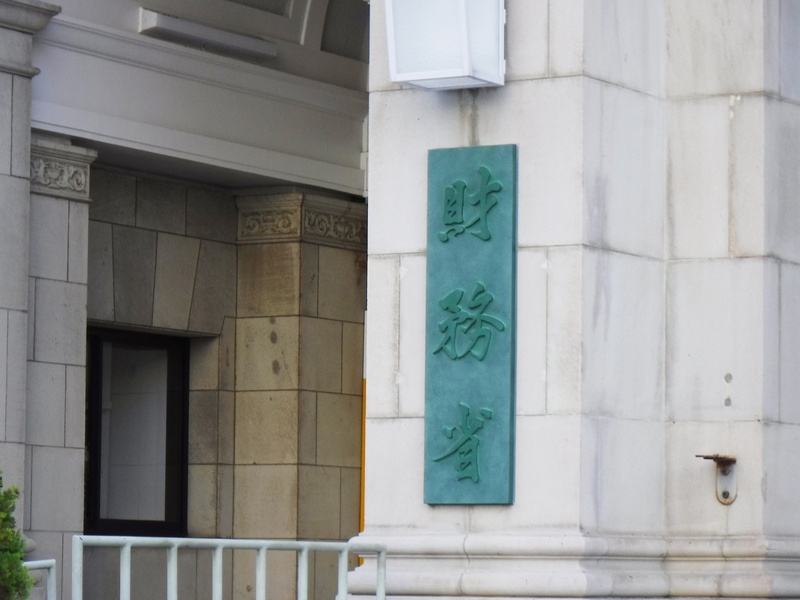
A record 30 trillion yen in the government's fiscal 2020 budget is expected to be carried over to the current fiscal year.
The government compiled three huge supplementary budgets to mitigate negative effects of the coronavirus pandemic, but one-fifth of the total will be carried over as the funds went unused.
Carryover is usually less than 5 trillion yen, and the latest figure is far greater than the previous record of 7.6 trillion yen in fiscal 2012 compiled following the 2011 Great East Japan Earthquake.
With the three supplementary budgets, total general account expenditures in fiscal 2020 ballooned to 175.7 trillion yen, 70% more than the initial budget of 102.7 trillion yen compiled prior to the coronavirus outbreak.
The national budget should in principle be used by the end of the fiscal year, and the Public Finance Law allows carryover to the next fiscal year only for unavoidable reasons, such as natural disasters.
Eyeing the House of Representatives election that must be held by autumn, the ruling coalition is likely to call for a large-scale economic stimulus package that uses the funds.
"The coronavirus is a series of unpredictable events," said a senior official at the Finance Ministry. "A sufficient budget was needed to reassure the public."
The largest source of the funds comes from about 6.4 trillion yen in economic assistance targeting public and private financial institutions that provide interest-free and unsecured loans.
Loans from government-affiliated financial institutions to companies suffering amid the pandemic have not reached expected levels.
In addition, about 5 trillion yen in special subsidies to local governments will be carried forward. The funds were earmarked to assist restaurants that have shortened their business hours as requested by the government, but prefectural governments were too busy to distribute the relief money in time.
Carryover occurred in other subsidies as well. An emergency support fund for medical institutions to secure beds for COVID-19 patients carried over 1.5 trillion yen. The Go To Travel tourism promotion campaign, which was halted because of the pandemic, saw 1.3 trillion yen moved forward.
While many government officials consider such a large amount of carryover as temporary, there are concerns that assessment and screening for budget monies will become lax if the move becomes a yearly trend.
Repeated supplementary budgets have already worsened the government's fiscal condition.
The central and local governments' cumulative long-term debts are expected to reach 1.209 quadrillion yen at the end of fiscal 2021, the worst among major economies.
Many in the ruling coalition are anticipating a 30 trillion yen economic stimulus package. However, the Finance Ministry is increasingly wary of issuing additional bonds.
"The government should make effective use of carryover funds and curb the supplementary budget as much as possible so as not to increase expenditures," said Keio University Prof. Takero Doi.
Read more from The Japan News at https://japannews.yomiuri.co.jp/