The Japanese government will begin experimental testing toward the creation of "super cities" that utilize artificial intelligence and big data by the end of this year.
Living in the new normal in the time of the novel coronavirus, there is a growing public interest in using cutting-edge technology for residential services. The government plans to fully implement the super cities plan starting in 2022.
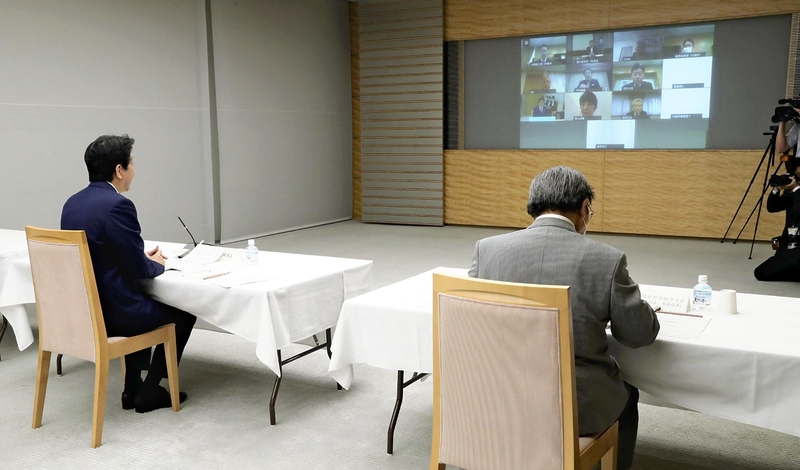
"In a bid to create a new normal, we need bold, progressive reform to turn a crisis into an opportunity," Prime Minister Shinzo Abe said at a meeting of the Council on Special Strategic Zones held on Wednesday. "A super city is representative of what is needed for that reform."
The bill to revise the National Strategic Special Zones Law was passed at the Diet in May toward the plan to make super cities a reality.
Cities designated as national strategic zones will be able to ease regulations across multiple sectors at once, including automated cars, automated drone deliveries, cashless payments and online medical services.
In target areas, the information collected from individuals and businesses will be aggregated onto a data linkage platform so that the target areas can use such data to implement these cutting-edge technologies.
By making daily life and businesses more convenient for residents, the project could lead to solving such issues as the declining birthrate, aging population and labor shortage.
The government plans to solicit applications from areas that are willing to conduct the experiment by September and will select five locations by the end of the year.
By the end of May, 55 organizations had submitted ideas to the government, with Osaka Prefecture and Osaka City, for example, putting forward a plan to use drones and other equipment for visitors at the Expo 2025 Osaka, Kansai.
However, at the Diet deliberations on the amendment to the law, concerns were raised by opposition parties that criticized the handling of personal information to be stored in data-sharing infrastructure and used for various services.
"We shouldn't make people give up their privacy in exchange for comfortable life," said Yuko Mori, a member of the Democratic Party for the People.
The government said the person's consent will be required before personal information can be shared with companies. Consequently, 15 supplementary resolutions were adopted in the vote, including thorough protection of personal information.
The government is to formulate decrees and ordinances on data protection and other matters. Local governments and other concerned parties of designated areas will also meet to discuss protecting the personal information of its residents.
Read more from The Japan News at https://japannews.yomiuri.co.jp/