This is the fifth and final installment in this series.
Will Prime Minister Shinzo Abe meet with South Korean President Moon Jae-in in line with the Group of 20 summit to be held in Osaka in June? This is one of the focal points in Japan-South Korea relations, which are said to be at their worst low level ever.
"We have a limited amount of time," said Kenji Kanasugi, director general of the Asian and Oceanian Affairs Bureau at the Foreign Ministry on April 23. "We haven't yet prioritized the heads of state with whom Abe will meet."
Kanasugi was speaking in Tokyo to Kim Yong-kil, director general for Northeast Asian affairs of the South Korean Foreign Ministry, indicating the possibility that a Japan-South Korea bilateral meeting might not be held.
Leaders from nearly 30 countries and international organizations will attend the G20 summit. While the leader of the host country is supposed to individually meet with as many leaders as possible, officials at the Prime Minister's Office seem to be giving the cold shoulder to South Korea.
"Holding a meeting with South Korea will not make any sense if results cannot be expected," one official said.
A South Korean diplomatic source objected, saying it was strange that the host country is arbitrarily selecting with whom its leader will meet.
The conflict continues behind the scenes.
The direct reason for the deterioration of bilateral ties is the Oct. 30, 2018, South Korean Supreme Court ruling that upheld a lower court decision to order a Japanese company to compensate South Koreans who say they were forced to work for the company. Since Tokyo takes the position that the issue of wartime labor has been resolved under the 1965 Agreement on the Settlement of Problems Concerning Property and Claims and on Economic Cooperation between Japan and the Republic of Korea, the South Korean Supreme Court ruling could break the intergovernmental promise. Thus, Tokyo has urged Seoul to take appropriate measures in response to the ruling, which violates international law.
However, the Moon administration has not taken any measures to address the situation. In January this year, South Korea notified Japan of its intention to dissolve a Japan-funded foundation to support former so-called comfort women. This move effectively rejects the core for implementing the 2015 agreement concluded between the Japanese government and the government of then President Park Geun-hye to "finally and irreversibly" settle the comfort women issue.
While past South Korean administrations have struggled with how to deal with Japan, no administration has taken as extreme measures as the Moon administration has.
Some conservative polemicists in South Korea point out how eccentric the Moon administration is, saying it could be described as going beyond a progressive leftist government and into the realm of a revolutionary government, and that it panders to public opinion, thoroughly rejects the previous administration and even shows a willingness to disregard international law.
Indeed, not only were Park and officials at relevant administrative bodies including her aides arrested, but a former chief justice of South Korea's Supreme Court was also arrested on charges of delaying the final ruling on the wartime labor case out of consideration for the Japan-South Korea relationship. The South Korean public, however, generally accepts these steps taken by the Moon administration.
Since it is impossible to share common values with South Korea, the Abe administration believes that neither a hard-line stance nor a reconciliatory approach would have any meaning. So it has adopted a detached approach toward the Moon administration. In the 2019 Diplomatic Bluebook, the wording "future-oriented" that had been used in previous editions was removed from the section on Japan-South Korean relations.
In preparation for the possibility that the wartime labor issue will become more complicated in the future, the government is listing all possible countermeasures, including imposing economic sanctions on South Korea.
A matter of concern is that the deteriorating Japan-South Korea relations will affect the issue of North Korea.
Whether a third bilateral meeting between U.S. President Donald Trump and North Korean leader Kim Jong Un will be realized holds the key to stopping Pyongyang's nuclear development. In addition, it is also necessary for Japan and South Korea, both allies of the United States, to cooperate with each other so that North Korea will feel pressure from the three countries. If Japan and South Korea are divided and this becomes an obstacle to resolving the issue, this would be a diplomatic defeat for both countries.
Amid the sluggish intergovernmental dialogue, there are robust civil connections between the two countries, such as an increasing number of tourists. While Japanese lawmakers are said to have weaker connections than before with South Korea, they are moving toward restoring the bilateral relations. For example, a senior member of the Japan-South Korea Parliamentarians' Union will visit South Korea shortly. Will Japan be able to take the opportunity of the G20 summit to improve the relationship with South Korea by linking those various connections? There is little time left.
Constructing new relationship with Seoul
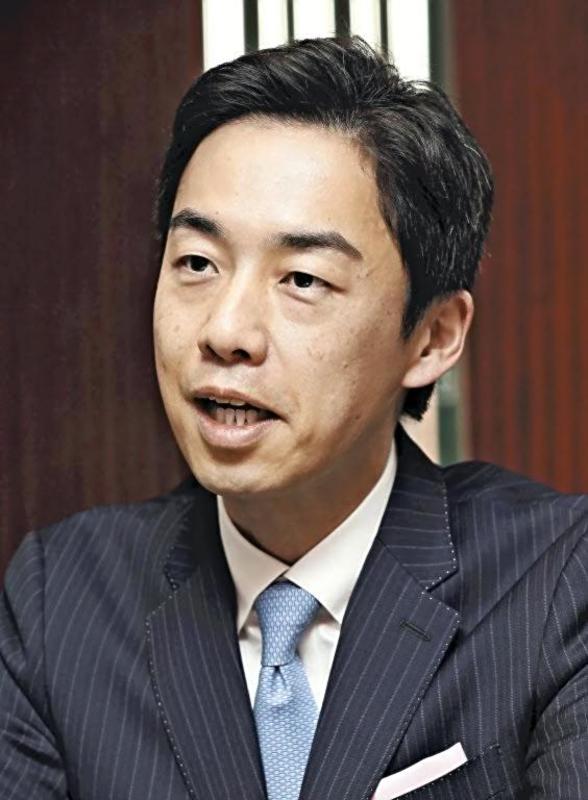
By Junya Nishino
Keio University Professor
International relations in East Asia surrounding the Japan-South Korea relationship have changed significantly, with China's rise and North Korea's increased nuclear and missile capacities. Since the democratization of South Korea, Japan-South Korea relations have had multiple aspects, including civil society and business.
The bilateral relationship is in transition as it responds to these changes, and the two countries should position the relationship in the context of wider international relations and rebuild it, rather than aiming to restore the conventional relationship.
When building a new relationship, Japan should keep in mind the fact that South Korea is a country separate from North Korea. In addition, South Korea's domestic politics are handled through fierce confrontation between conservatives and progressives. It is important for Japan to deepen understanding of such South Korean society.
Following the South Korean Supreme Court ruling on the requisitioned worker case involving South Korean workers, there seems to be no end to the deterioration of the relationship between Japan and South Korea. But the South Korean side is not as serious about the situation as Japan is. The South Korean government should show a responsible attitude and take actions in accordance with its conventional position to deal with those issues on its own.
Read more from The Japan News at https://japannews.yomiuri.co.jp/