Large-scale protests swept across Japan on Sunday as thousands opposed prime minister Sanae Takaichi’s push to revise the country’s pacifist constitution.
An estimated 50,000 people gathered at Tokyo Rinkai Disaster Prevention Park, organisers said, to mark Constitution Memorial Day.
Protesters rallied in support of the country’s existing constitution – unchanged since 3 May 1947 – and to oppose changes to its Article 9, a clause that renounces war and imposes limits on the country’s military.
Successive Japanese governments have argued that the constitution, drawn up in the aftermath of a crushing defeat for Japan in the Second World War, is no longer fit to meet modern-day security challenges.
Ms Takaichi and the ruling Liberal Democratic Party (LDP) have called for “advanced discussions” to amend parts of the constitution. The revisions would seek to formally recognise the Japan Self-Defence Forces and adapt to regional security threats, including tensions with China and North Korea, among other changes that are yet to be detailed.
Ms Takaichi has said the constitution should be periodically updated to reflect the needs of the times so its value is not diminished.
Japan is SUPER AGAINST their government's pro-war policy
— Daily Marcher (@DailyMarcher) May 4, 2026
This protest has AT LEAST 50000 peoplepic.twitter.com/awQFHjbr1k
Members of the conservative wing of the party have demanded the removal of paragraph 2 of article 9, which not only forbids Japan from going to war but also restricts the possession of military forces for that purpose, and have called for the creation of a modern national defence force.
“Politicians should hold discussions in order to make decisions,” Ms Takaichi told lawmakers in a video message, adding that debate must be aimed at reaching outcomes rather than continuing indefinitely.
Any constitutional amendment in Japan must be approved by a two-thirds majority in both houses of parliament, known as the Diet, followed by a majority vote in a national referendum. The ruling LDP already holds a two-thirds majority in the lower house and, along with other pro-reform parties, is close to reaching the same threshold in the upper house.
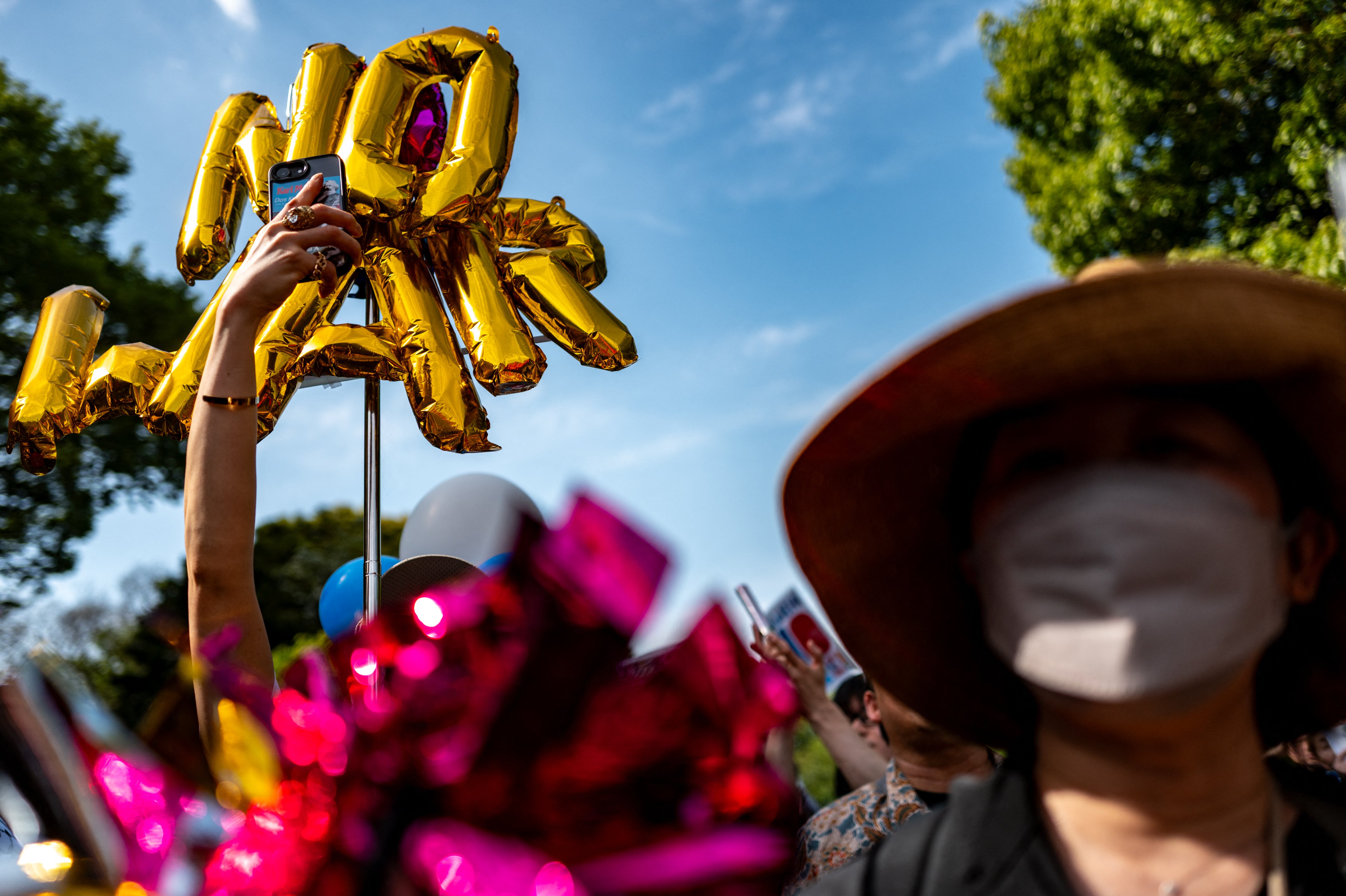
The rally in Tokyo saw demonstrators carrying banners reading “STOP Constitutional Revision and Military Expansion,” and chanting “No to War” and “Protect the Peace Constitution.”
Similar events took place nationwide, drawing a diverse crowd including long-time activists, families, and a notable number of younger participants.
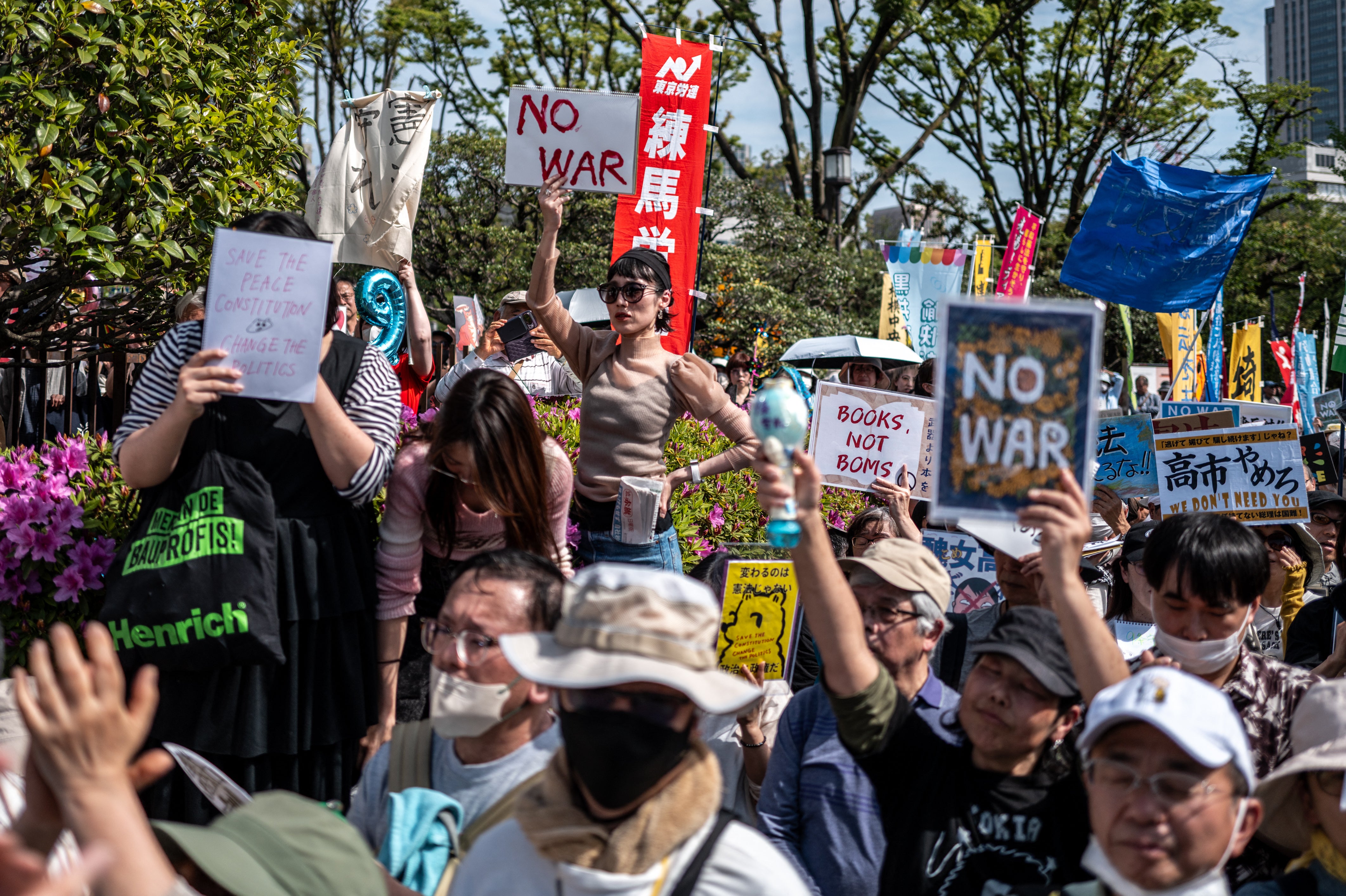
“I want to cherish the constitution like my own child and pass it on to the next generation,” Haruka Watanabe, an 87-year-old who lived through the war, told the Kyodo news agency.
At another rally in Tokyo, non-fiction writer Shinobu Yoshioka criticised related moves by the conservative government, including proposals to criminalise desecration of the national flag.
“Centralised methods are becoming increasingly entrenched. Where this leads is a country that wages war,” he said.
It marked one of the largest protest rallies in Japan after previous rallies attracted an increasing number of protesters. An estimated 36,000 people protested similar issues in March.
According to a poll by Kyodo News, 73 per cent of respondents think any constitutional amendment should only move forward if there is wide agreement across different political parties – not just pushed through by the ruling party alone.
A poll by the conservative Yomiuri Shimbun newspaper found that nearly 57 per cent of respondents were in favour of revisions, while the liberal Asahi Shimbun said only 47 per cent supported reforms.
Ms Takaichi, who took office in October, has pushed for policies and measures to accelerate Japan's military buildup as a deterrence against regional threats. She argues that Japan needs to prioritise its defence strategy to further strengthen its military capability to better protect itself and survive prolonged, new forms of warfare.
Earlier, Ms Takaichi's cabinet scrapped restrictions on Japanese lethal weapons exports, a move welcomed by the United States and other defence partners as a step to deepen their military and industry cooperation.
However, it was criticised by pacifists at home and China for deviating from Japan’s postwar principle of limiting its military and technological advancements to self-defence.
Japanese zoo worker arrested for burning wife’s body in incinerator
Japan faces surge in bear sightings as animals emerge from hibernation
Earthquake shakes northern Japan a week after ‘mega-quake’ warning
Thousands evacuate in Japan as forest fires close in on homes
Man attacks group of teenagers with hammer before giving police the slip in Tokyo
Major Japanese airport deploys humanoid robots as baggage handlers