This series discusses the present and future of washoku traditional Japanese cuisine. This installment explores tsukemono pickles, which play a key supporting role in washoku. Faced with challenges of changing tastes linked to the Westernization of the nation's diet and consumer demand for less salty foods, tsukemono manufacturers have had to keep up with the times.
Tokai Pickling Co. in Toyohashi, Aichi Prefecture, is known for its signature product Kyuchan made from cucumbers pickled in a soy sauce-based mixture. Since its debut in 1962, the seasoning for the popular tsukemono pickles has been the responsibility of only one employee at a time.
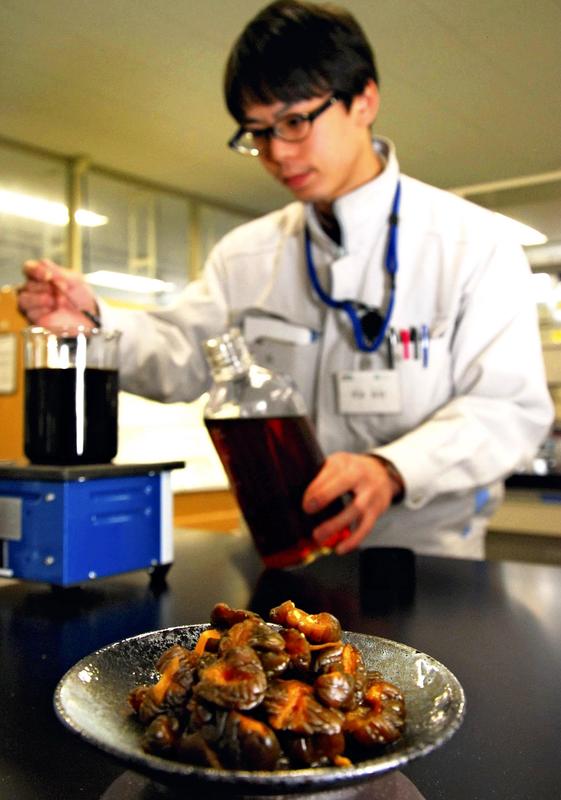
One day in late February, 28-year-old Keisuke Araya, the employee currently tasked with seasoning, was making samples for a new pickling sauce at the maker's Tsukemono Functional Research Laboratory in a suburb of the city.
Tokai Pickling has been improving the flavor of its signature product to adapt to today's market.
"Tsukemono has a negative image as a food with a high salt content," said Mineji Iwata, 61, one of Araya's predecessors. "Working out how to maintain Kyuchan's delicious flavor while reducing its salt content has been the key to the recipe's evolution."
Tokai Pickling worked with a soy sauce manufacturer to develop lower-sodium soy sauce. However, they feared making Kyuchan's flavor become bland would drive loyal customers away. As a solution, the manufacturer added a seafood extract to enhance the umami flavor of soy sauce, while also improving disinfection technologies at its factories. Thanks to these efforts, Kyuchan's sodium content has been reduced from 11.9 grams to 4.3 grams per 100 grams.
"I hope to keep improving our product so that it satisfies contemporary tastes while maintaining our traditions," Araya said.
Around the 1970s, people began to turn to foods with lower salt content because excessive sodium intake was linked to lifestyle-related diseases. Tsukemono was one food that changed as a result.
"Tsukemono used to be very salty because it is a preserved food," said Kenshiro Fujikawa, senior director of the All Japan Tsukemono Federation of Cooperatives. "However, we managed to reduce the sodium content thanks to improved wrapping technology and equipment to keep it chilled while in transit, among other efforts."
According to the government's Standard Tables of Food Composition in Japan, sodium content in takuan pickled daikon was reduced from 7.1 grams per 100 grams in 1982 to 2.5-4.3 grams in 2015.
Nonetheless, tsukemono production has declined along with decreasing rice consumption. Nationally, tsukemono production peaked at 1.2 million tons in 1991 and had dropped to 710,000 tons by 2018.
Manufacturers, however, are taking action, and the industry is making efforts to promote tsukemono to younger consumers.
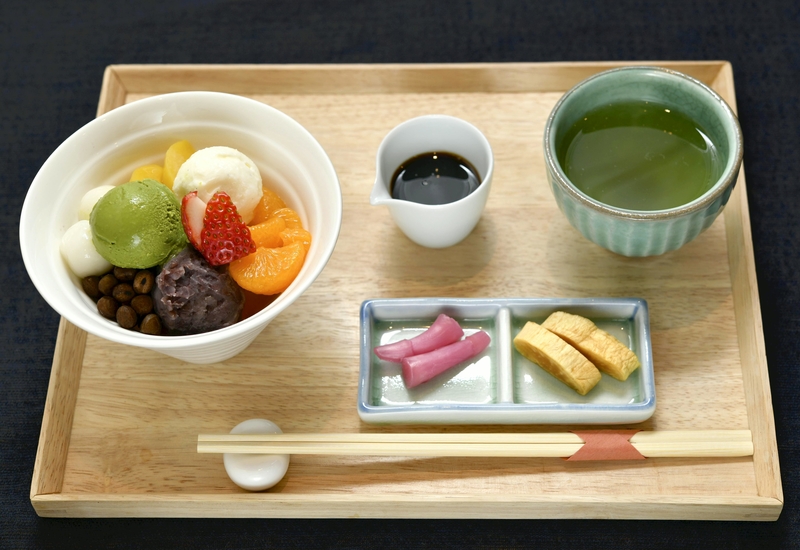
For example, Yamau Inc., a Tokyo-based producer established in 1946, opened an outlet in Tokyo's upscale Ginza district in January 2017. Selling about 50 tsukemono products from across Japan, the shop also houses a cafe where sweets are served with daily tsukemono specials. Creamy ice cream can be enjoyed there with the flavors of pickled peach and myoga ginger bud, among others.
"We hope that our customers will find how delicious tsukemono is by trying unusual pairings," said shop manager Takeshi Ishijima.
The federation, for its part, has been holding an annual tsukemono "grand prix" since 2016. "Many companies are pursuing the potential of tsukemono by using unconventional ingredients," Fujikawa said.
Essential partner for rice
Tsukemono has been enhancing the flavors of the Japanese diet for centuries.
"Pickling enabled people to preserve food for long periods of time when there were no refrigerators," said cooking expert Seiko Ogawa, who researched the history of tsukemono for a doctoral degree. "They were also essential to help people enjoy eating rice, a central component of washoku."
Preserving vegetables and other ingredients in salt dates back to ancient times. The first historical records can be found on wooden strips from the early years of the Nara period (710-784).
In the Meiji era (1868-1912), people began eating in large groups in places such as military facilities and factories. Meals served there often included large portions of rice with tsukemono.
The post-World War II years saw a wider variety of dishes become commonplace in Japan, eventually leading to the decrease in traditional tsukemono consumption. Meanwhile, kimchi has grown in popularity as people have become more interested in South Korean culture, thanks in part to the 2002 World Cup soccer tournament cohosted with Japan.
According to the National Health and Nutrition Survey, average salt intake per day stood at 10.8 grams for men and 9.1 grams for women in 2017, exceeding the government's targets of under 8 grams for men and under 7 grams for women.
"It's best to decide how often and how much tsukemono to consume by taking into account the other dishes you eat and your total salt intake," Ogawa said. "Tsukemono has umami flavors that are brought about through the fermentation process. You can also enjoy tsukemono by, for example, chopping them and stir-frying with rice."
To find out more about Japan's attractions, visit http://the-japan-news.com/news/d&d
Read more from The Japan News at https://japannews.yomiuri.co.jp/