With the number of train passengers down as a result of many people refraining from traveling amid the pandemic, railway companies are stepping up their efforts to develop tourist spots within about one hour of central Tokyo.
Hotels, ryokan traditional inns and other facilities are being built in areas along railway lines so that tourists can enjoy overnight trips even in locations near their homes. The railway companies plan to make these areas holiday resorts in the future, with a hope to turn them into a main source of revenue.
-- Tours of Mt. Takao
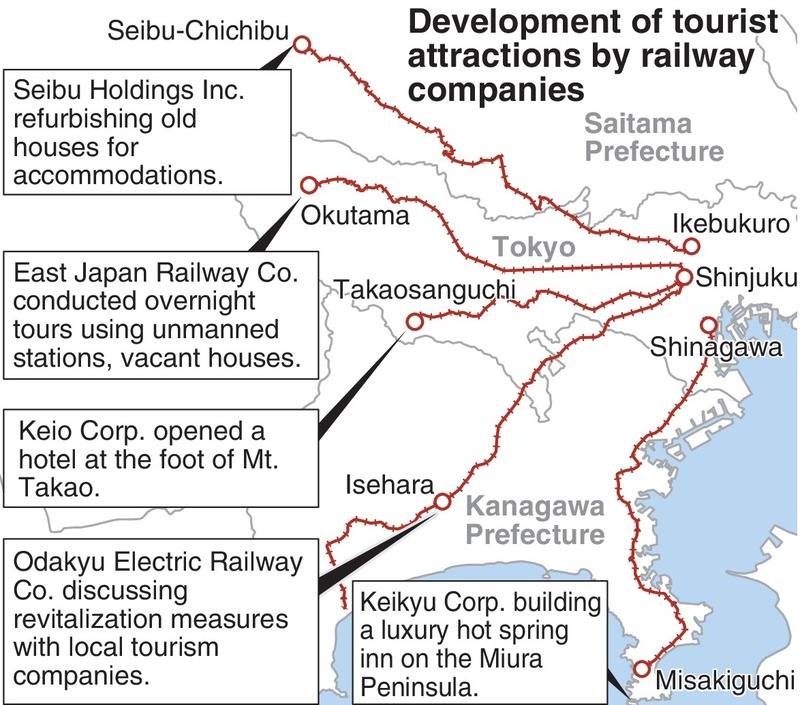
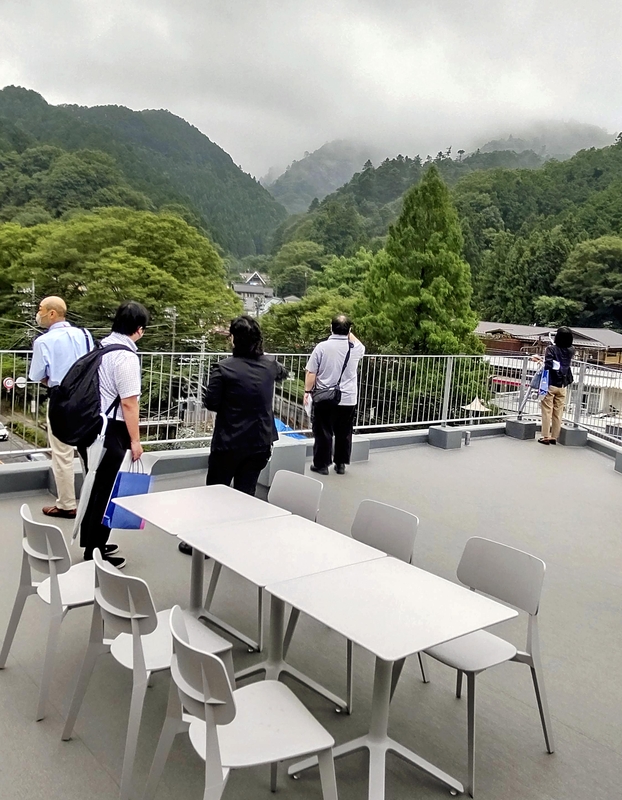
Keio Corp. announced Friday that it would hold a first-ever series of events, including classes on how to use a cookfire, at the Takaone hotel at the foot of Mt. Takao in Tokyo, at the end of October. Targeting families, the company aims to emphasize the attractions of the mountain, which has just entered the autumn season.
Keio bought a hotel in 2018 before the pandemic began and renovated it as Takaone, which opened in July. The hotel has an inner garden where guests can cook over a fire even at night and offers sunrise tours to Mt. Takao, emphasizing hands-on experiences that only guests at the hotel can enjoy.
"As the number of railway passengers has been dropping, we thought it was urgent to devise activities other than mountain climbing," an official at the company said.
Mt. Takao is about 50 minutes by train from Shinjuku Station in Tokyo, and many of its visitors are day-trippers. Keio opened the Takaone hotel in a bid to turn some of those tourists into overnight guests. The pandemic has led people to avoid long-distance travel, which has ultimately proved a boon -- in July to September, the hotel's occupancy rate was relatively high at around 70%.
According to Keio, many of the guests were families from various parts of Tokyo.
-- Luxury ryokan
Keikyu Corp. has included a plan to make the entire Miura Peninsula in Kanagawa Prefecture a holiday resort in its medium-term management plan. Since the peninsula is close to central Tokyo, many of those who visit are day-trippers, as at Mt. Takao.
Through the long-term development, the company aims to turn the peninsula into a tourist spot visited by many overnight guests, similar to Atami in Shizuka Prefecture and Karuizawa in Nagano Prefecture.
In May this year, the company unveiled a plan to open a luxury hot spring ryokan inn in fiscal 2024, which will serve as the center of the planned resort area.
Keikyu and Hulic Co., a major real estate company, will jointly develop the resort area. They are also building lower-cost accommodation facilities and launched a project in July to refurbish vacant houses and other buildings to convert them into rental cottages.
--'Micro tourism'
Railway companies are working to develop tourist areas close to central Tokyo because they believe that the coronavirus pandemic will change the way people travel.
The 2021 White Paper on Tourism in Japan shows an increase in number of trips to nearby places in small groups, and says the tendency will continue even after the pandemic. This kind of trip is called "micro tourism," and it is expected to create new travel demand.
Some companies are forming partnerships. A new business subsidiary of East Japan Railway Co. formed a capital partnership with a startup involved in regional revitalization in July, to turn the nature-rich area of Okutama in western Tokyo into a tourist spot.
They held overnight tours using unmanned stations on the Ome Line and vacant houses from February to April. The tours were well received, prompting the partnership to launch full-fledged efforts.
Naoko Kuga, a senior researcher at the NLI Research Institute, also pointed to "workations," a combination of working and enjoying a vacation in tourist areas, as another example of changing travel.
"Combining tourism with other elements will help create mid- and long-term demand," Kuga said.
Read more from The Japan News at https://japannews.yomiuri.co.jp/