Faced with a rapid surge in the number of people infected with the new coronavirus, the political ability of Prime Minister Shinzo Abe is being tested ever more severely. The following report takes a close look at how his administration is managing the crisis on the front line.
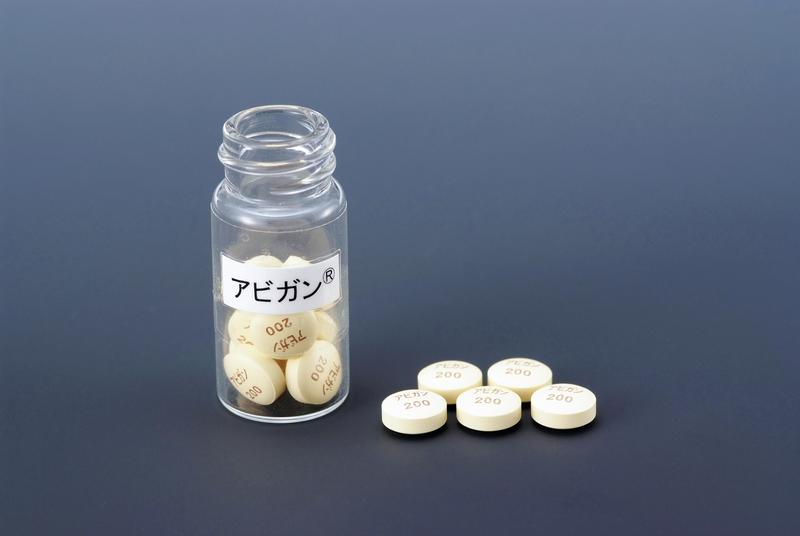
"If it is effective, why not use it vigorously?" One day in mid-March, the atmosphere inside the prime minister's executive room became tense. Administration officials, including Takaya Imai, a special advisor to Abe, asserted that Avigan, an anti-flu drug expected to be effective in treating coronavirus patients, should be used extensively.
Abe also supported the use. But Yasuhiro Suzuki, chief medical and global health officer of the Health, Labor and Welfare Ministry, did not relax his cautious stance. "It has caused definite side effects. Also its efficacy has yet to be made clear," he said.
Avigan, a drug for treating patients with a new type of influenza, is manufactured by Fujifilm Toyama Chemical Co., a drug maker based in Tokyo, and is now drawing global attention. China announced that it has confirmed the effectiveness of the drug in tackling the new coronavirus in a clinical trial. More than 50 countries are asking Japan to provide them with the medicine.
As a drug for treating the infected patients would be a trump card in fighting the virus, just as a vaccine would, the Prime Minister's Office has been enthusiastic about the use of Avigan. Abe expressed his intention to expand international clinical research and start clinical testing of Avigan during a press conference on March 28.
Yet it has been confirmed in an experiment on animals that Avigan has a side effect of causing a deformation in fetuses. The use of thalidomide, which was once marketed as a medicine for stomach issues and other conditions, led to fetal anomalies after it was taken by pregnant women. Sufferings induced by drugs are engraved on the memory of the health ministry, so cautious views are deep-rooted, particularly among technical officials who have a medical license and the like.
Contrary to the misgivings at the health ministry, an "Avigan team" with about 10 members was created in a room on the second floor of the Economy, Trade and Industry Ministry in late March. Just a few officials were initially engaged in the task, starting from February, but it was expanded into the current team at the instruction of the Prime Minister's Office.
Japan relies on China to supply the raw materials needed to make Avigan, so in order to procure the materials domestically, the team managed to find a factory located in Itoigawa, Niigata Prefecture, that had suspended its operations in 2017. Approaches were made to the company that operated the factory and it has been decided that production will resume in May. Abe went so far as to say at a press conference on Tuesday that "under a system of observational study, we will increase as much as possible the use [of the drug] for those patients who want it."
But technical officials with a medical license or similar remain cool toward the Prime Minister's Office and the economy ministry, both of which they consider to be jumping the gun. "We cannot trust the data presented by China, which have yet to be endorsed internationally. It is necessary to accumulate medical evidence more solidly," they said. Health, Labor and Welfare Minister Katsunobu Kato, who is close to Abe, has also made it clear that "we must recognize the fact that it is a drug whose efficacy or effect has yet to be proved."
"For the prime minister, the Health, Labor and Welfare Ministry is a danger zone," a high-ranking government source said. The issues of slipshod record-keeping of pension premium payments that became unaccounted for, inappropriate data in connection with the discretionary working-hour system, and illegal compilation of monthly labor statistics – including the period of his first administration, Abe feels strongly that he has had bitter experiences at the hands of the ministry, and a deep distrust lies at the bottom of his discontent.
If he inclines too much toward a political decision, however, Abe will be thrown off balance. When he called on schools across the country to close all at once on Feb. 27, he was bombarded with criticism for not having heeded experts' opinions. A former health minister said doubtfully, "Only prioritizing his political leadership while neglecting scientific evidence will make his judgment distorted."
The Abe administration advocates for the political leadership and the Prime Minister's Office to take the initiative. Abe's political ability, which has proved successful in such areas as natural disaster response and diplomacy, is being tested as he confronts a new adversary, namely the coronavirus.
Read more from The Japan News at https://japannews.yomiuri.co.jp/