The Economy, Trade and Industry Ministry has compiled a draft revision of the nation's Basic Energy Plan. The revised plan will serve as the new guidelines for long-term energy policies. In the plan, nuclear power is defined as "an important mainstay energy source," but the plan does not specifically call for construction of new and additional nuclear power reactors.
If the situation is left as it is, Japan will move slowly toward zero nuclear energy over the long term. How can the people's understanding of nuclear power deepen? Japan's nuclear power policy is at a crossroads.
Mainstay energy source
The draft revision of the Basic Energy Plan presented on May 16 laid out a policy aiming to make solar power and other renewable energy the nation's key energy sources. At the same time, it also listed technical issues such as fluctuations in energy output according to weather conditions and time of day.
In the draft revision, the ministry maintained its policy of using nuclear power as a mainstay source of consistent power supply. Since no carbon dioxide is emitted by nuclear power generation, the draft also recognizes this power source as a contributor to decarbonization.
While the revised plan does highlight renewable energy, it seems more concerned with the importance of nuclear power overall.
In order to achieve the plan's goal of nuclear power accounting for 20 percent to 22 percent of the nation's overall power supply in fiscal 2030, about 30 reactors will need to be put back into operation. Only eight are active currently, and many doubt the country will achieve this goal.
"If we extend the operating period of our existing nuclear power reactors to the maximum 60 years allowed in the regulations, we'll just barely be able to reach our goal," a senior ministry official said. But unless new and additional reactors are built or existing ones are replaced with new ones, which will take over 20 years to become operable, there will be more decommissioned reactors after 2030 and nuclear power as a share of the nation's energy supply will rapidly decline.
Economy, Trade and Industry Minister Hiroshige Seko continues to insist he does not envision building or replacing reactors.
"We couldn't write about building new and additional reactors in this political environment where we're concerned about public opposition to nuclear power," a senior ministry official said.
On the other hand, the official also confessed, "Not writing it in the basic plan doesn't mean we can't actually build new and additional plants."
Along with these revisions in the basic plan, the ministry is actually secretly encouraging major electric power companies to consider building plants and replacing reactors.
Interpreting the ministry's intentions, a major power company executive said, "It's hard for the government to take the lead in building new and additional reactors, so they're trying to develop an environment [in which that can happen] by encouraging the private sector to take independent action."
Growing costs
However, major power companies have to overcome high hurdles to independently build new plants or replace current reactors with new ones.
The total cost of Hitachi, Ltd.'s nuclear power business in Britain has ballooned to more than 3 trillion yen with two reactors. The project is likely to receive financial support from the British government, but negotiations are still under way for the prices of electricity the government guarantees to purchase, and no final conclusion has been reached.
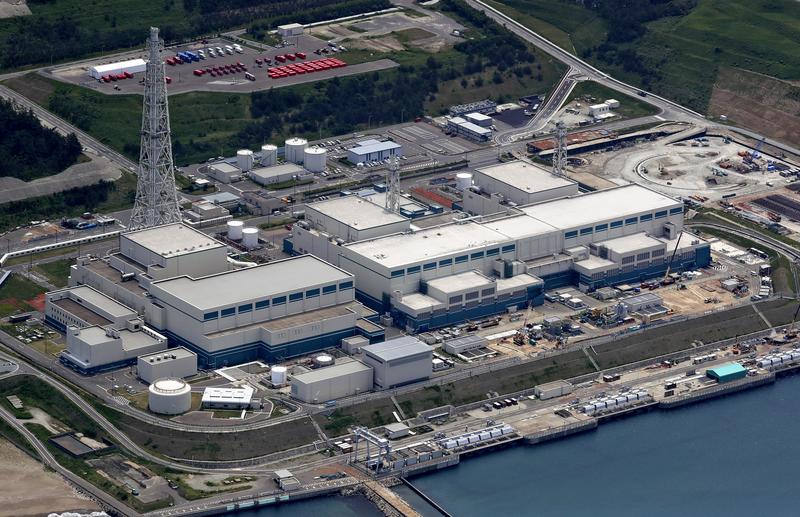
The cost of building the Nos. 6 and 7 reactors at Tokyo Electric Power Company Holdings, Inc.'s Kashiwazaki-Kariwa nuclear power plant in Niigata Prefecture, which began operating in the 1990s, was about 400 billion yen per reactor. TEPCO was a blue chip company before its nuclear accident in 2011, and it was able to procure low-interest funding. Its interest burden for the construction funds of the reactors was only 10 billion yen in total.
However, the situation has changed completely since the nuclear accident. Nuclear safety standards have been ramped up worldwide, and construction costs have soared. TEPCO has spent a total of 700 billion yen on safety measures for the Nos. 6 and 7 reactors at the Kashiwazaki-Kariwa plant.
Even if companies build new plants at tremendous cost, a good return on the investment seems unlikely, and it is difficult to procure funds.
"Costs for Hitachi's nuclear project in Britain seem to be expanding not only because of safety measures, but also for labor costs and fund procurement costs," an executive of a major electric power company said. "The private sector alone cannot make a decision on building or replacing reactors."
"Some sort of government support, such as guaranteeing the purchase of nuclear-generated electricity at a certain price, or a guarantee of an operating ratio, are needed," an executive of a leading bank said.
Public resistance
Another hurdle is how to promote public understanding of nuclear power.
On June 14, TEPCO announced the decommissioning of the Fukushima No. 2 nuclear power plant. It judged it would be difficult to restart the plant after having been unable to obtain the understanding of local people who suffered because of the 2011 nuclear accident. Now that TEPCO has limited income sources, the importance of being able to restart the Kashiwazaki-Kariwa plant has increased for TEPCO.
Backed by the ruling Liberal Democratic Party and its coalition partner Komeito, Hideyo Hanazumi was elected Niigata prefectural governor this month. Hanazumi plans to continue the prefectural government's own examinations of the nuclear disaster, and the new governor maintains that discussions on a restart cannot begin until the examination has produced results.
Many residents in Niigata Prefecture are opposed to nuclear power. A local resident related to the electric power industry who supported Hanazumi said, "I feel that possible votes for him are sure to decrease if constituents see [Hanazumi as being linked to] the activities of electric power companies."
"I'm not sure if he would be able to win the next election if it is held after the examination is completed and the restart becomes a point of contention in the campaign," the resident said.
Not only those living in the vicinity of nuclear power plants, but Japanese citizens in general have negative views on nuclear power generation.
International Environment and Economy Institute senior researcher Sumiko Takeuchi points out the significance of utilizing nuclear power generation.
"From the perspective of energy security, the lack of alternatives to thermal power generation [which depends on imported fuel] presents many problems," Takeuchi said. "If we put ourselves on a course toward a zero-nuclear-power policy without commitments and intentions [regarding other power sources as alternatives to nuclear power], it will end up increasing the public's burdens and risks."
The government has positioned nuclear power as a mainstay power source, but it avoids discussions of building and replacing reactors. Unless this situation is resolved, a stable power supply may falter in the future.
(From The Yomiuri Shimbun, June 16, 2018)
Read more from The Japan News at https://japannews.yomiuri.co.jp/