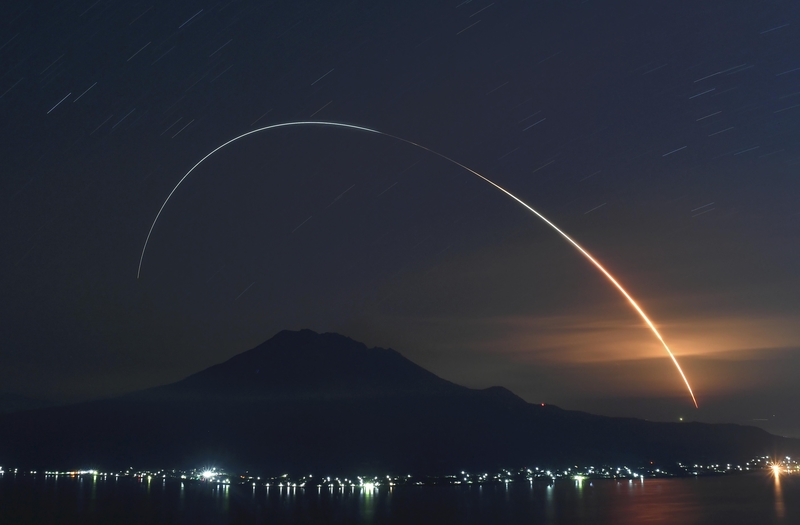
The Kounotori No. 9 transfer vehicle was launched at 2:31 A.M. Thursday from the Tanegashima Space Center in Minamitane, Kagoshima Prefecture, carrying supplies for the International Space Station.
The Kounotori was sent up by the H-IIB rocket. According to launch operator Mitsubishi Heavy Industries Ltd., the transfer vehicle was successfully put into orbit about 15 minutes later.
This is the last launch for the Kounotori, and also represents the retirement of the H-IIB rocket.
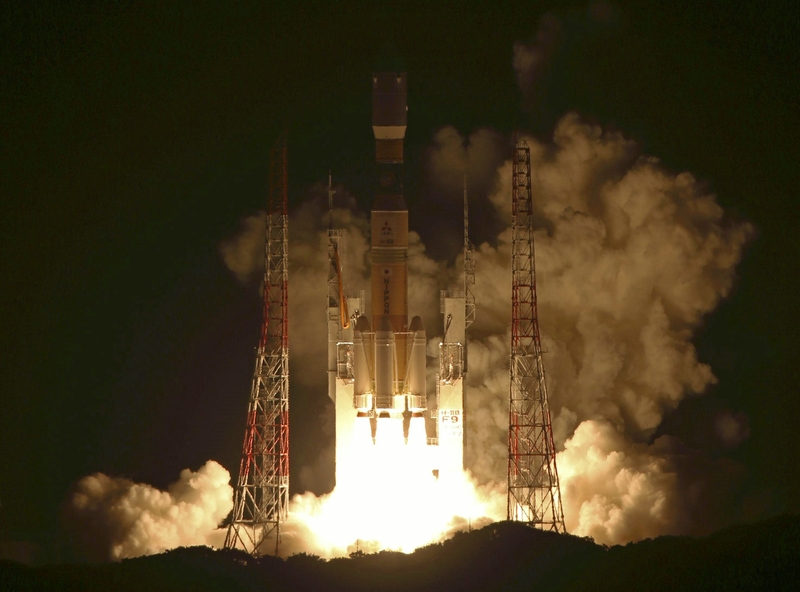
The H-IIB rocket has carried the Kounotori nine times in a row, with a success rate of 100%. This time the Kounotori is carrying about 6.2 tons of supplies for ISS, including water, food and large batteries for power supplies. It is flying smoothly and is expected to arrive at the ISS on Monday night.
After one to two months, it will be loaded up with waste, reenter the atmospheric layer and burn up.
The Kounotori was developed for Japan to join in the ISS program, in which the United States, Europe, Russia and other countries also participate, and has been transporting supplies for more than 10 years since 2009. Despite a series of failures by U.S. and Russian supply ships, the ship was successful and won high praise.
In particular, since the retirement of the U.S. space shuttles nine years ago, the Kounotori has used its high transportation capacity to carry large batteries, which are essential for the long-term operation of the ISS. From fiscal 2021 onward, future transportation will be transferred to the HTV-X next-generation enhanced capacity transfer vehicle.
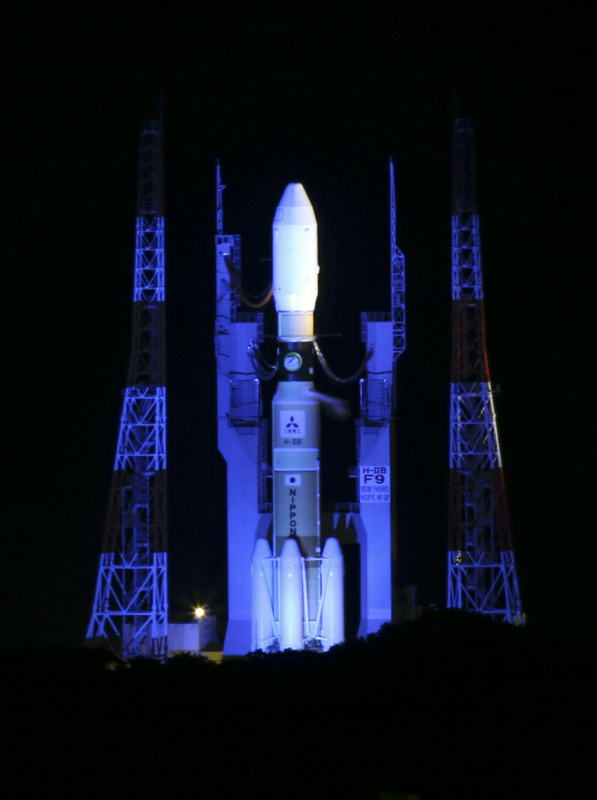
To show gratitude to medical workers helping fight the spread of the new coronavirus, the Japan Aerospace Exploration Agency and others lit up the H-IIB rocket in blue on Wednesday night.
"Despite the postponement and cancellation of various events around the world, the launch was carried out as planned thanks to the understanding and support of the local community," said Naohiko Abe, a corporate executive at Mitsubishi Heavy Industries. The company and JAXA reduced the number of visitors to the Tanegashima Space Center by about 20%.
The Kounotori mission, along with the Japanese Experiment Module Kibo on the ISS, symbolizes Japan's international cooperation in space development. Based on Japan's achievements so far, many people expect Japan to provide supplies under the U.S. plan to build a lunar base in the mid-2020s.
However, the launch cost of the H-IIB rocket was about 16 billion yen, making it difficult for the company to win a commercial order for a large satellite.
Read more from The Japan News at https://japannews.yomiuri.co.jp/