Freezing technologies are now an integral part of modern life. With this year marking 100 years since a Japannese company first began producing frozen food, cutting-edge, rapid-freezing technologies are changing how food is kept chilled while still being fresh and tasty.
Japanese technologies that harness highly concentrated salt water and other methods are being increasingly adopted to reduce food waste.
Tokyo-based DayBreak Co., a trading company concentrating on specialty freezers, buys oddly shaped fruits and vegetables that were not shipped to consumers and sells them as frozen and processed products. The company uses a special freezer that envelops the produce in air chilled to minus 30 C or colder. This preserves the flavor and ensures the food stays crisp.
In March, DayBreak started an emergency support project in response to the spread of the new coronavirus. The company purchases fruit and vegetables that went unsold due to a drop in tourists amid the outbreak and will sell them as frozen goods. The project mainly concentrates on produce such as strawberries at pick-your-own farms that are left over due to fewer visitors. Part of the profits will be returned to the producers.
"Freezing can add new commercial value to fruits and vegetables that would otherwise be thrown away," said DayBreak Chief Executive Officer Masayuki Kinoshita.
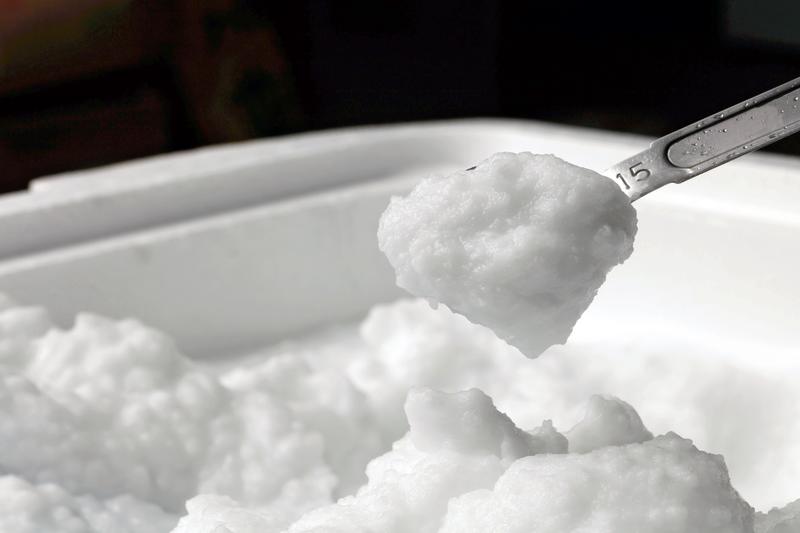
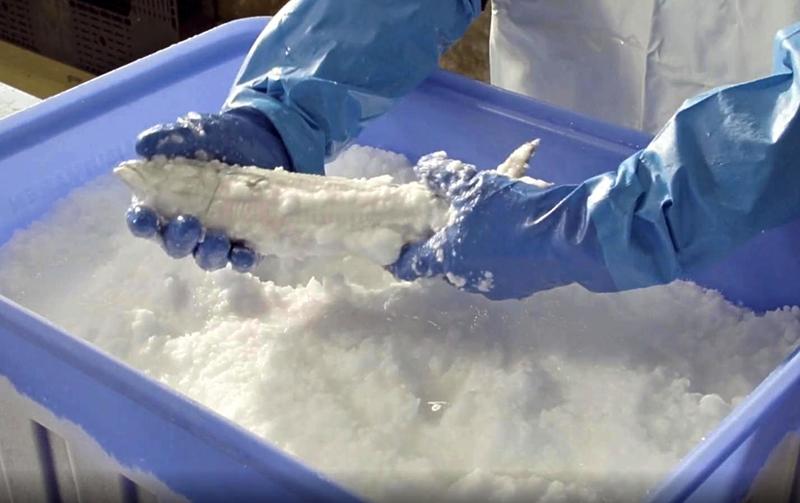
Freezing technologies that keep food fresh are cropping up in various industries. Last year, Konoike Transport Co. opened a factory in Osaka that processes high-grade washoku Japanese cuisine ingredients and readies them for export. The company now has a freezing method centered on "hybrid ice" made from water with high salinity. The water contains 23.5% salt, which makes it freeze at minus 21.3 C -- much lower than ice made with regular water. Fresh produce is snap frozen in this hybrid ice.
"It strips away heat extremely fast, so the cells don't break down," said the head of Konoike Transport's Osaka Kizu sales office in Osaka. "Consequently, when the product is thawed, there are no droplets through which nutrients can be lost."
Hybrid ice was developed about five years ago by Blanctec International Co., which manufactures refrigeration equipment. A live mackerel placed in hybrid ice will stop moving almost instantly and be completely frozen within 20 to 30 minutes, according to the Tokyo-based company. This is less than one-tenth the time it takes for conventional freezers, the company said.
The secret lies in thermal conductivity -- how well heat moves from one object to another. Ice's thermal conductivity is about 100 times that of air, meaning packing foods entirely in powdered or sherbet-textured ice will more efficiently chill them.
"Hybrid ice is portable and made of water and salt, so it can be reused," said Blanctec International President Yosio Hirokane. "We think it will have practical applications in distributing goods in refrigeration containers."
Rapid freezing can keep foods fresh because the ice crystals formed are small. Slow freezing allows ice crystals to grow, which can damage the food cells or enable gaps to form between cells, resulting in moisture emerging when the food thaws. Success hinges on keeping the time food spends between minus 1 C and minus 5 C as short as possible, as this is when ice crystals form.
Technological advances are coming to the rescue. Ryoho Freeze Systems Co., based in Nara, has developed "proton freezers" that combine cool air, magnets and electromagnetic waves to prevent the formation of ice crystals, according to the company. Proton freezers are also used to preserve cells utilized in regenerative medicine.
The Japan Frozen Food association sets a voluntary standard of minus 18 C or lower as the temperature for preserving frozen food, as this is cold enough to stop microorganisms and enzymes that can break down protein from moving. Food kept at minus 18 C, or lower, can reportedly maintain its original quality for one year after its manufacture.
The temperature when food is defrosted is also crucial. Enzyme reactions accelerate at room temperature, which can cause color changes and degeneration. For instance, when frozen tuna is thawed to be eaten raw as sashimi, placing the fish in ice water at about 0 C so the flesh does not reach room temperature will help the tuna maintain superior quality.
It is believed Japan's frozen food industry started in 1920, when a facility in Hokkaido started freezing fish. The 1964 Tokyo Olympics and 1970 Osaka Expo spurred hotels and the food service industry to start using frozen foods. They steadily spread to households across the country.
Japan consumed 2.89 million tons of frozen food in 2018, and the average annual consumption per person was about 23 kilograms -- enough for 92 meals, according to the Japan Frozen Food Association. This figure goes up every year. Domestic frozen food production amounted to about 1.6 million tons in 2018. In recent years, domestic production has stayed relatively flat, but imported frozen food is helping consumption grow.
Read more from The Japan News at https://japannews.yomiuri.co.jp/