The spread of the new coronavirus has cast a shadow over the elderly who live alone and often receive delayed medical treatment in the event of sudden changes in their health.
While the Health, Labor and Welfare Ministry has urged local governments nationwide to boost monitoring efforts, a growing number of elderly people in Tokyo's apartment complexes are becoming ill from a lack of exercise and stress resulting from the stay-at-home orders.
In the 1970s, people started moving into Tama New Towns in western Tokyo, where now more than 220,000 people are living.
At the Wada Danchi apartment complex in Tama New Town, about 200 of roughly 1,000 residents are 65 years old or older who live alone.
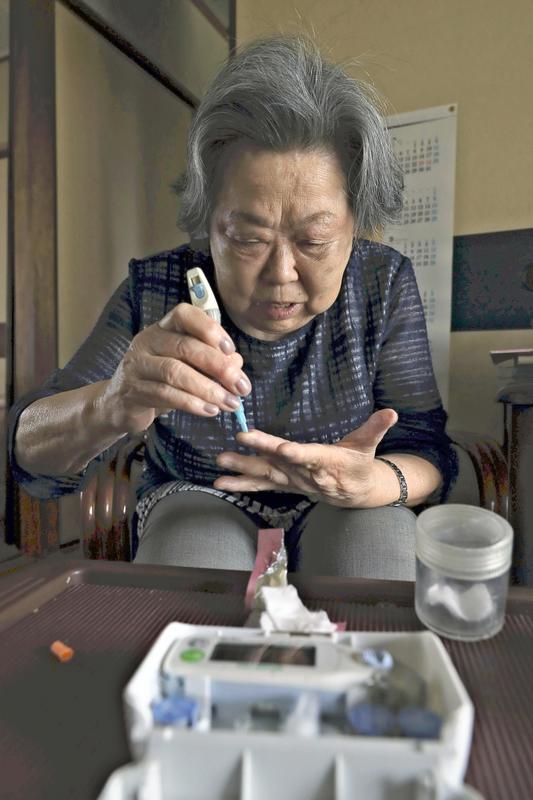
An 85-year-old woman who lives alone in the apartment complex said she has not much slept lately. Having diabetes and high blood pressure, she has made a habit of walking three times a week in the neighborhood swimming pool to stay healthy.
She started to have trouble falling asleep after the swimming pool was temporarily closed at the end of February due to the spread of the novel coronavirus.
As an assembly hall was also closed in April, her opportunities to socialize with neighbors has decreased. The more time she spends at home, the higher her blood-sugar levels are raised. She measures these levels twice a day, once in the morning and once in the evening.
Her medical doctor diagnosed the reason for her blood-sugar level spike as being a lack of exercise.
"I feel like I'm being pushed into a corner, which makes me anxious," she said.
In the apartment complex, door-to-door visits to single-person households have also been refrained from being conducted to prevent infection.
A 72-year-old man, who has been monitoring people in Tama New Town for about 20 years, started making phone calls to confirm their safety instead of visiting their homes, saying: "I might spread the infection myself. It has become difficult to know their real condition," he said.
A woman who has been living alone for the past three years in Takashimadaira Danchi apartment complex in Itabashi Ward, Tokyo, also said that she has been experiencing problems with her left knee, problems she has had for some time.
After the state of emergency was declared, she stopped going to her favorite coffee shop, and reduced her visits to an orthopedic clinic. "There are times when I miss them to the point of tears," she said.
Going to a supermarket near her home has also become bothersome, and she has been spending more and more of her days in front of the TV from morning until night.
Of the roughly 15,800 residents living in the complex, about 3,600 are 65 years old or older and are living alone.
In this complex, the act of monitoring the residents' condition has changed from door-to-door visits to phone calls. Since mid-April, the staff of the Tokyo Metropolitan Geriatric Hospital and Institute of Gerontology has been checking on their health.
The institute has received a lot of complaints from the elderly people about having to refrain from outings, saying such things as, "I have nothing to do," or "I can't go out, so I don't know how to get my prescription medication from a hospital."
"We often don't notice the complexity of some things until we meet them face-to-face, which increases the chances of missing something unusual," said the institute's researcher Madoka Ogawa.
Read more from The Japan News at https://japannews.yomiuri.co.jp/