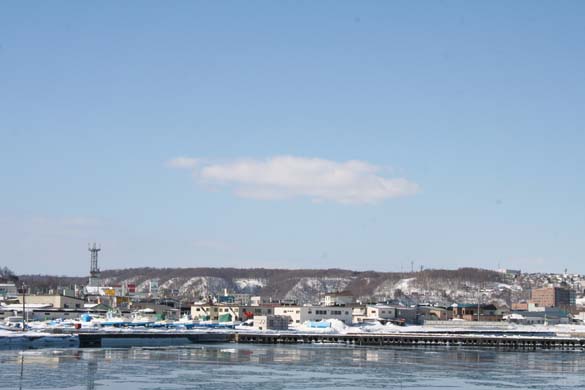
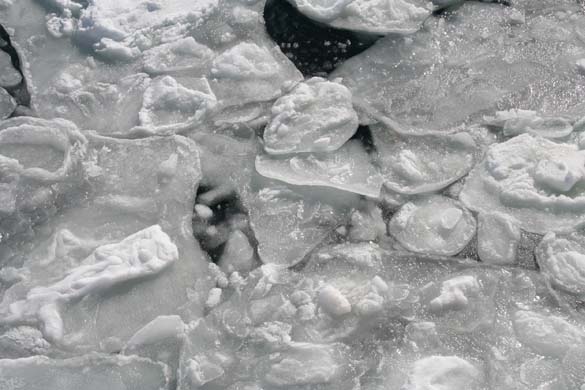
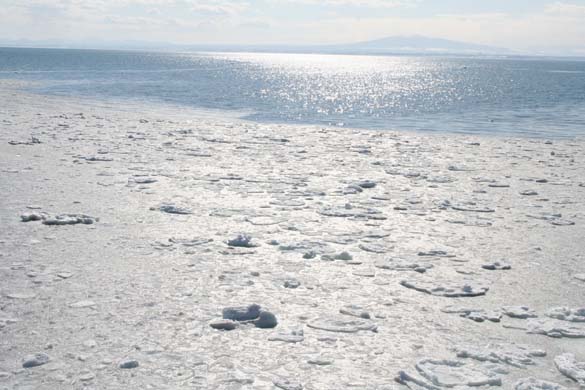
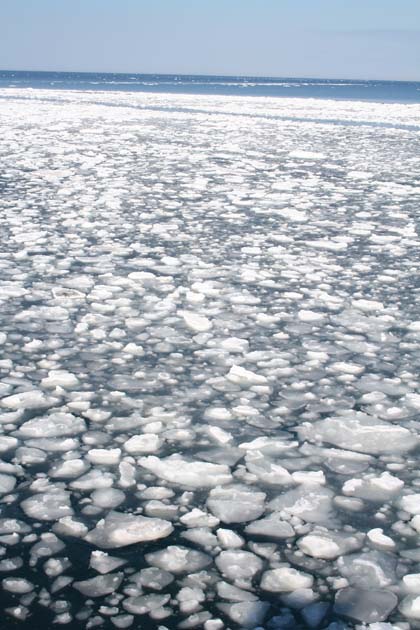
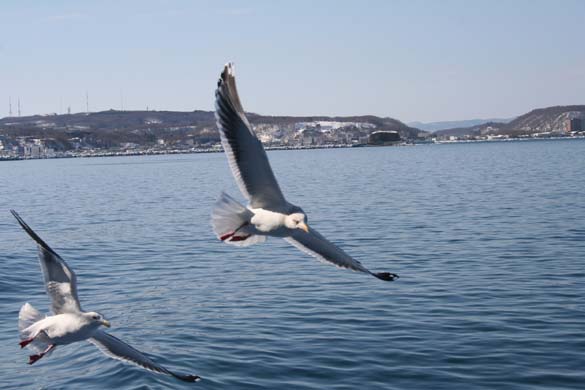
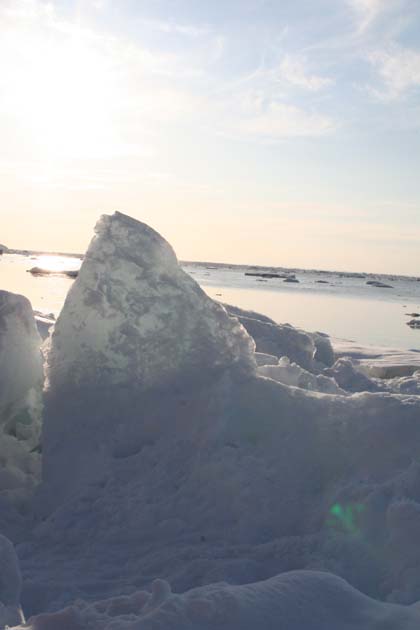
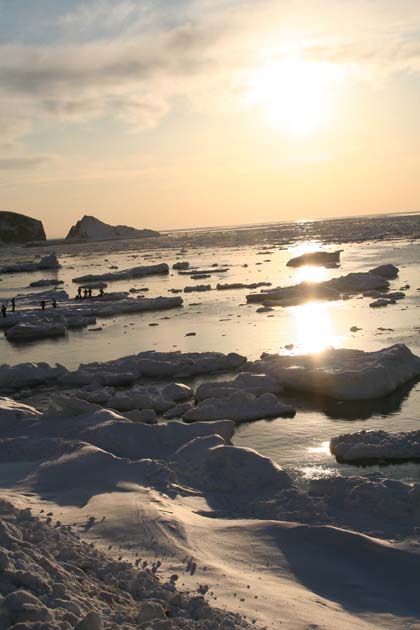
Abashiri port, where Keiichi Hori, captain of the icebreaker Aurora, has been guiding tourists through the ice off the eastern coast of Hokkaido, Japan for the past decade Photograph: Justin McCurryDrift ice in Abashiri Bay. Hori says: "I'm no expert, but I've noticed that the ice is getting thinner, especially over the last four or five years"Photograph: GuardianLooking out to sea over drift ice. The unusually high freshwater content near the sea's surface, blasts of cold air from Siberia and the current-blocking presence of large landmasses on all sides combine to create the Shiretoko peninsula's beguiling natural anomaly: sea ice at the 44th parallelPhotograph: Guardian
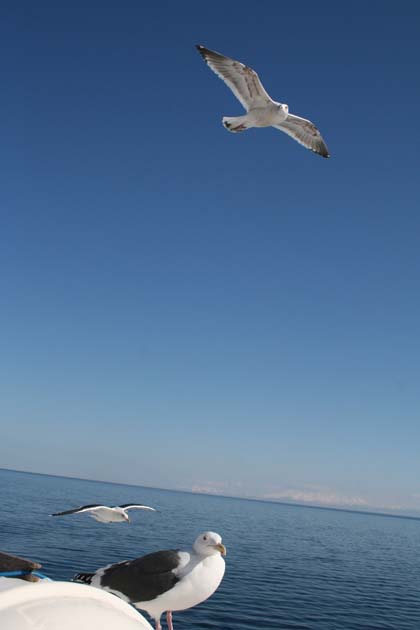
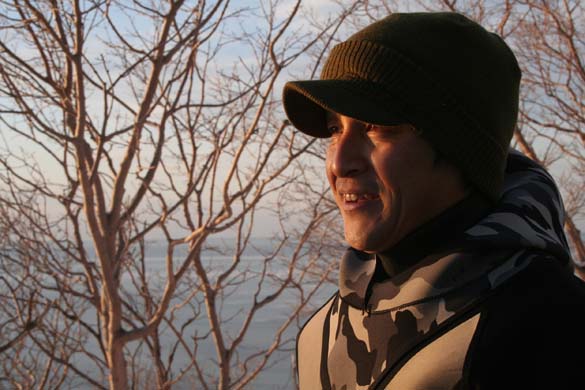
Archeologists believe that thousands of years ago the ice was so widespread that people were able to migrate on foot from mainland Asia to Hokkaido, Japan's northernmost island. That feat would be impossible today Photograph: Justin McCurryAs the lowest point in the northern hemisphere in which it is possible to observe Arctic sea ice, the Shiretoko region – "land's end" – is among the first of the world's great ecosystems to feel the full force of climate changePhotograph: GuardianSea birds follow the Aurora. The ice is a vital part of the region's marine ecosystem, providing the basis for nutrients that are essential to the formation of phytoplankton - or "ice algae" – which forms the basis of an intricate food chain that sustains crustaceans, fish and, in turn, sea lions, birds of prey and brown bears Photograph: GuardianIce covers the coastline of the Shiretoko peninsula. According to the local meteorological observatory, the Abashiri coastline saw an average of about 90 days of ice between 1971 and 2000. But for the past three years the average has fallen dramatically, to just 65 days Photograph: GuardianTatsuya Fujisaki, a local conservationist who takes groups of tourists for walks on the ice. "There is no other place in Japan like this," he says. "This was one of the main reasons we were given Unesco status"Photograph: GuardianShiretoko at sunset. Experts say the G8 vision of a 50% cut in CO2 emissions by 2050, even if realised, will come too late for ShiretokoPhotograph: Guardian
Sign up to read this article
Read news from 100’s of titles, curated specifically for you.