To prevent the spread of the new coronavirus infection, about 900 facilities for the disabled to work at or stay for a short time are closed nationwide. As the suspension of services has and will continue for some time, there are concerns that the health of people with disabilities who are deprived of places to work will deteriorate, and the facilities are facing a significant drop in their revenue.
"I want to work." "I want to see my friends."
These are what a 51-year-old man of Fuchu, Tokyo, who is confined to a wheelchair because of brain paralysis, has been saying to his mother, 76, almost every day.
His life changed completely after April 20. He lived in a group home with other people on weekdays and sewed kinchaku drawstring bags and other items with sewing machines at its workplace during the day. But he was asked to refrain from using the workplace amid the spread of the new coronavirus.
He was proud of being told, "You are so good," by young facility users, and looked forward to selling his own kinchaku at periodical flea markets. After self-restraint, he returned to his parents' home and has been spending most of his time lying down. It is uncertain what will happen to the 8,500 yen monthly income for labor fee, which he used to spend on his haircuts and other things. His mother said, "I'm worried his disability will get worse as his life is not so interesting now."
The Health, Labor and Welfare Ministry calls for the continued operation of facilities for the disabled as they are "necessary for the maintenance of life." However, many facilities are closing down to prevent infection. According to the ministry, 891 out of about 57,000 visiting and short-stay types of facilities for the disabled nationwide were closed as of April 20, accounting for 1.6% of the total. By prefecture, there were 266 in Tokyo and 67 in Osaka Prefecture.
Such facilities are also facing a drop in revenue due to suspension of operations.
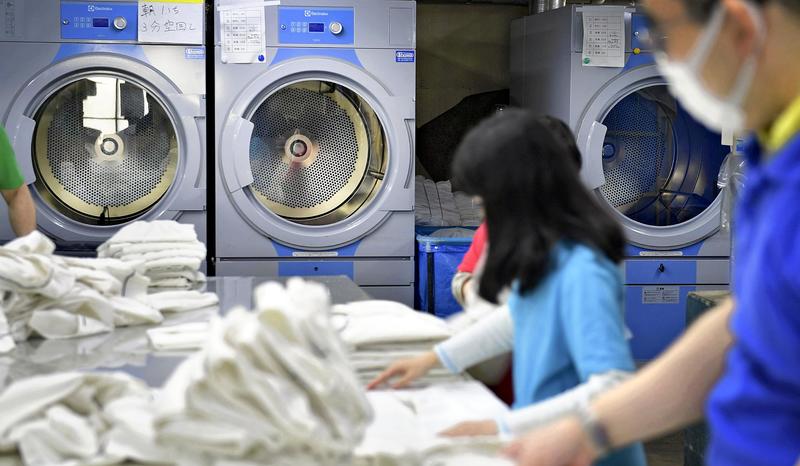
Sunup, an Ota Ward, Tokyo-based facility that provides jobs for people with disabilities, suspended its operation from April 16 to May 10. Before the suspension, 24 people with intellectual and other types of disabilities clean room wear for hotels, but the number of hotel guests decreased due to people's voluntary restraint from going out, and consequently, Sunup's sales in April plunged 85% from the previous year.
The facility resumed operation on May 11 with 10 people who could commute without using public transportations, Hiroyuki Nagaura, 44, president of Sunup, said, adding that nine came to work on May 12.
According to a survey conducted in late March by Kyosaren, a national organization of welfare offices for people with disabilities, 53% of 281 facilities nationwide responded that they would see more than 20% decrease in March revenue. The decline was apparently due to a decrease in sales opportunities due to voluntary suspensions of events and other causes and a decrease in orders from customers.
"If work places are closed, user's life rhythm may be disrupted, possibly resulting in a deterioration of mobility functions and worsening health," said Risa Fujiwara, a professor at Hokusei Gakuen University. "It is necessary to understand the burden on family members and other factors and make proposals for use of other services.
Separately, donations of masks to welfare facilities for people with disabilities have started in an effort to respond to an SOS from places with inevitable close contact with others and shortage of masks.
The project name is #Fukushi Genba nimo mask o (Masks on the welfare scene), launched April 22 by four organizations.
Donations will be collected through the project's website to purchase masks, which are then sent to welfare service offices seeking support.
"If this situation continues, welfare will collapse. I want to prevent isolation in the welfare scene," said Tomohiro Sawada of Shogai Koryakuka, a welfare organization that has planned the project.
Read more from The Japan News at https://japannews.yomiuri.co.jp/