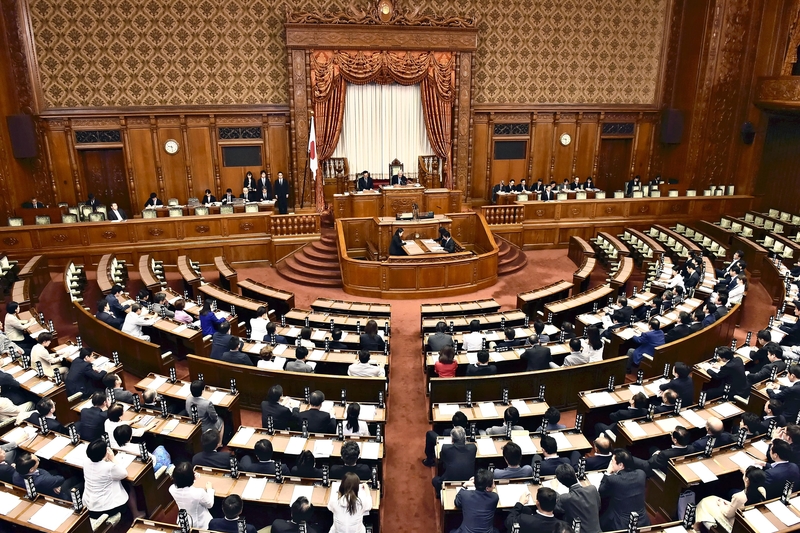
A casino resort bill, the first of its kind in Japan, was enacted after passing the House of Councillors on Friday night.
The bill, which was approved at a plenary session of the upper house by a majority vote with support mainly from the ruling coalition of the Liberal Democratic Party and Komeito, along with Nippon Ishin no Kai, allows for the introduction of up to three integrated resorts with casinos across the nation. Casino operators will be required to acquire a certificate that is effective for three years and renewable.
The legislation stipulates regulations such as limiting the number of visits to casinos by Japanese nationals and foreign residents in this country to three times a week and 10 times a month, and setting an entry fee of 6,000 yen per visit. These visits will be tracked using the My Number identification cards.
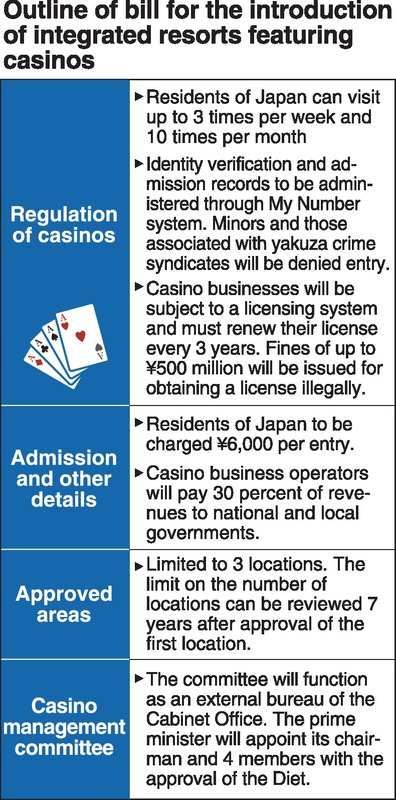
The government hopes the enactment of the law will help generate positive economic effects, but others have pointed out that it could encourage gambling addiction. The government intends to make such integrated resorts a pillar of its growth strategy after the 2020 Tokyo Olympics and Paralympics.
"Integrated resorts could become a driving force to make Japan a leading tourism destination," Chief Cabinet Secretary Yoshihide Suga said at a press conference on Friday morning.
In late April, the government gained Cabinet approval of the bill, which then cleared the House of Representatives in June.
Amid concerns over gambling addiction, the government and ruling parties included in the bill a measure that will allow casino operators to ban entry to an individual at the request of the individual or the individual's family members if there is a possibility that the person might become a gambling addict.
Though the current Diet session is scheduled to close Sunday, the session effectively ended Friday, the last weekday before the official closing date. Committees of both Diet chambers undertook closing procedures on the day.
On Friday morning, major opposition parties, including the Constitutional Democratic Party of Japan, submitted to the lower house a no-confidence motion against the Cabinet of Prime Minister Shinzo Abe to prevent the enactment of the bill. The motion was voted down.
Read more from The Japan News at https://japannews.yomiuri.co.jp/