The prolonged rainy season and subsequent heat wave have stunted the growth of crops across the nation, sharply reducing shipment volumes and pushing prices up.
On Aug. 17, the mercury hit 41.1 C in Hamamatsu, tying with the highest temperature ever recorded in Japan.
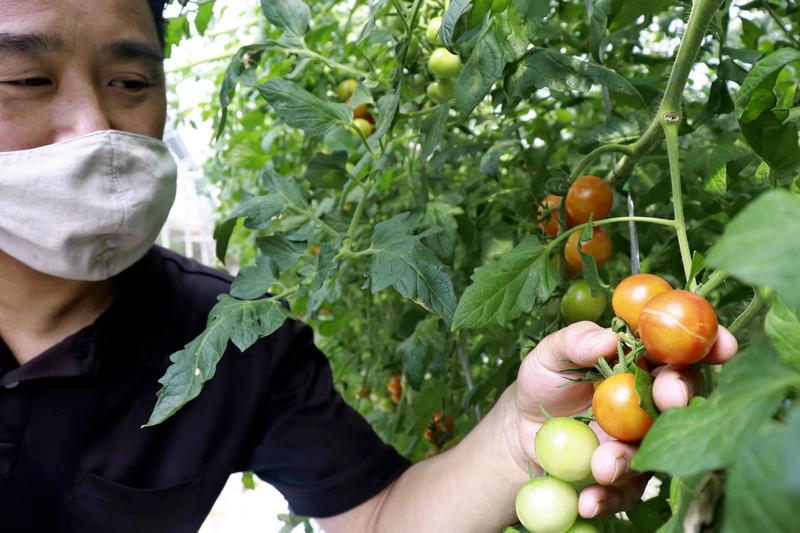
Marutaka Farm in the city's Kita Ward normally produces about 70 tons of cherry tomatoes annually. Since mid-August, however, it has discarded about 100 kilograms of tomatoes, or a third of its harvest, because of poor color and cracks in the fruits.
The temperature in the farm's greenhouses sometimes reaches nearly 50 C, and work has to stop earlier than usual to guard against heat stroke.
"I didn't expect it to be this hot. I can't ship anything of poor quality," said farm representative Takashi Suzuki, 42.
Shipments of gerbera flowers, of which Hamamatsu is the largest producer in the nation, have also been affected by both the novel coronavirus pandemic and the severe climate. Demand for gerbera is decreasing because events that use flowers have been canceled due to the pandemic, and the flowers are also growing smaller than usual.
Given these factors, shipment volume dropped 30% in August, according to JA (Japan Agricultural Cooperatives) Topia-Hamamatsu.
The hot nights are affecting the growth of grapes, for which the difference between day and night temperatures is important.
Grape farmer Junichi Mitsui grows shine muscat grapes in an about 4,000-square-meter orchard in Koshu, Yamanashi Prefecture. Mitsui is concerned that the sugar content of his grapes is not rising due to high temperatures at night -- if the sugar content falls below the prescribed level, shipment will have to be postponed, which could force him to sell the backed-up inventory at rock-bottom prices.
Prices of leafy vegetables have been also high, as lettuce and cabbage produced in Tsumagoi, Gunma Prefecture, and other areas at high elevetions are withering or not growing large.
This has led to lower shipment volumes and higher prices, according to the retail price trend of vegetables for Aug.10-12 announced by the Agriculture, Forestry and Fisheries Ministry. During that period, the price of cabbage rose 19% from the previous week, while lettuce was up 12%.
The Niigata prefectural government issued a second emergency bulletin to rice farmers this summer on Sunday, in preparation for the harvest, saying, "Abnormally high temperatures and dryness due to a foehn [a warm dry wind that blows down a mountain] may occur on Thursday and Friday."
The local government implemented the measure in cooperation with the Niigata regional meteorological observatory, based on lessons learned last summer, when the quality of the rice was greatly reduced due to high temperatures.
Read more from The Japan News at https://japannews.yomiuri.co.jp/