In July, a Tokyo company employee in his 50s traveled to his parents' home in Kyushu for a memorial service for his father, who had passed away in the spring. After returning to Tokyo, he was stunned to learn that because she had met with him, the mother said she wouldn't be able to get her usual home visit from a careworker for two weeks.
"Even a parent and child can't meet," lamented the man who later had to cancel his flight to visit to his hometown for the Bon holiday period in mid August.
His mother became subject to a new "noncontact rule" that more and more rural areas are adopting to prevent the spread of the coronavirus. Locals who come into contact with those in high-risk areas such as Tokyo are basically being asked to quarantine themselves.
Such a move is being employed at facilities where there is a high probability of an outbreak of infection clusters. This can include refraining from using facilities for elderly people, or for civil servants, staying home from work.
The measure is viewed as a precaution in situations when PCR tests are not readily available.
During the Bon holiday, a woman in her 20s from the Chugoku region took her two children to Osaka to visit her husband, who was working there.
When she returned from Osaka, she was asked to keep her 2-year-old son from attending his nursery school for two weeks. She said she had "no choice but to stay home" with her son while looking after her 5-month-old daughter.
-- Seeking understanding
There are circumstances for those setting the rules as well.
Omeiso, the Japanese Red Cross Society's special nursing home in Shizukuishi, Iwate Prefecture, decided to deny short-term stays of elderly people if they or family members who live with them had left the prefecture over the past two weeks.
"Our elderly residents can get seriously ill once they are infected. We want everyone to understand [our situation]," said Toyoshige Chiba, 58, head of the nursing home, remorsefully.
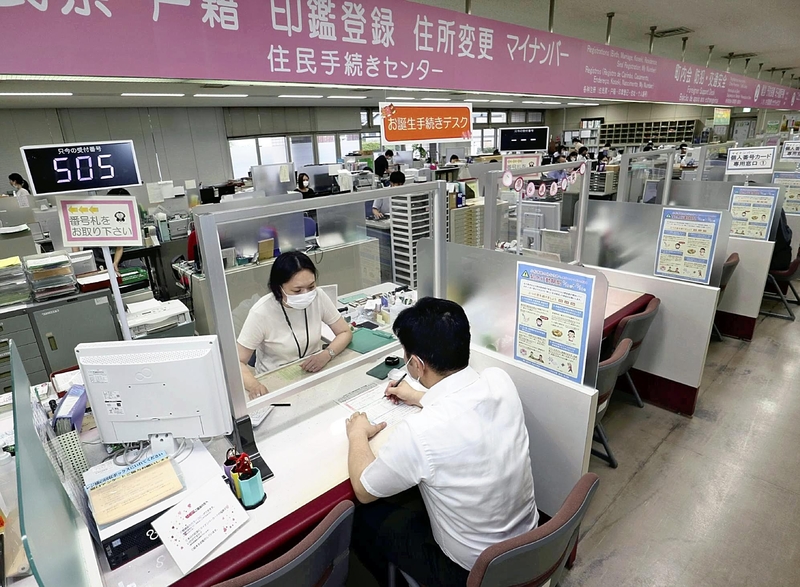
Municipal offices that deal with large numbers of people via counters are on edge, too.
The city of Komatsu, Ishikawa Prefecture, saw a nine-fold increase in the number of infected people in just one month, reaching 105. In response, a municipal worker who comes into contact with someone from Tokyo, Osaka or another area with a high number of infections will have to work from home or in a separate room for a minimum of one day, and refrain from working at a counter for a week.
"We must take thorough preventive measures so that we don't have to halt services," an official of the city's general policy department said.
-- Mutual relief
Behind the anxiety in rural communities is the fact that, following the lifting of the central government's state of the emergency, the virus "appeared to have spread from such high-risk places as Tokyo to rural areas," according to an infection control specialist.
As a result, municipalities launched efforts to dispel such worries.
The city of Nagaoka, Niigata Prefecture, has requested that student teachers dispatched from universities outside of the city to its elementary, junior high and nursery schools to stay in Nagaoka for two weeks before starting their assignment. It also called for PCR testing at the city's expense.
"We want to create an environment in which both the student teachers coming from the Metropolitan Tokyo and others areas, and the schools that accept them can feel mutually safe with each other," a school board official said.
Doshisha University Prof. Kazuya Nakayachi, who specializes in social psychology, surmises that the central government's decision to exclude Tokyo from its Go To Travel tourism support campaign may have spurred the proliferation of noncontact rules in rural areas.
"While understandable as a defensive measure, it is necessary for local governments to gain a firm grip on the situation and take measures to prevent such rules from leading to prejudice and slander," he said.
Read more from The Japan News at https://japannews.yomiuri.co.jp/