Rescuers search waist-high muddy waters for missing people in typhoon-hit Japan
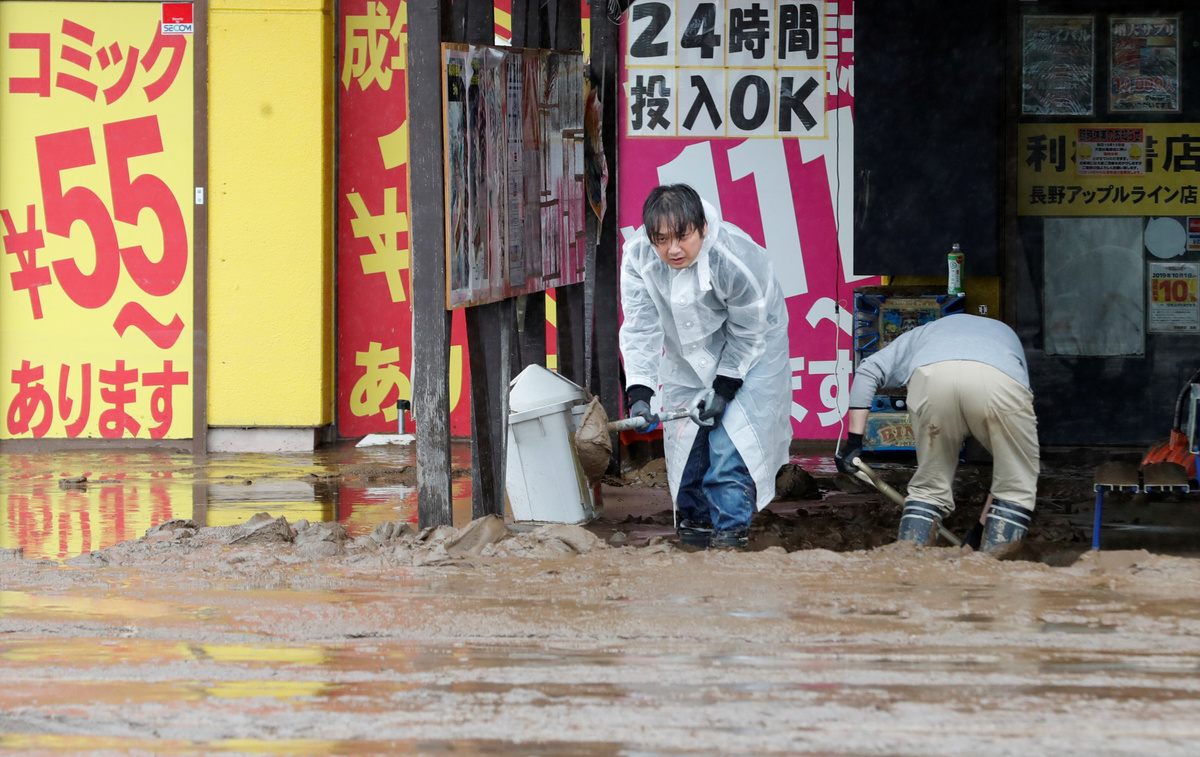
A man cleans up a shop in the aftermath of Typhoon Hagibis, which caused severe floods, near the Chikuma River in Nagano Prefecture, Japan, October 14, 2019. REUTERS/Kim Kyung-Hoon
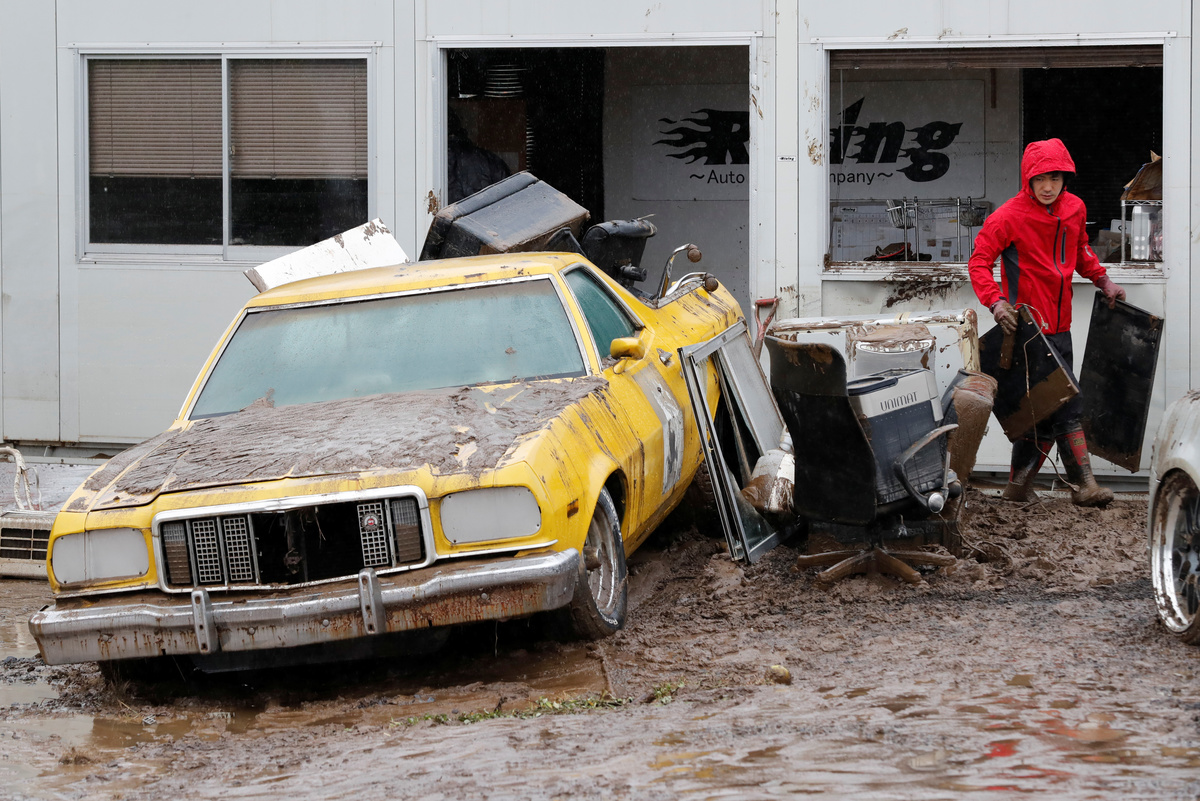
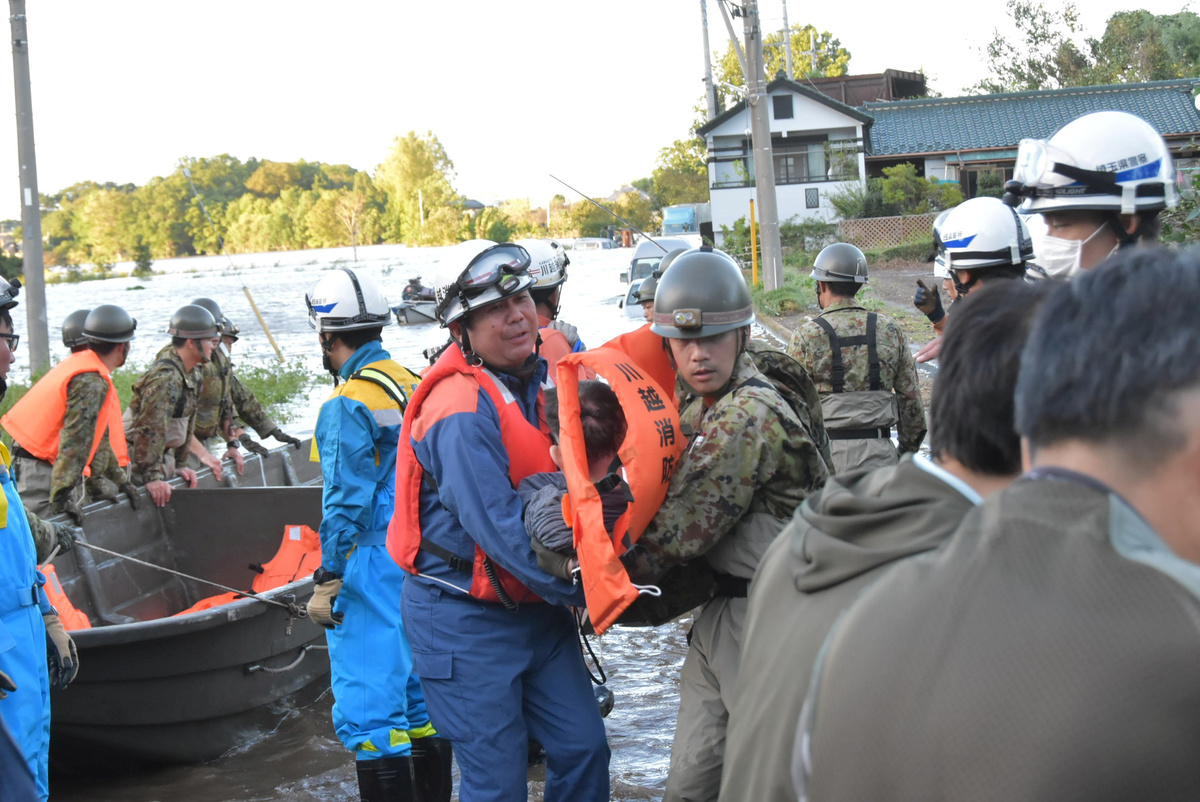
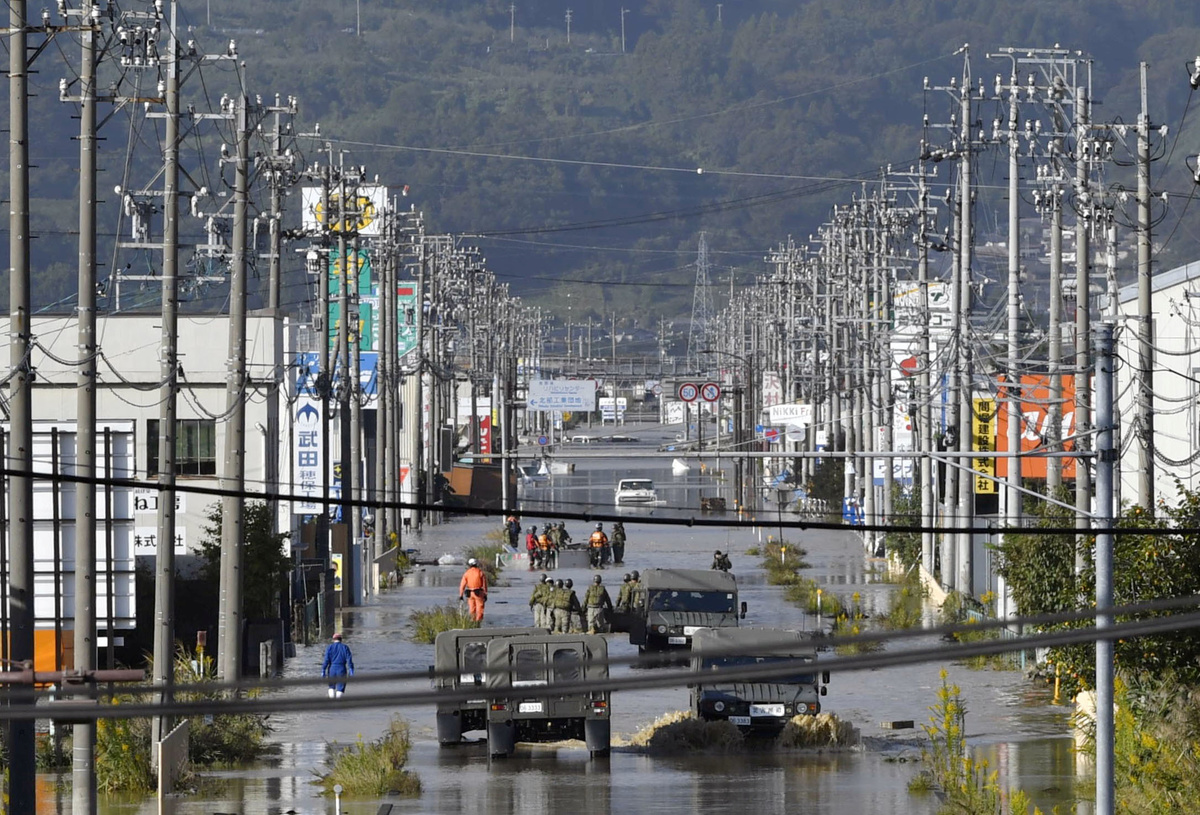
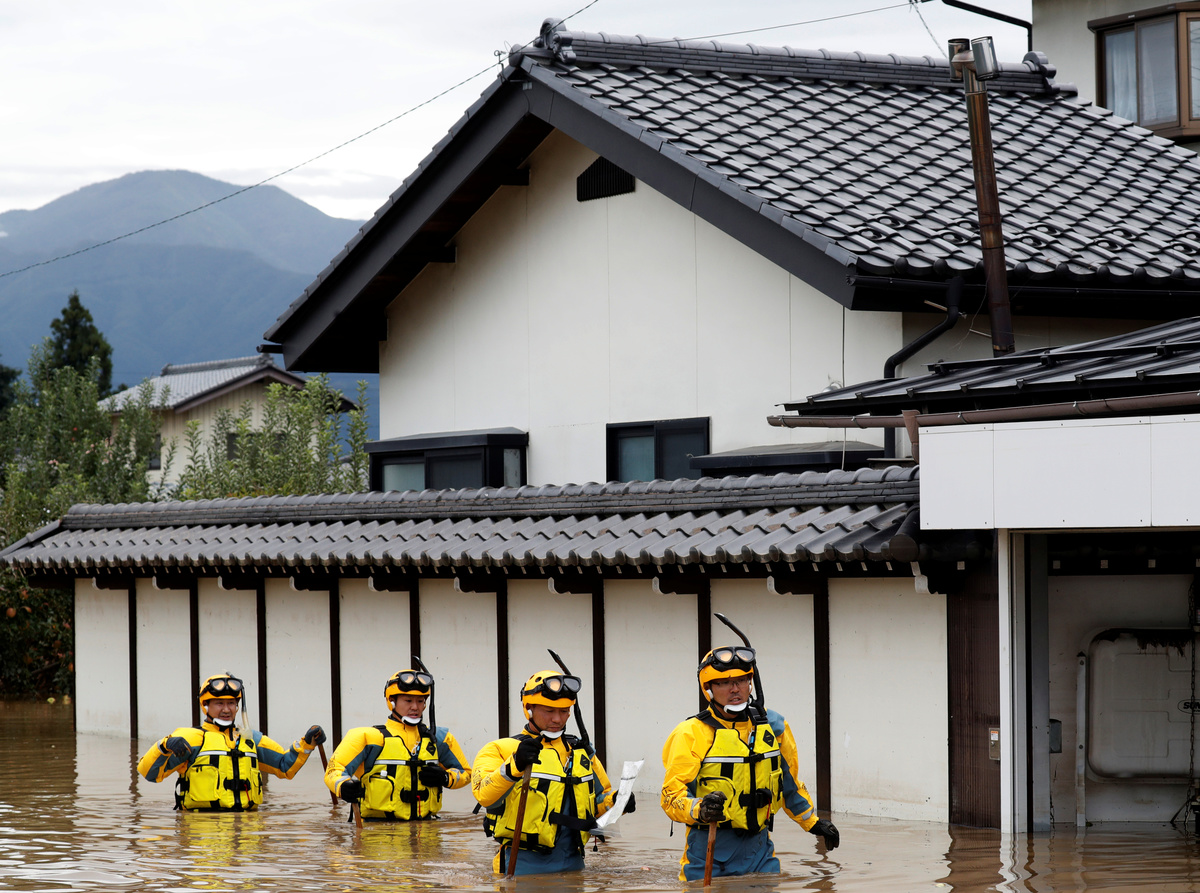
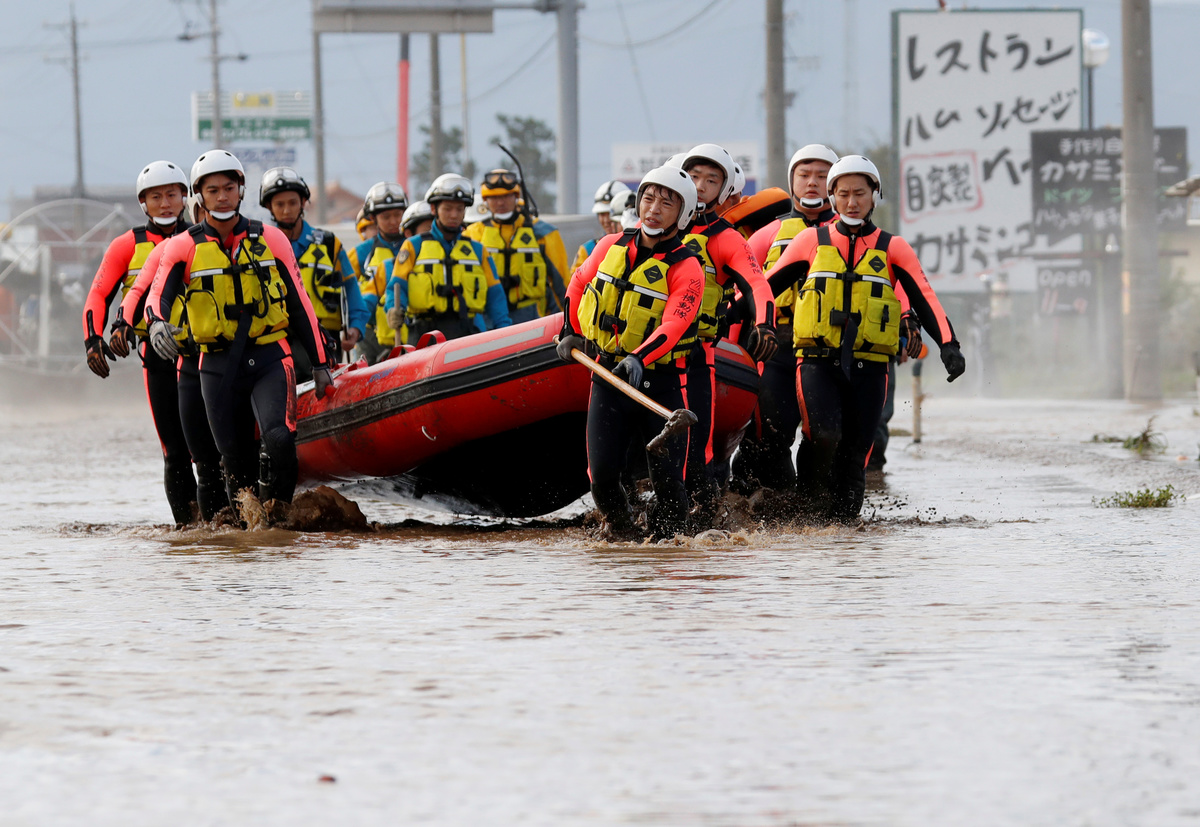
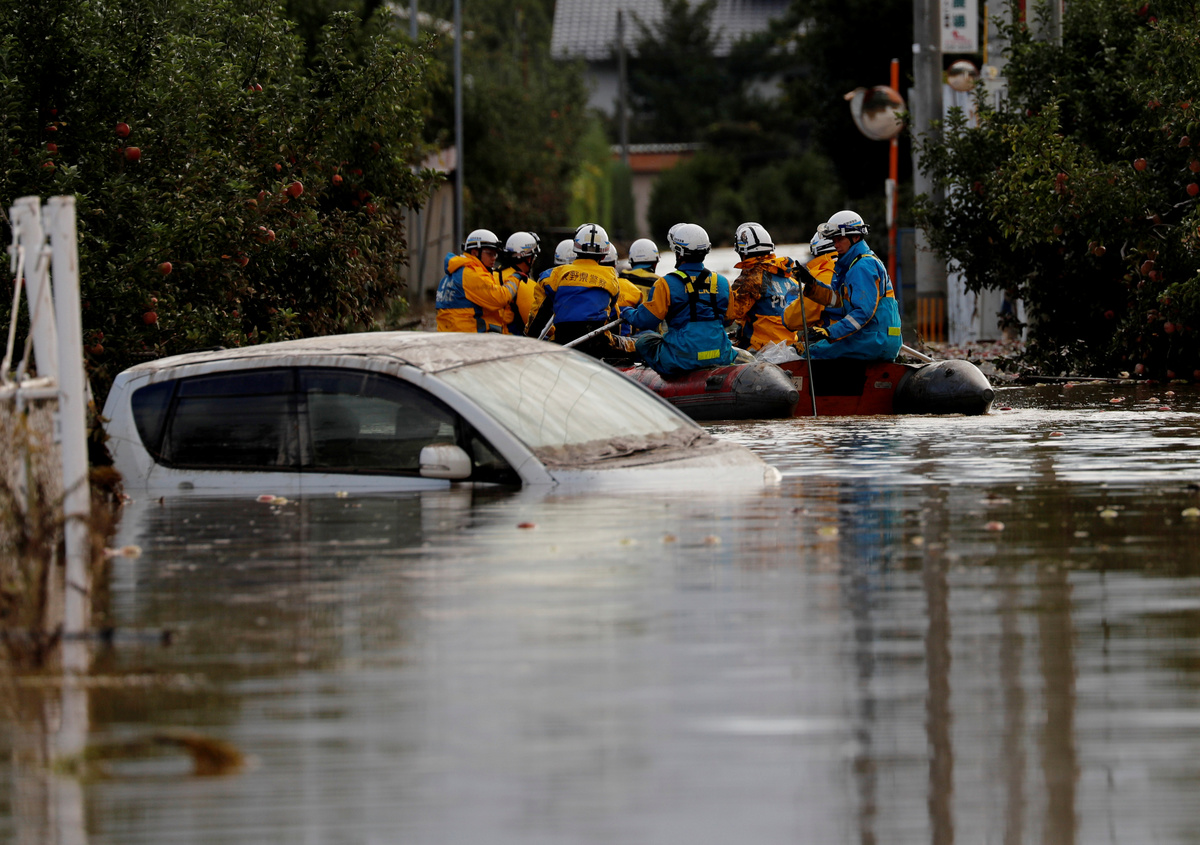
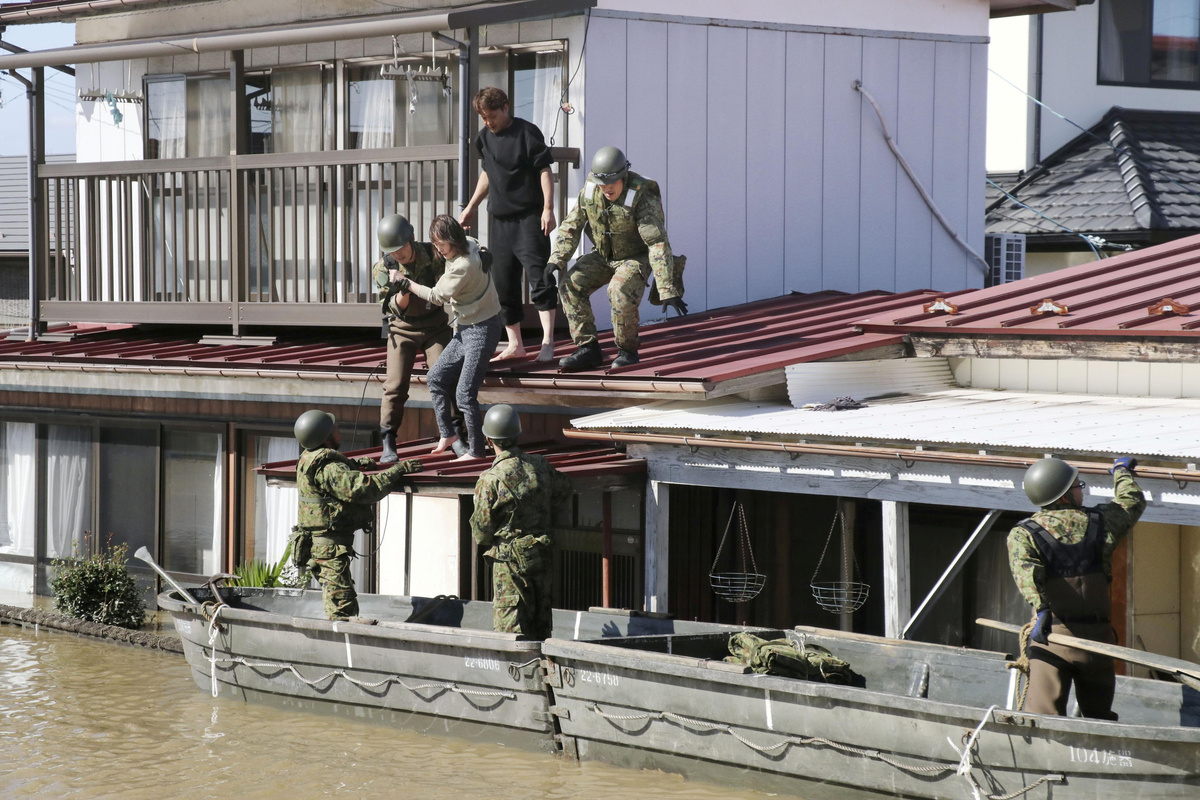
NAGANO, Japan (Reuters) - Rescue workers waded through muddy, waist-high waters on Monday searching for missing people after one of the worst typhoons to hit Japan in recent history, while rain fell again in some affected areas, stoking fears of further flooding.
Prime Minister Shinzo Abe said vast areas had been struck by the storm and called for urgent support to those affected.
Men clean up a shop in the aftermath of Typhoon Hagibis, which caused severe floods, near the Chikuma River in Nagano Prefecture, Japan, October 14, 2019. REUTERS/Kim Kyung-Hoon
At least 56 people were killed in the typhoon, which left vast sections of towns in central and eastern Japan under water, with another 15 missing and 211 injured, public broadcaster NHK said.
Tens of thousands of rescue workers and a fleet of helicopters fanned out in the affected areas, officials said.
"There still are many residents who have yet to be accounted for. Our people in uniform are working day and night in search and rescue operations," Abe told an emergency meeting of ministers.
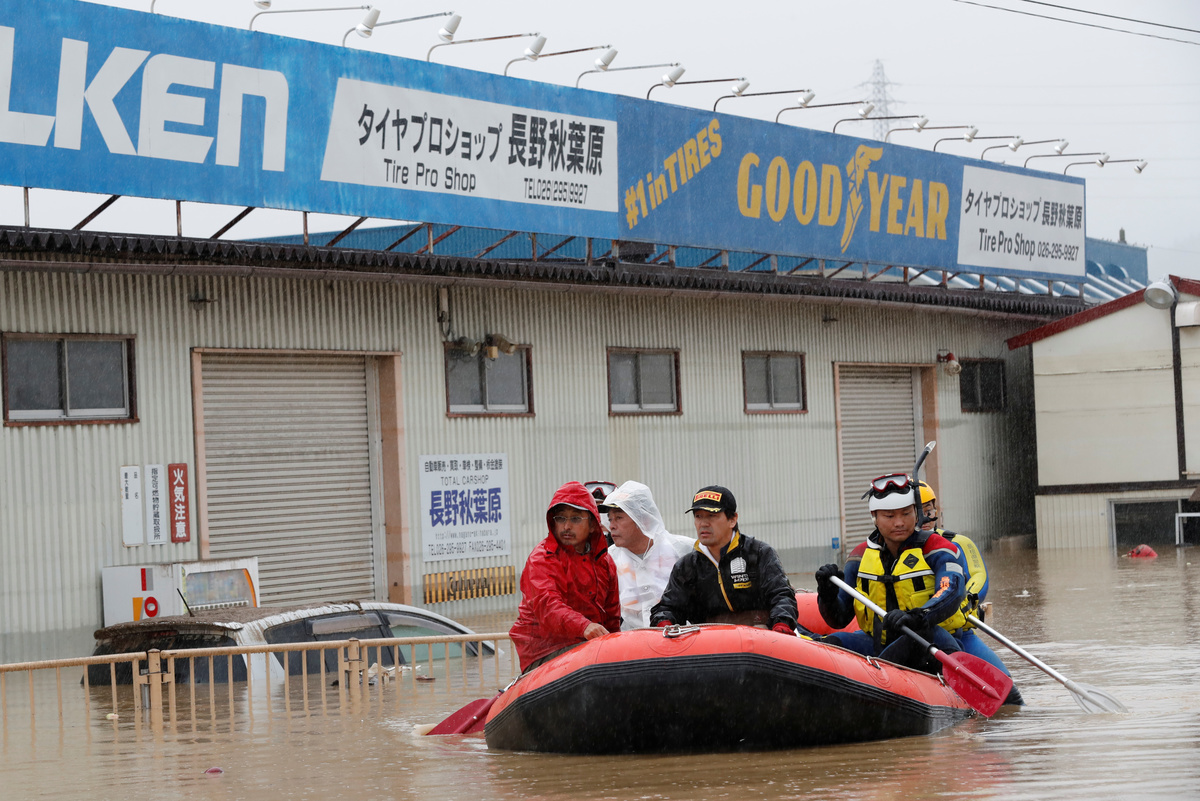
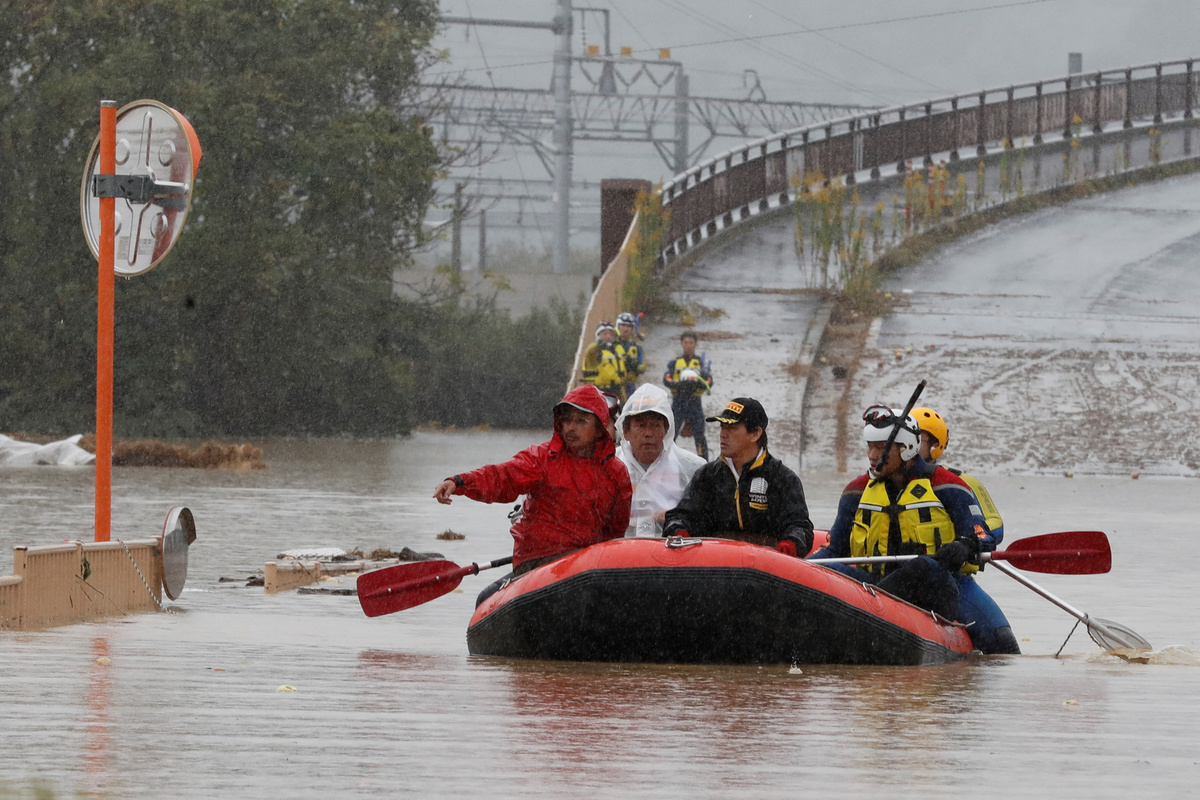
Rescue workers transport a resident in the aftermath of Typhoon Hagibis, which caused severe floods, near the Chikuma River in Nagano Prefecture, Japan, October 14, 2019. REUTERS/Kim Kyung-Hoon
"Damage has been made in an extremely wide range of areas, and more than 30,000 people are still being forced to remain in the state of evacuation. It is our urgent task to offer meticulous support to those who have been affected."
Typhoon Hagibis, which means "speed" in the Philippine language Tagalog, made landfall on Japan's main island of Honshu on Saturday and headed out to sea early on Sunday.
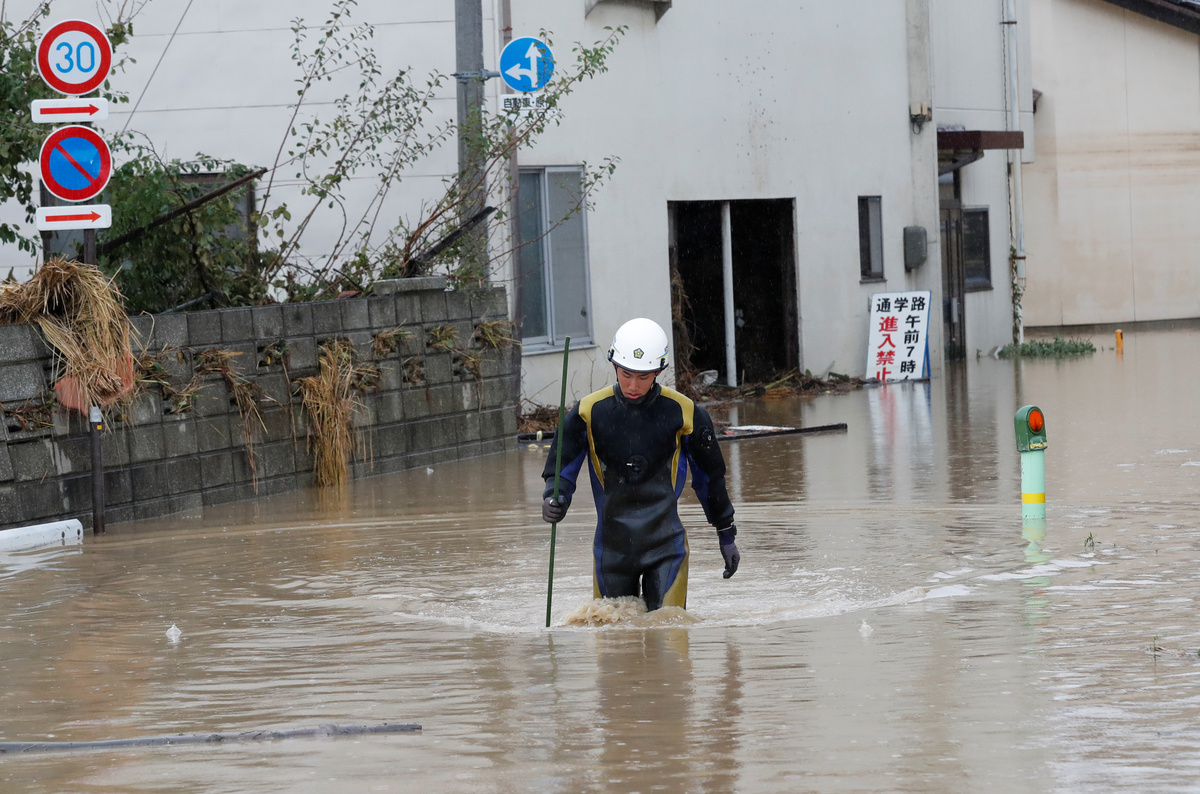
Groups of rescuers wearing goggles and snorkels looked for survivors while making their way in waist-high water in Nagano, central Japan, where the Chikuma River inundated swathes of land. A middle-aged man in Nagano, asked about the situation around his house, told NHK: "It's just like a lake."
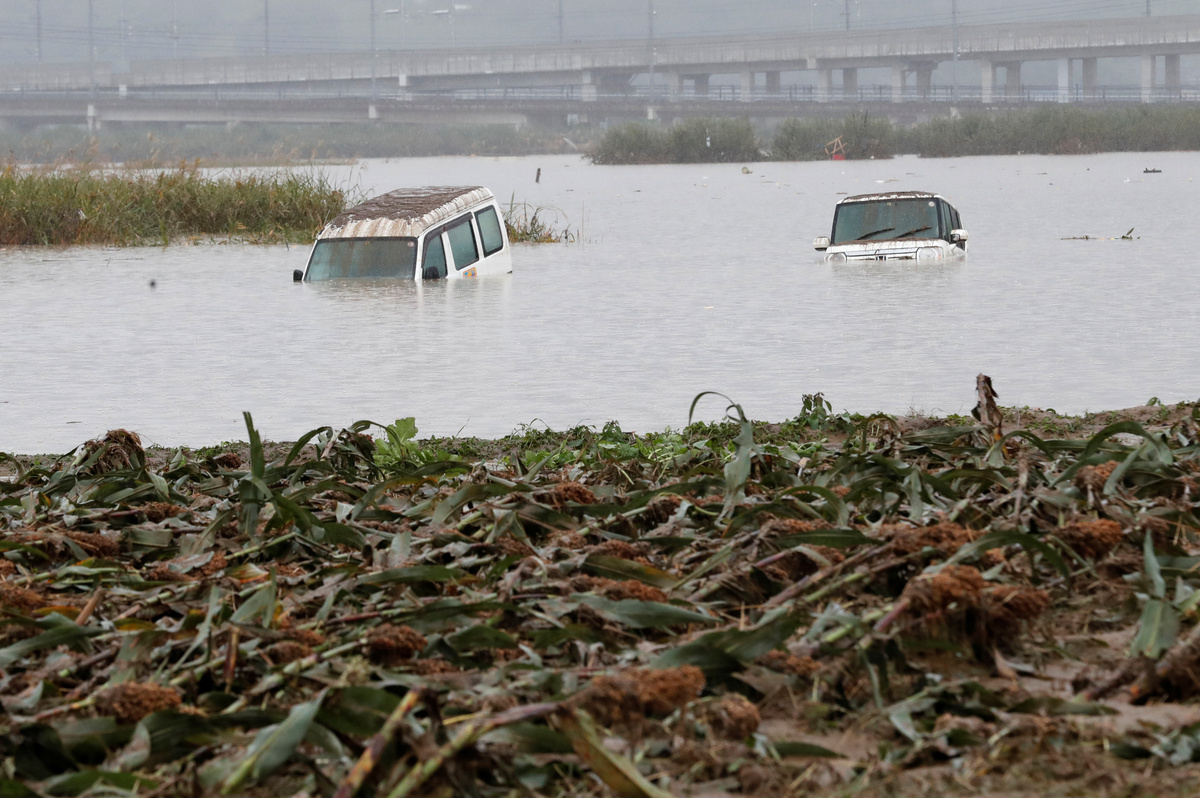
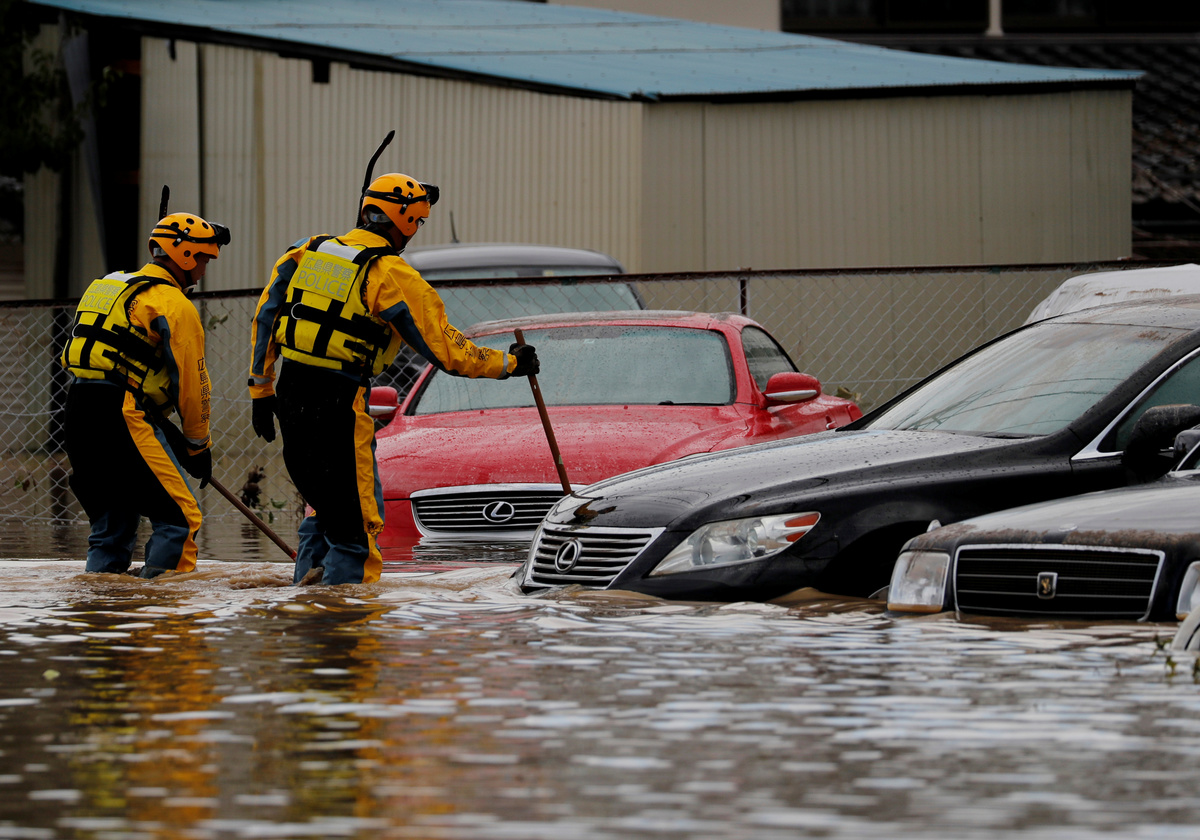
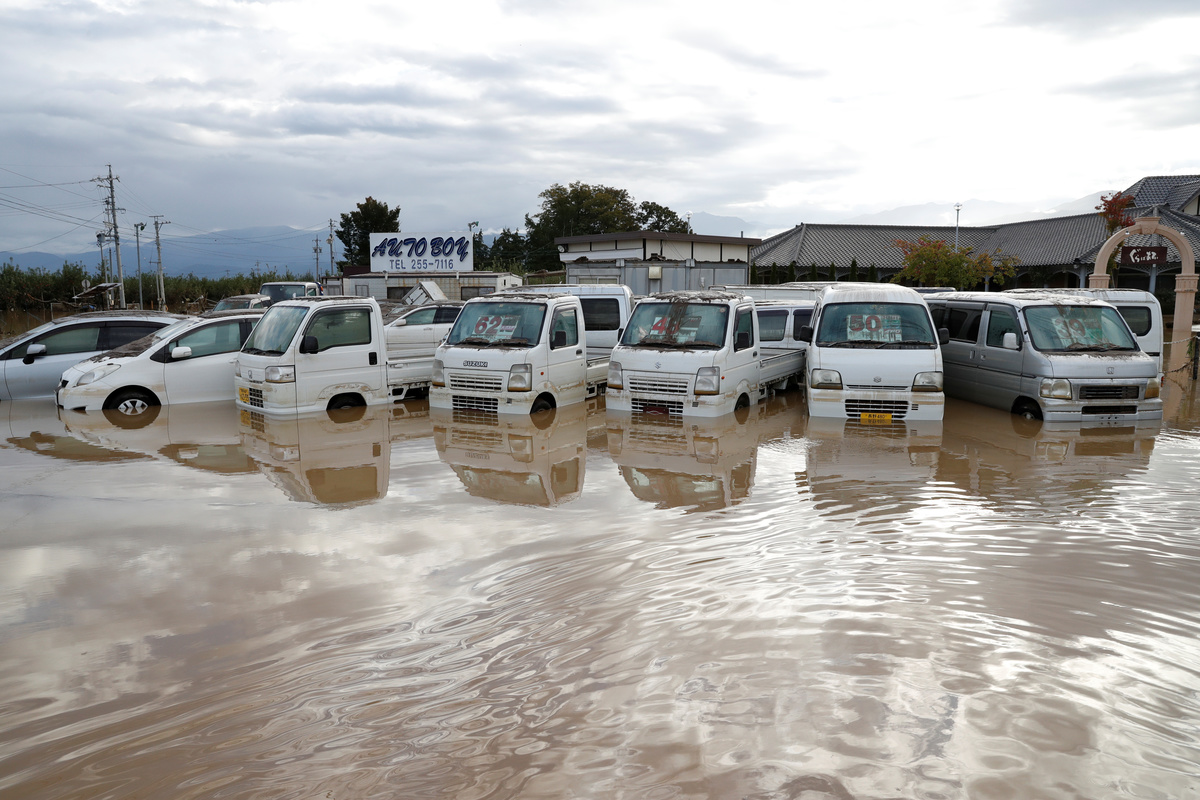
Partially submerged cars are seen in the aftermath of Typhoon Hagibis, which caused severe floods, near the Chikuma River in Nagano Prefecture, Japan, October 14, 2019. REUTERS/Kim Kyung-Hoon
Yoshinobu Tsuchiya, 69, returned on Monday morning to his home in Nagano city, near where the Chikuma had breached its banks, to find that his first floor had been flooded and that the garden he tended had turned to brown mud.
"So this is what it's come to," Tsuchiya sighed to the Nikkei newspaper. "I can't even imagine when we'll finish cleaning up. I'm sick of this flood."
A neighbour in his 60s told the newspaper: "This is just like a tsunami. This is hopeless."
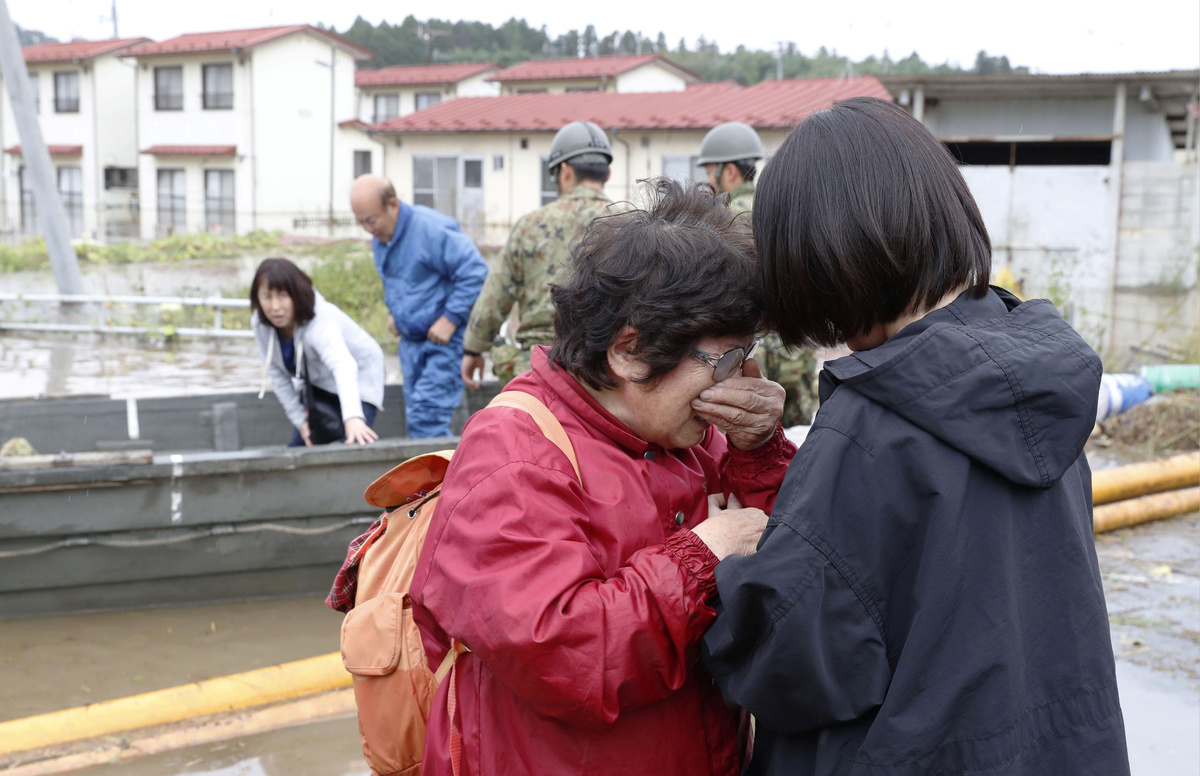
A woman cries in relief after being rescued from an area flooded by Typhoon Hagibis in Marumori, Miyagi prefecture, Japan, October 14, 2019, in this photo taken by Kyodo. Mandatory credit Kyodo/via REUTERS
At a second emergency meeting on Monday, Abe urged ministers to do their utmost to help evacuees return to normal life as soon as possible.
More than 110,000 police officers, firefighters, soldiers and coastguard personnel, as well as some 100 helicopters, were mobilised for Monday's rescue operations, Chief Cabinet Secretary Yoshihide Suga said.
Heavy rain was forecast for Monday night in some parts of central and eastern Japan, where soil is already loosened by record-breaking downpours from the typhoon, prompting Suga to urge residents to keep their guard up.
Rescue workers transport a resident in the aftermath of Typhoon Hagibis, which caused severe floods, near the Chikuma River in Nagano Prefecture, Japan, October 14, 2019. REUTERS/Kim Kyung-Hoon
"Rain is expected in affected areas today. Because of the rain we have seen so far, levels of water are high in some rivers and soil is loose in some areas," Suga said. "Please remain on your guard for landslides and river overflows."
A Nagano city official said there were some showers by early afternoon, although they were not heavy.
Some parts of Japan saw about one third of their average annual precipitation just over the weekend, causing 37 rivers to break their banks, NHK said.
A rescue worker wades in water in the aftermath of Typhoon Hagibis, which caused severe floods, near the Chikuma River in Nagano Prefecture, Japan, October 14, 2019. REUTERS/Kim Kyung-Hoon
More than 77,000 households were still without power by mid-afternoon on Monday, a national holiday, the Ministry of Economy, Trade and Industry said. That was down from 262,000 households as of midday on Sunday.
Also, about 136,000 households were without running water as of Monday morning, Suga said.
In Fukushima, north of the capital, Tokyo Electric Power Co <9501.T> reported nine cases of irregular readings from sensors monitoring water over the weekend at the Fukushima Daiichi nuclear power plant, which was crippled by a 2011 earthquake and tsunami.
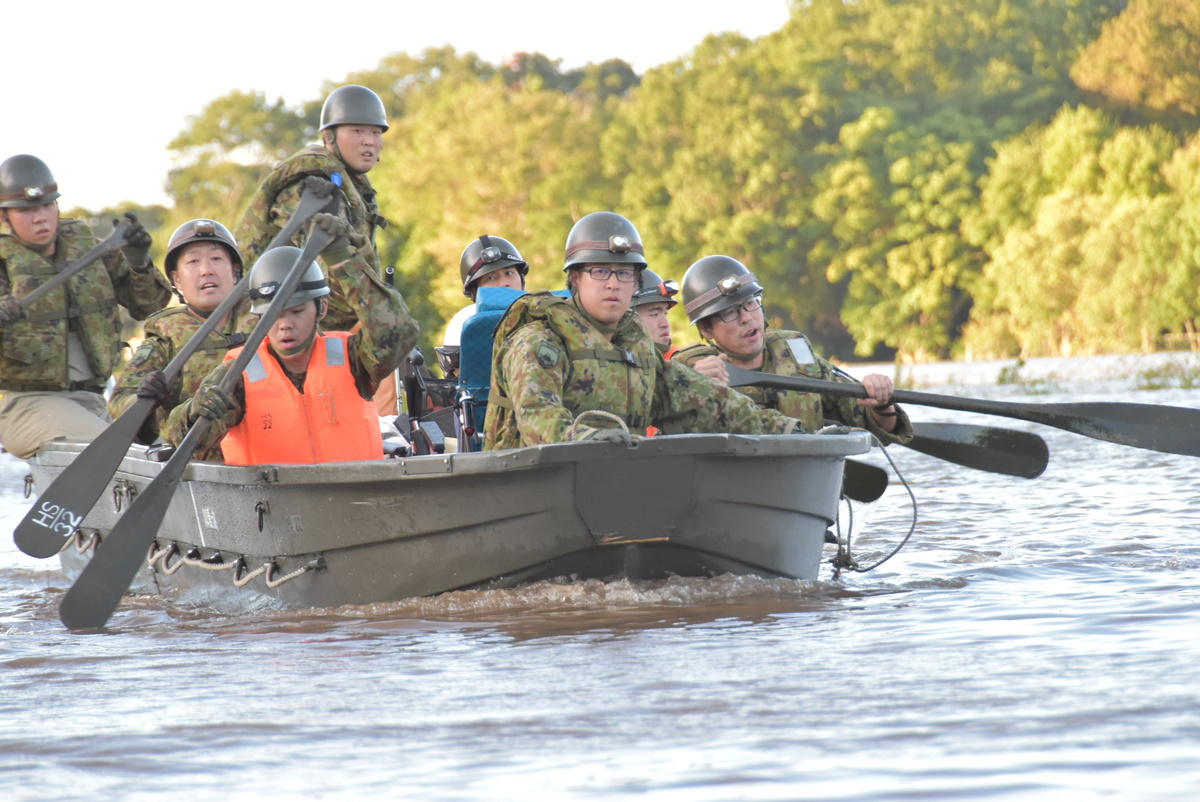
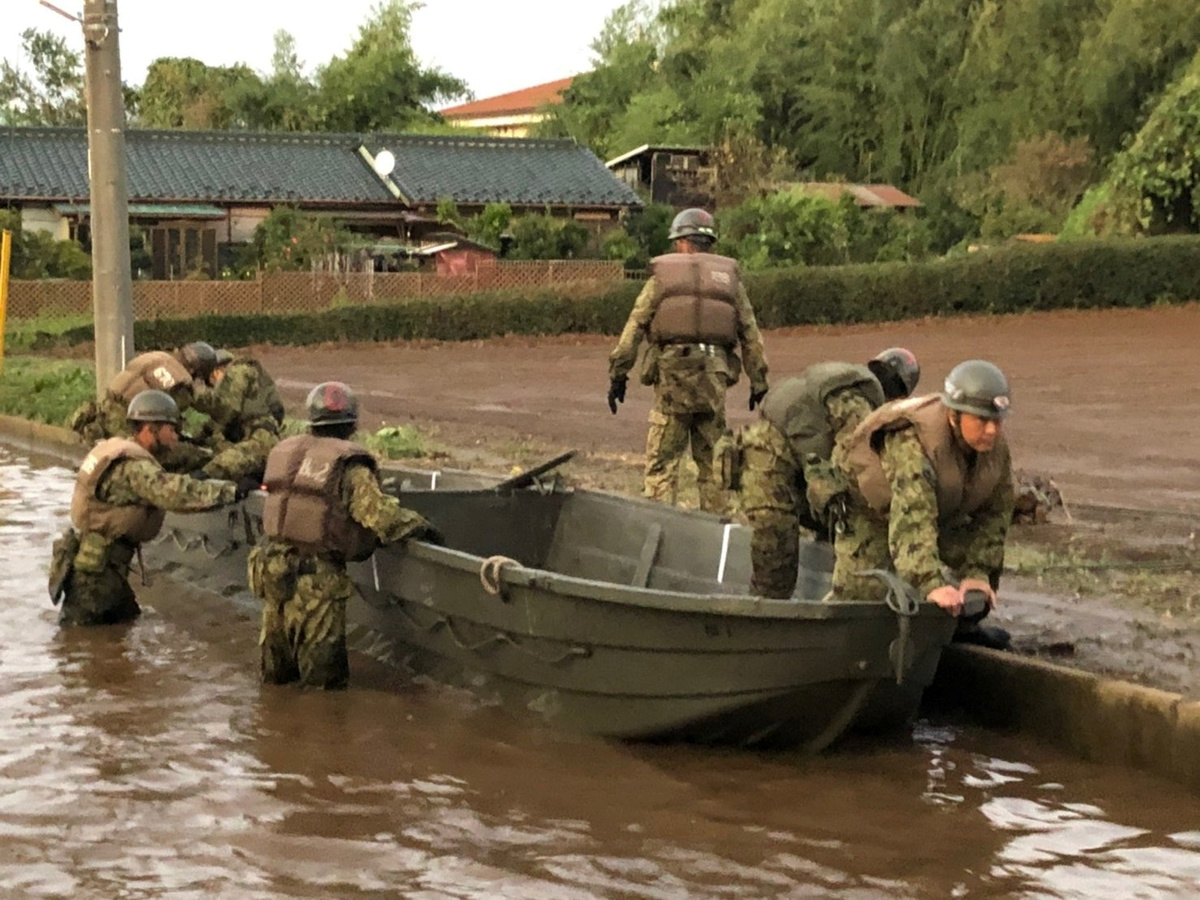
Rescue workers paddle a boat during evacuation operations after a typhoon swept through Kawagoe, Saitama prefecture, Japan, October 13, 2019 in this photo obtained from social media. JGSDF/via REUTERS
But a Tokyo Electric official said on Monday eight of the irregular readings were triggered by rainwater, and the other one by a malfunction of a monitor, and that there was no leakage of contaminated water.
(Reporting by Kyung Hoon Kim, Kwiyeon Ha; Writing by Kiyoshi Takenaka; Editing by Mark Heinrich)
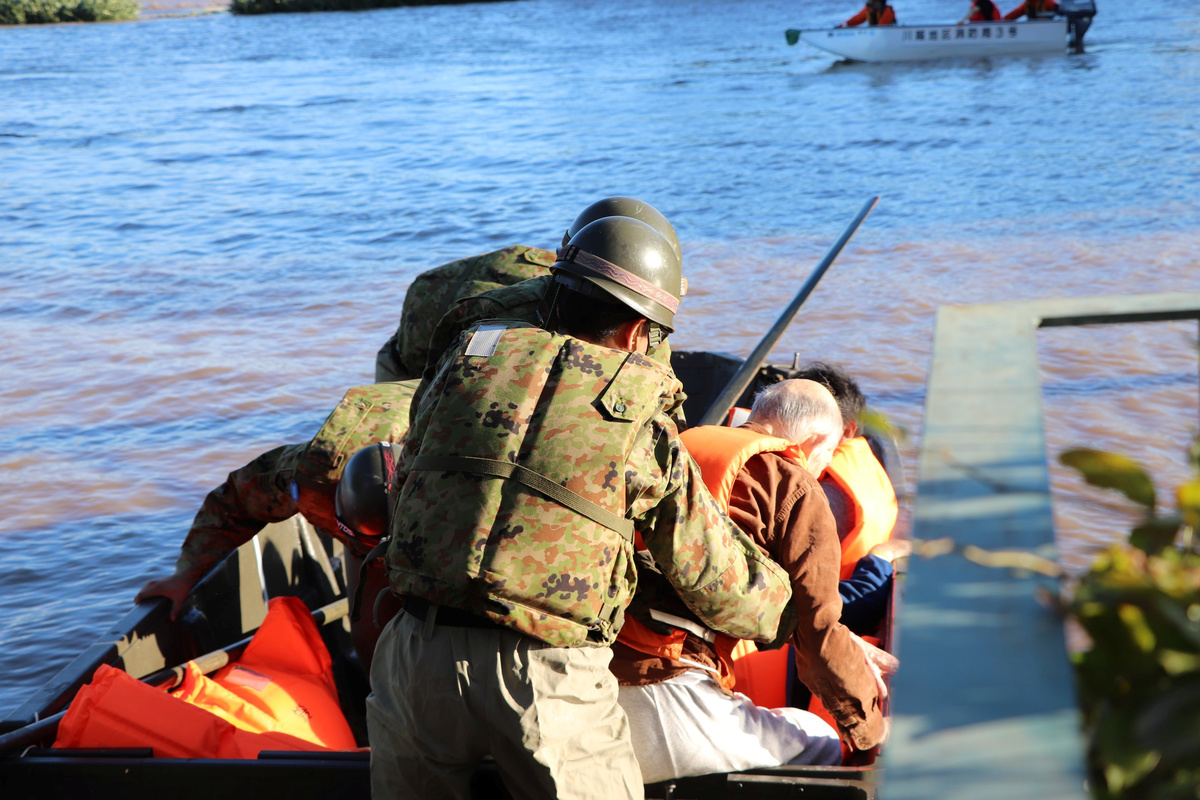
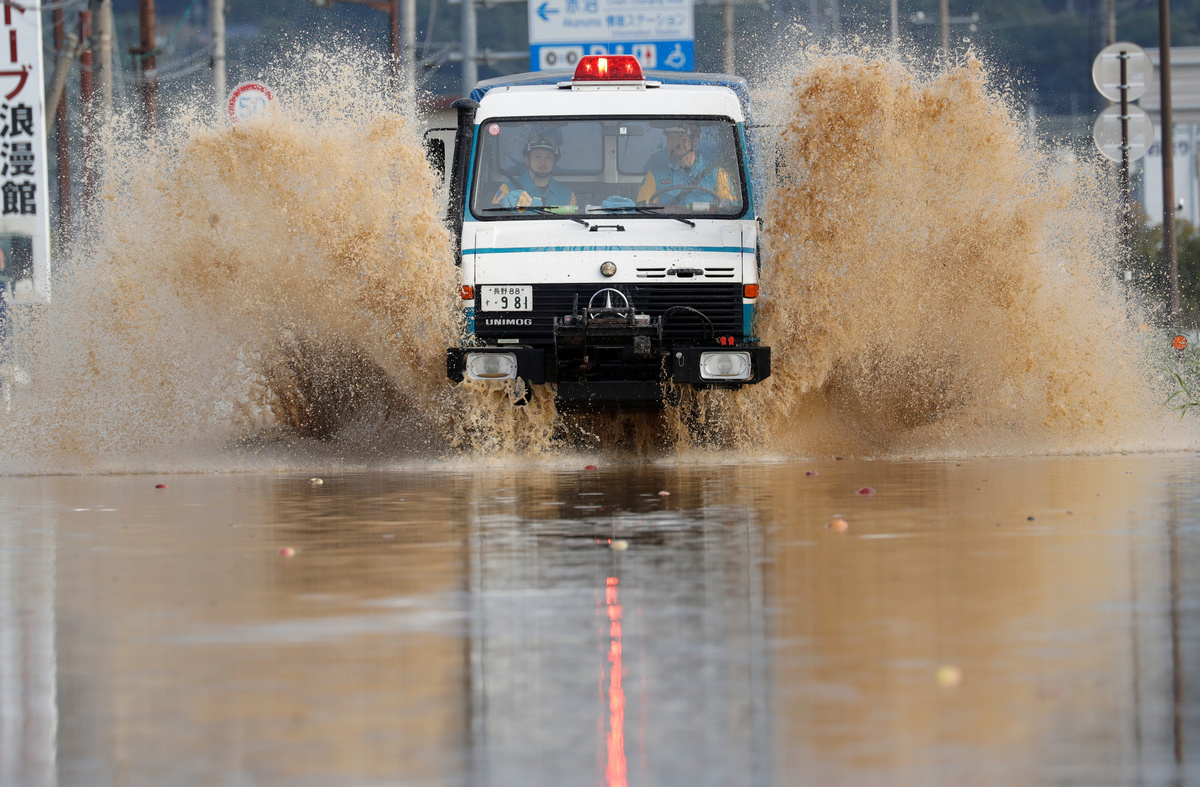
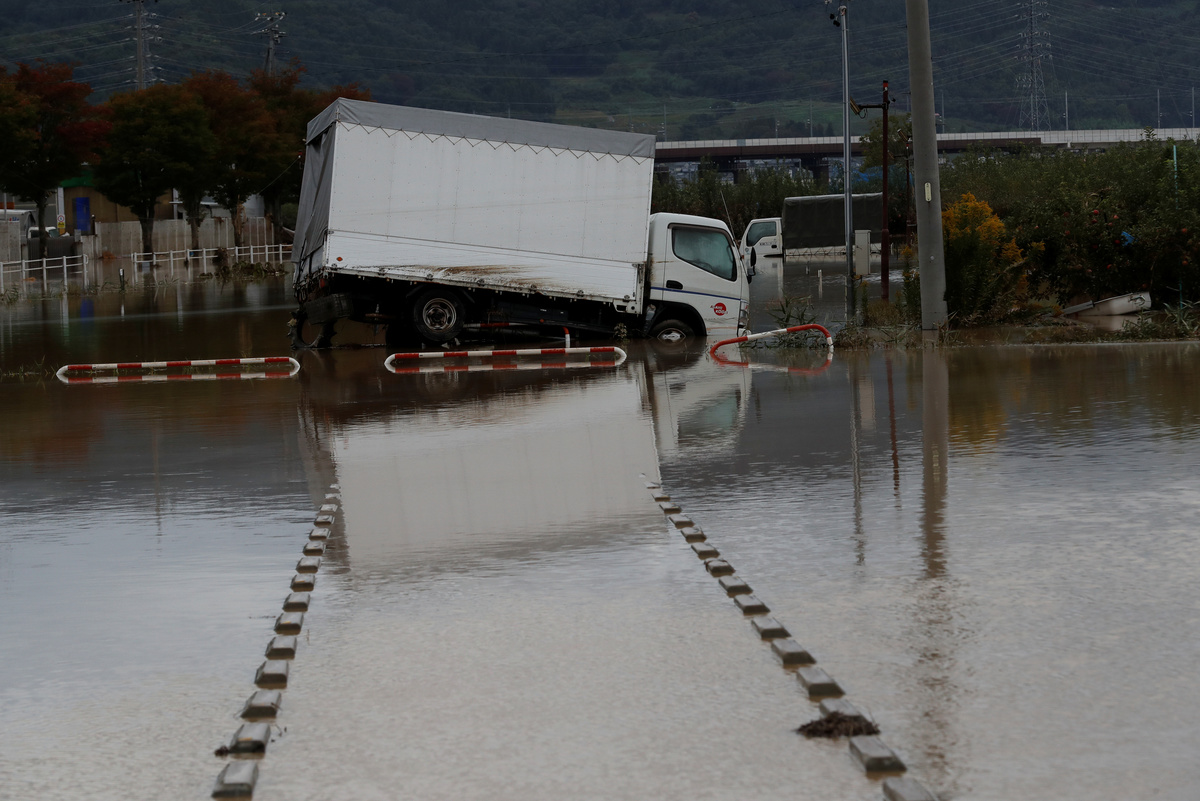
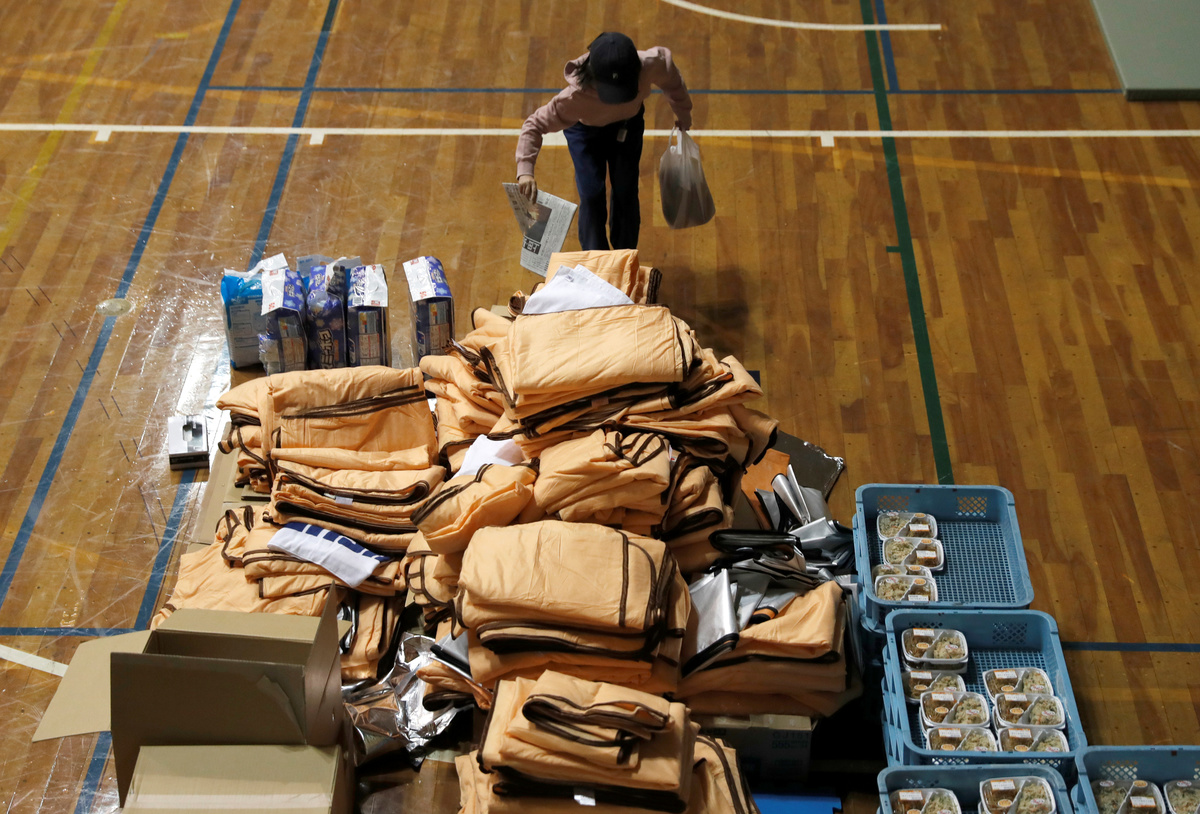
Rescue workers help residents evacuate an area after a typhoon swept through Kawagoe, Saitama prefecture, Japan, October 13, 2019 in this photo obtained from social media. JGSDF/via REUTERS Rescue workers wade near a boat during evacuation operations after a typhoon swept through Kawagoe, Saitama prefecture, Japan, October 13, 2019 in this photo obtained from social media. JGSDF/via REUTERSRescue workers help residents evacuate an area after a typhoon swept through Kawagoe, Saitama prefecture, Japan, October 13, 2019 in this photo obtained from social media. JGSDF/via REUTERS A residential area flooded by the Chikuma river, caused by Typhoon Hagibis is seen in Nagano, central Japan, October 13, 2019, in this photo taken by Kyodo. Mandatory credit Kyodo/via REUTERS ARescue workers search a flooded area in the aftermath of Typhoon Hagibis, which caused severe floods at the Chikuma River in Nagano, Nagano Prefecture, Japan, October 14, 2019. REUTERS/Kim Kyung-HoonRescue workers carry a rubber dinghy as they search a flooded area in the aftermath of Typhoon Hagibis, which caused severe floods at the Chikuma River in Nagano, Nagano Prefecture, Japan, October 14, 2019. REUTERS/Kim Kyung-HoonRescue workers search a flooded area in the aftermath of Typhoon Hagibis, which caused severe floods at the Chikuma River in Nagano, Nagano Prefecture, Japan, October 14, 2019. REUTERS/Kim Kyung-HoonA rescue vehicle makes its way through a flooded area in the aftermath of Typhoon Hagibis, which caused severe floods at the Chikuma River in Nagano Prefecture, Japan, October 14, 2019. REUTERS/Kim Kyung-HoonA truck is partially submerged in a flooded area in the aftermath of Typhoon Hagibis, which caused severe floods at the Chikuma River in Nagano Prefecture, Japan, October 14, 2019. REUTERS/Kim Kyung-HoonVehicles are seen partially submerged in a flooded area in the aftermath of Typhoon Hagibis, which caused severe floods at the Chikuma River in Nagano Prefecture, Japan, October 14, 2019. REUTERS/Kim Kyung-HoonRescue workers search a flooded area in the aftermath of Typhoon Hagibis, which caused severe floods at the Chikuma River in Nagano, Nagano Prefecture, Japan, October 14, 2019. REUTERS/Kim Kyung-HoonA person takes goods provided in the evacuation centre for affected by the flood after Typhoon Hagibis in Nagano, Nagano Prefecture, Japan, October 13, 2019. REUTERS/Kim Kyung-HoonLocal residents are rescued by Japapnese Defence-Force soldiers from a flooded area caused by Typhoon Hagibis in Kakuda, Miyagi prefecture, Japan, October 13, 2019, in this photo taken by Kyodo. Mandatory credit Kyodo/via REUTERS
Sign up to read this article
Read news from 100’s of titles, curated specifically for you.