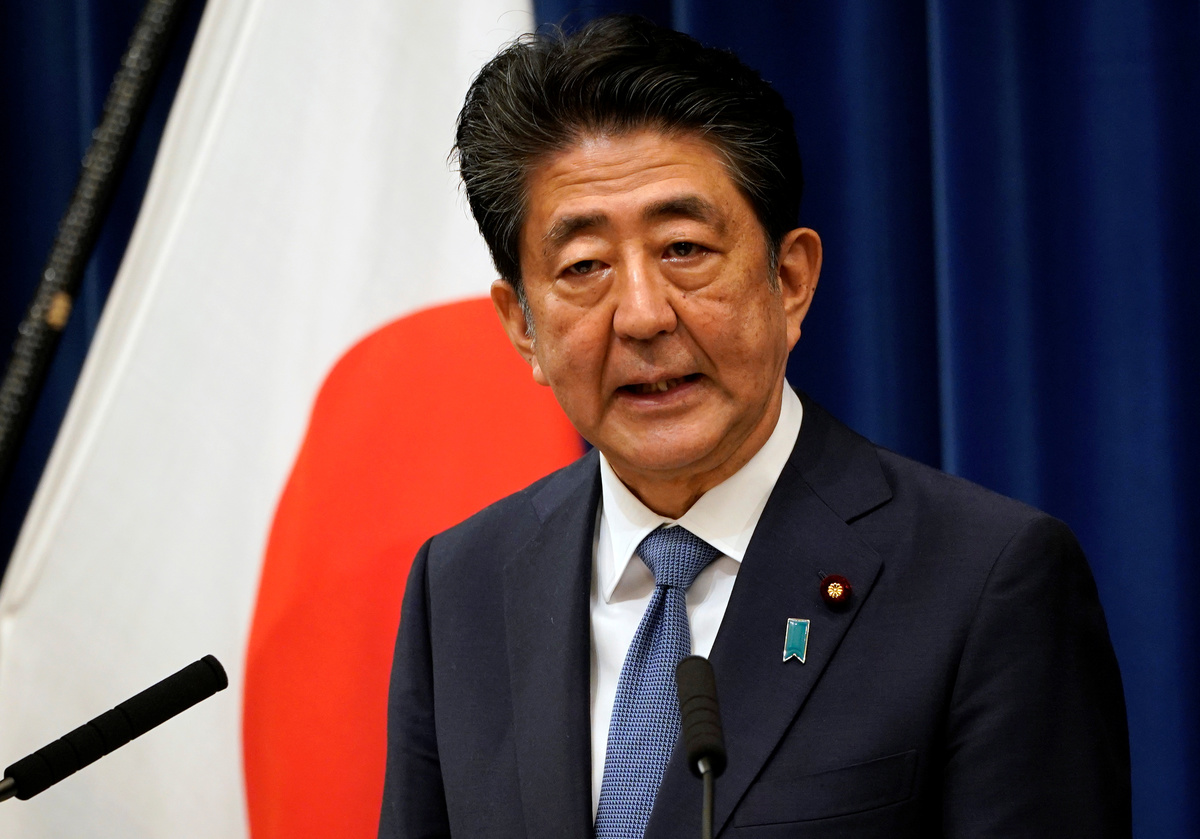
Japan's Shinzo Abe on Friday said he was resigning because of poor health, ending a tenure as the country's longest-serving prime minister in which he sought to revive an economy stricken by deflation and push for a stronger military.
His abrupt departure triggers a leadership battle in his Liberal Democratic Party (LDP) over the next few weeks. The winner will likely stick to Abe's reflationary "Abenomics" policies that had mixed results in resuscitating the world's third-largest economy.
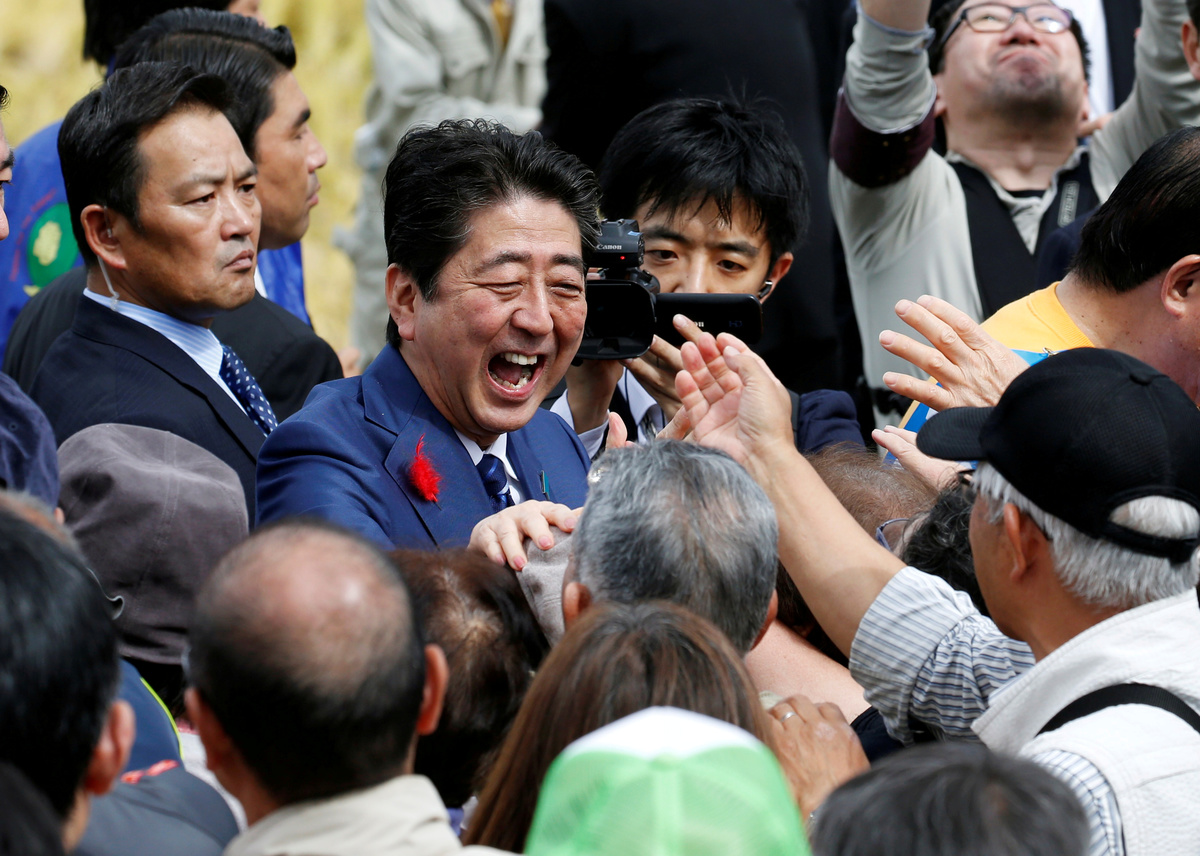
Abe has battled ulcerative colitis for years, and two recent hospital visits within a week had raised questions about whether he could stay on in until his term ends in September next year.
Despite the deepening concerns about his health, news of Abe's resignation sent tremors through Tokyo financial markets. Japan's main stock market, which has more than doubled under Abe, fell some 2% before recovering, while the yen rose on concerns of a return to deflation.
"I cannot continue being prime minister if I do not have the confidence that I can carry out the job entrusted to me by the people," Abe, 65, told a news conference as he announced his decision.
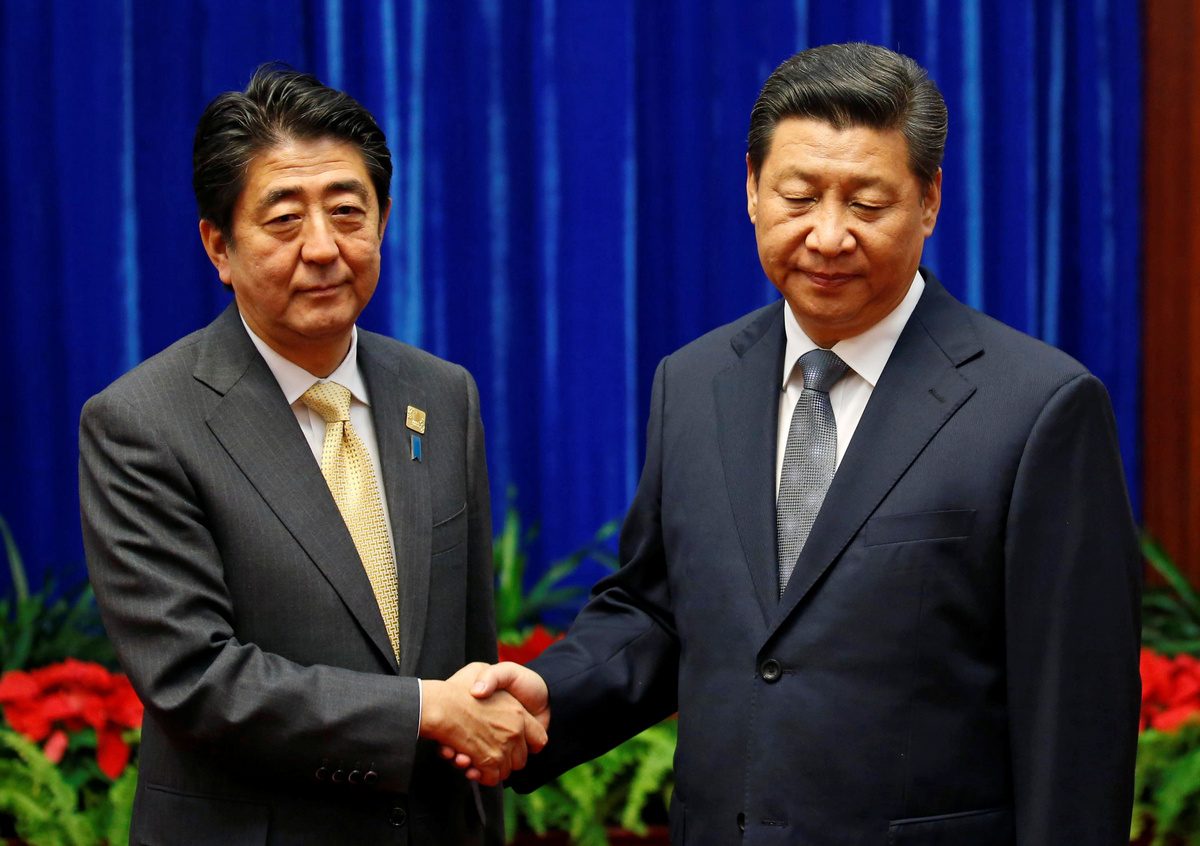
He said he wanted to avoid a political vacuum as Japan copes with the novel coronavirus. It was the second time Abe has resigned as prime minister because of poor health, the first more than a decade ago.
"I apologise from the bottom of my heart that despite all of the support from the Japanese people, I am leaving the post with one full year left in my term," he said.
At times during his news conference he choked up and blinked back tears.
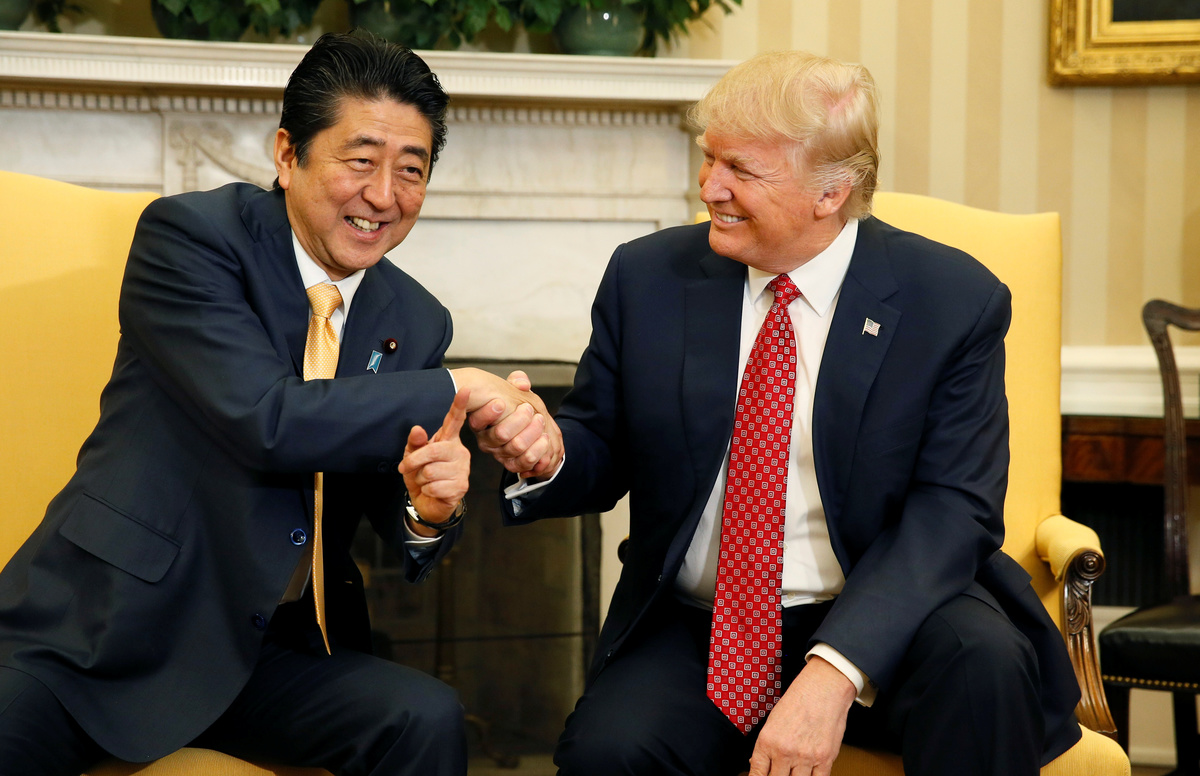
Apart from inheriting an economy in the throes of its worst downturn since World War Two, Abe's successor will be left to try and ensure next year's Olympics - already delayed for a year by the COVID-19 pandemic - will go ahead.
Former defence minister Shigeru Ishiba and former foreign minister Fumio Kishida quickly expressed interest in the top job, media reported. Among others whose names have been floated is Abe's close aide, Chief Cabinet Secretary Yoshihide Suga.
"The broad picture remains intact. In terms of economic and fiscal policy, the focus remains very much on reflation," said Jesper Koll, senior adviser to asset manager WisdomTree Investments. "Longevity will be a struggle."
RECORD TENURE
The resignation comes just days after Abe surpassed a record for longest consecutive tenure as premier set by his great-uncle Eisaku Sato half a century ago.
But for all his longevity, he failed to deliver on one of his most prized goals - altering Japan's postwar, pacifist constitution. He also fell short of a full revival of the economy, even before the coronavirus.
"As head of the ruling party he worked hard on Abenomics for eight years," said Naohito Kojima, 55, a brokerage employee.
"There were various problems but if someone else had been leader, it's questionable whether they could have maintained a stable government as long as Mr Abe."
Abe won praise for reasserting Japan's presence on the global stage after years of revolving-door premiers.
His resignation comes amid an uncertain geopolitical environment, including an intensifying confrontation between the United States and China.
The conservative Abe returned as prime minister for a rare second term in December 2012, pledging to revive growth with his "Abenomics" mix of hyper-easy monetary policy, government spending and reforms. He also pledged to beef up Japan's defence and revise the constitution.
Abe was instrumental in winning the Tokyo 2020 Olympics.
"We must fulfil our responsibility as the host country of the Olympics," Abe told the news conference. "Of course, I believe my successor will work to host the Olympics under the same belief."
UNDER FIRE
Under fire for his handling of the coronavirus and scandals among party members, Abe has recently seen his support fall to one of the lowest levels since taking power in December 2012.
Japan has not suffered the explosive surge in virus cases seen elsewhere - it has had nearly 67,000 cases and 1,255 deaths - but Abe drew fire for a clumsy early response and what critics saw as a lack of leadership as infections spread.
Abe kept his promises to boost spending on the military after years of declines and expanding its capacity to project power abroad. In a historic shift in 2014, his government reinterpreted the constitution to allow Japanese troops to fight abroad for the first time since World War Two.
A year later, Japan adopted laws scrapping a ban on exercising the right to defend a friendly country under attack.
But Abe proved unable to revise the U.S.-drafted, postwar constitution's pacifist Article 9, a personal mission that also eluded his grandfather, Nobusuke Kishi, who quit as premier in 1960 because of uproar over the U.S-Japan security pact he championed.
Abe resigned from his first stint as prime minister in 2007, citing ill-health after a year plagued by scandals in his cabinet and a huge election loss for his ruling party. He had since kept his illness in check with medicine that was not previously available.
(Additional reporting by Tokyo bureau; Editing by David Dolan and William Mallard)