The government's decision to end the coronavirus-related state of emergency and less-strict priority measures at the end of this month will set the stage for pressing ahead with a planned further easing of restrictions in November.
Tuesday's decision to relax certain restrictions will enable the resumption of some day-to-day social and economic activities. The government intends to loosen restrictions even more widely following a one-month "trial period" intended to prevent infection numbers from quickly rebounding.
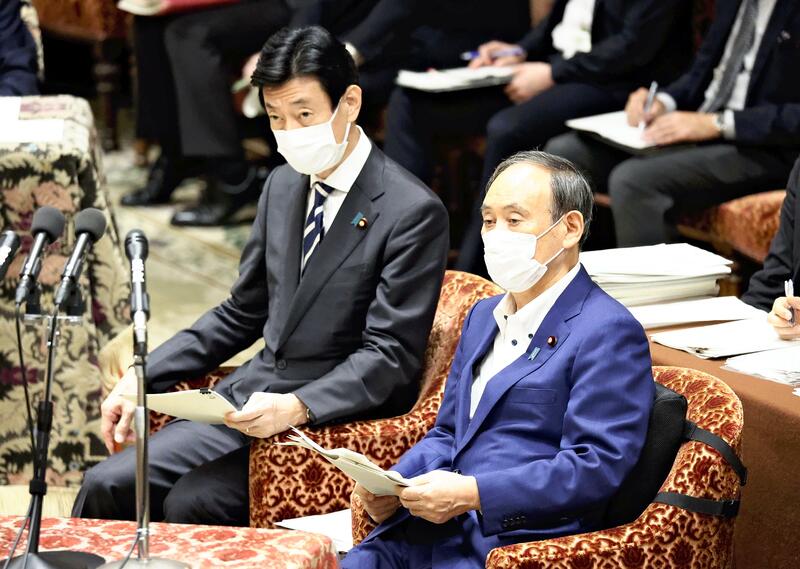
Gradually easing restrictions and moving toward a return to "daily lives filled with activity and peace of mind" is the government's desire, Prime Minister Yoshihide Suga said at a press conference Tuesday.
One of Suga's pet arguments is that social and business activities need to be resumed.
Given the sharp fall in new infection cases in recent weeks, the government unveiled revised basic coronavirus response measures Tuesday that outlined a lifting of certain restrictions imposed on restaurants, public events and other activities.
Restrictions will be loosened in stages, with only some relaxed in October.
Restaurants and bars in the prefectures where the state of emergency was declared or priority measures have been in effect will no longer be prohibited from serving alcohol. However, even restaurants that have been certified as taking infection prevention measures will be asked to close by 9 p.m. Establishments with karaoke equipment will be requested to refrain from allowing customers to use it.
The maximum number of attendees at large events will remain capped at 10,000 during October.
Health, Labor and Welfare Minister Norihisa Tamura also reminded the public that the pandemic is not over yet.
"It'll be troubling if people go back to moving and behaving like they did when coronavirus wasn't around," Tamura said at a press conference Tuesday.
Even so, the government intends to further ease restrictions in November. These steps are expected to include extending the operating hours for restaurants and bars and lifting the maximum number of customers permitted per group at these establishments. It also anticipates that the upper limit on attendees at events could be raised to 20,000.
Suga has become increasingly confident in the COVID-19 vaccines' ability to blunt coronavirus infections. He credits the vaccine for bringing Japan's fifth wave of infections sharply down.
"What else could it be apart from the vaccines?" Suga reportedly said to a close aide.
More than 160 million COVID-19 vaccine shots have been administered in Japan. The government's goal of completing the two doses required for all people wishing to be vaccinated in October or November is coming into range. If the situation pans out as Suga has wished, the effects of the vaccine rollout should be apparent in November, when the restrictions are eased further.
"The light is getting brighter by the day," Suga said at Tuesday's press conference.
The government is trying to make maximum use of vaccines in its efforts to rev up the economy.
At the government's coronavirus task force meeting Tuesday, participants decided on a plan that would allow restaurants and bars even in areas under a future state of emergency to stay open until 9 p.m. and serve alcohol, provided those establishments had been confirmed as taking infection prevention precautions and customers showed evidence they had been vaccinated or tested negative for the virus.
Read more from The Japan News at https://japannews.yomiuri.co.jp/