Japan picks 'Wagyu Olympics' winner amid growing demand for luxury beef
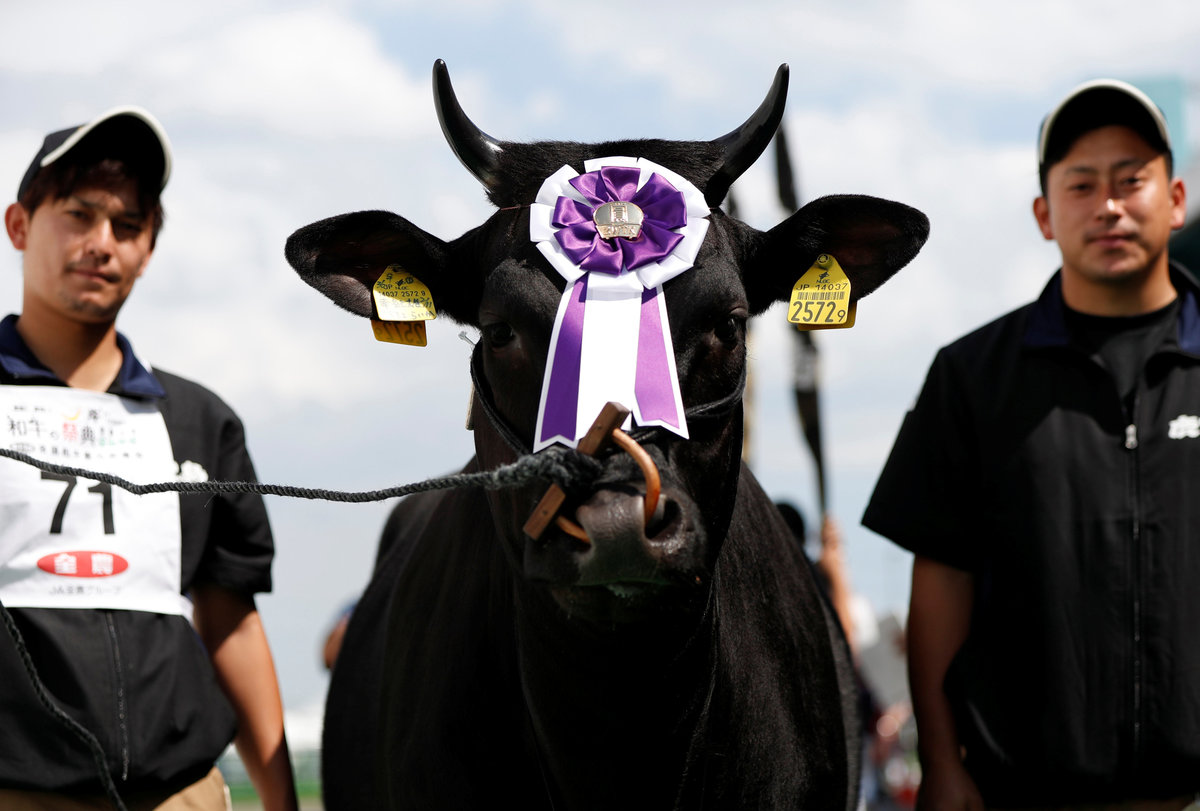
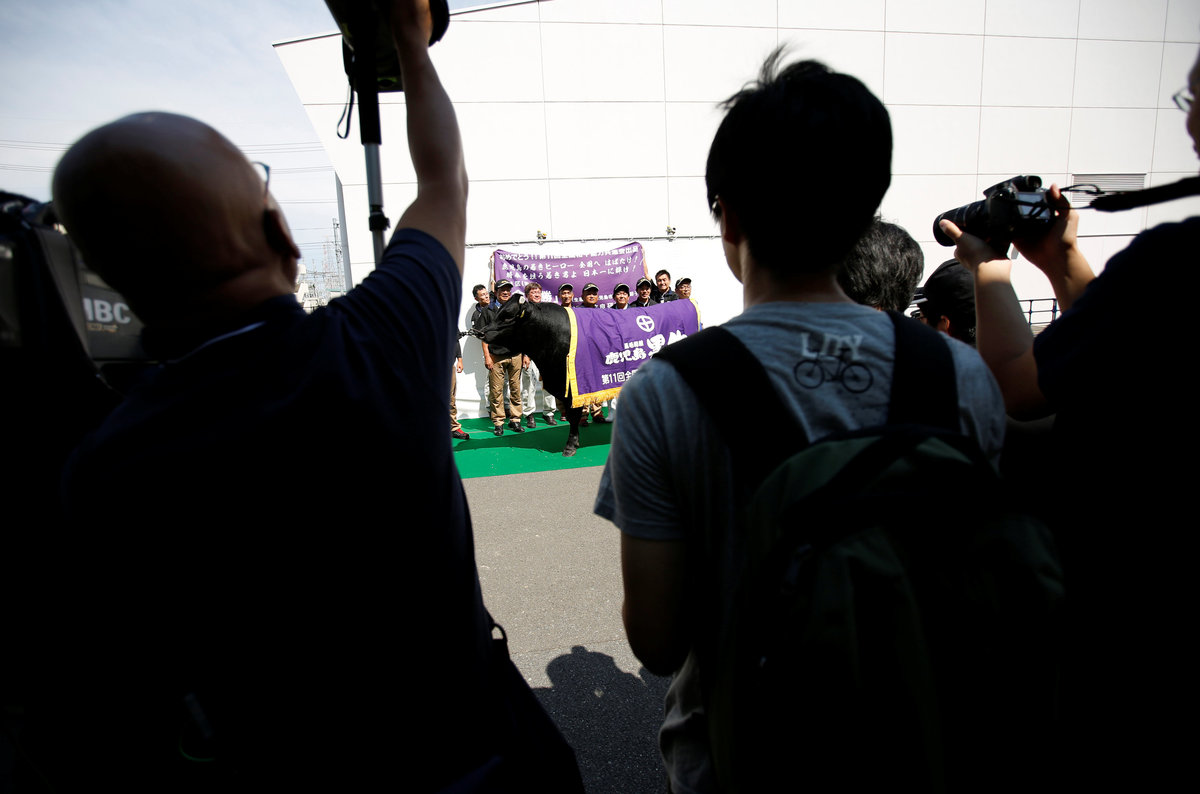
18 month-old female cattle Yoriko, from Kagoshima prefecture, is posed for a photograph during a photo session after winning the breeding cattle category - young female cattle division competition at 11th National Japanese Beef Ability Expo, commonly known as Wagyu Olympics, in Sendai, northern Japan September 10, 2017. Picture taken September 10, 2017. REUTERS/Issei Kato
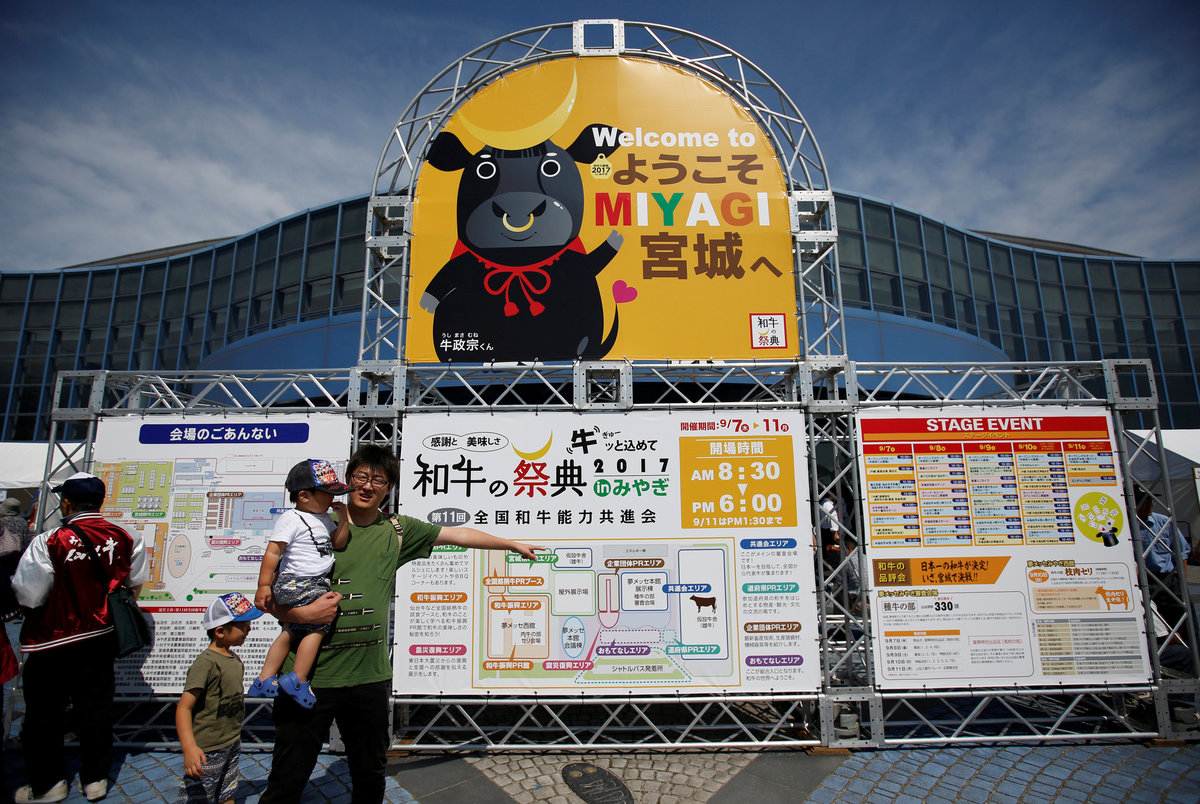
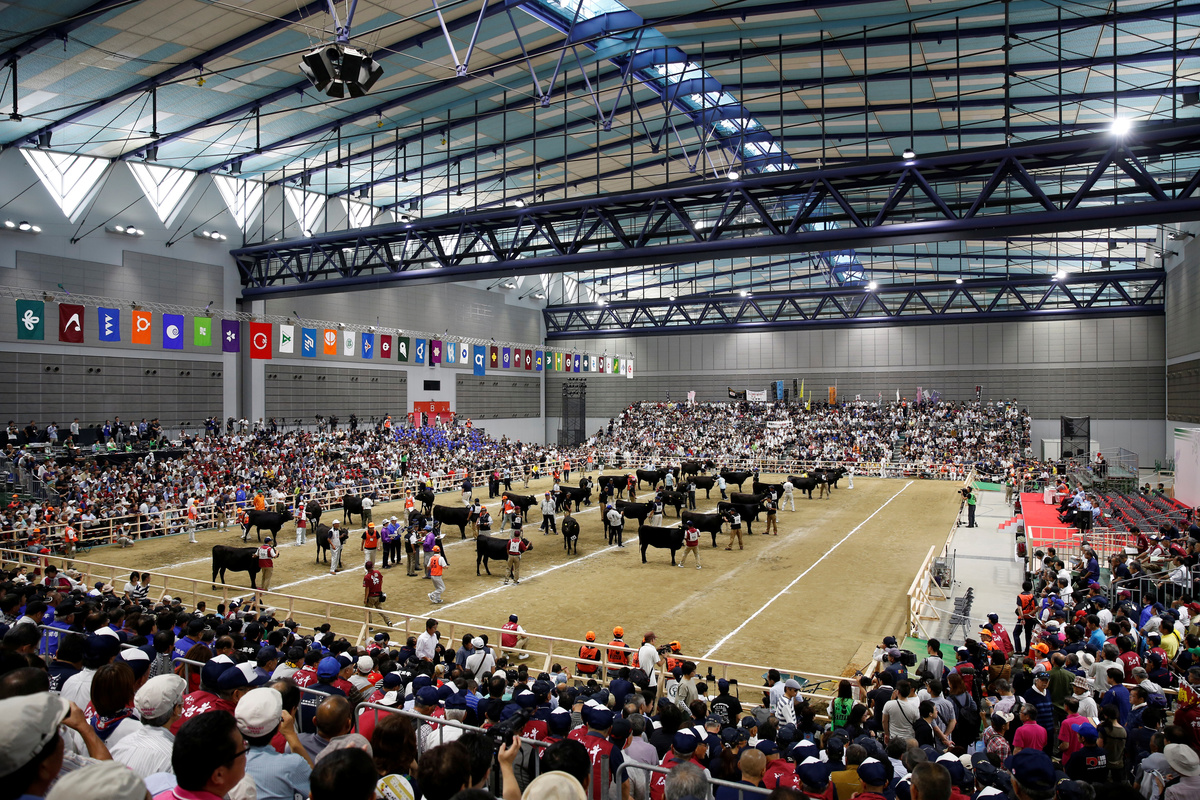
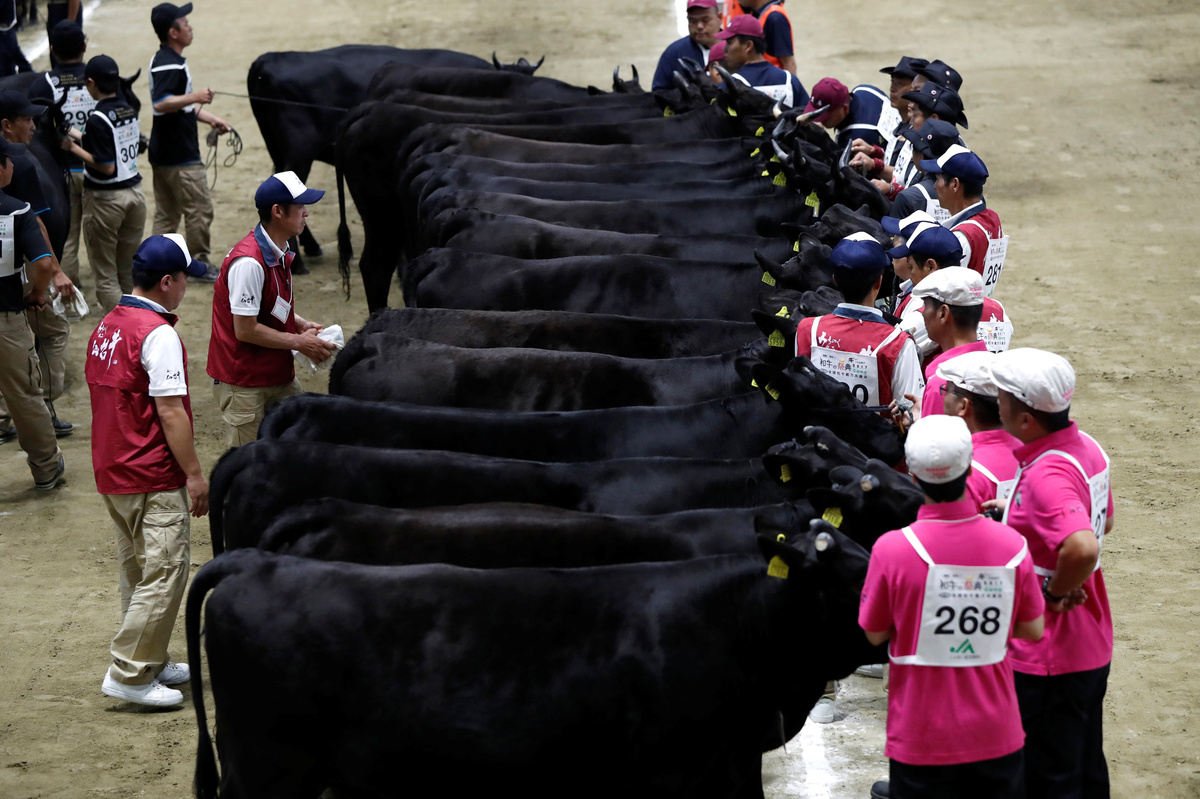
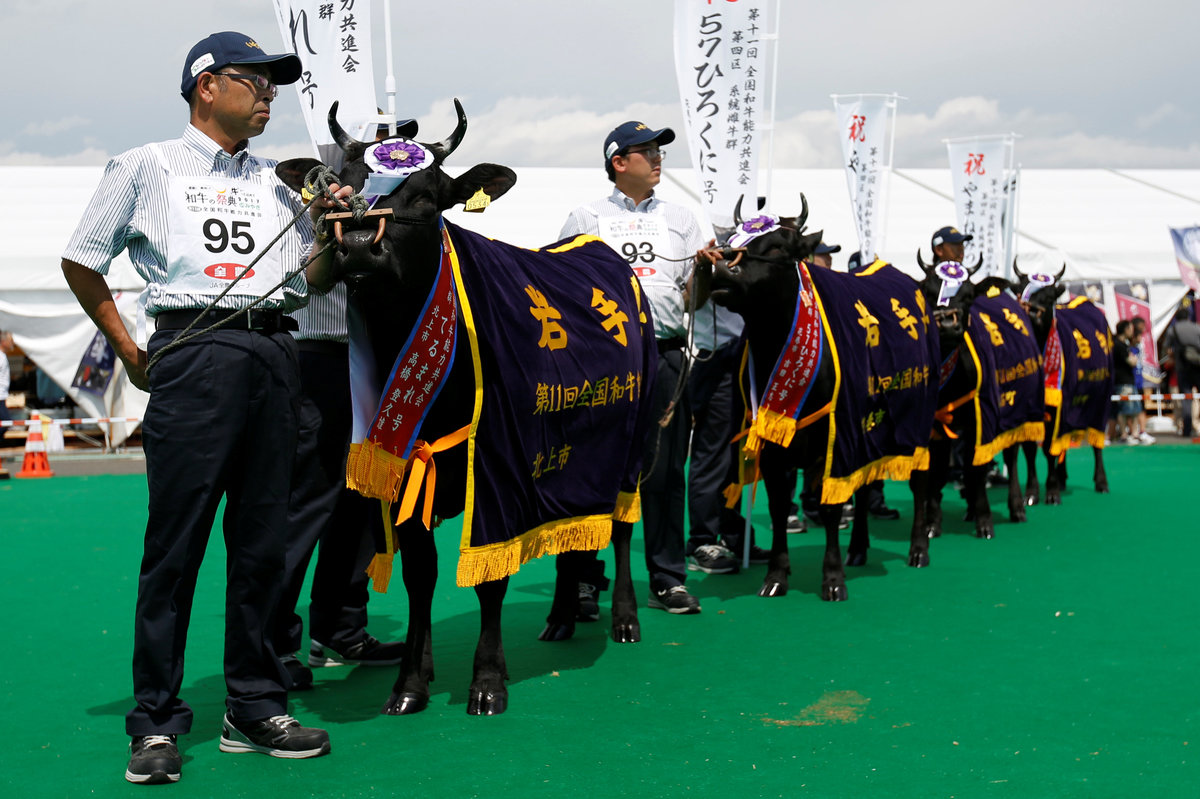
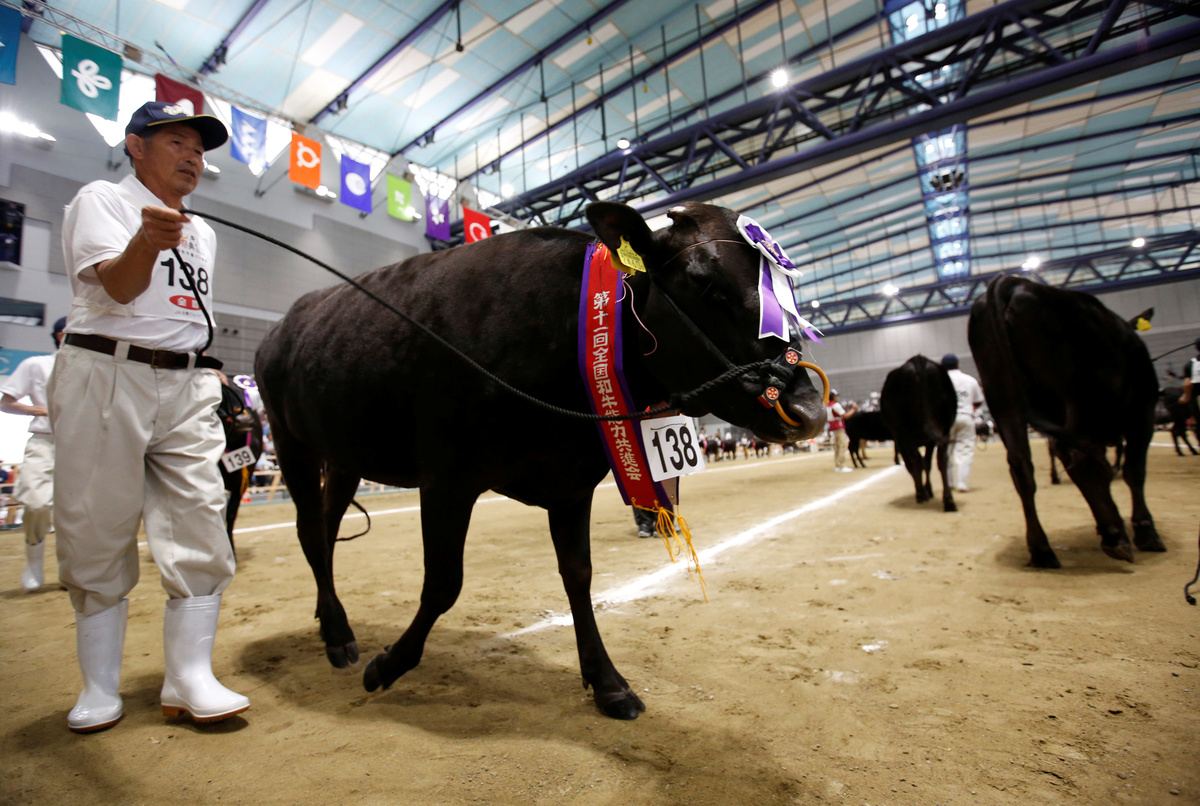
SENDAI, Japan (Reuters) - More than 500 cattle paraded through a ring in northern Japan in the "Wagyu Olympics" to win prizes and renown as the most fertile - and mouth-watering - examples of "wagyu" beef, increasingly popular among foodies around the world.
The six-day contest that ended in Miyagi prefecture on Monday saw breeders of wagyu, prized by gourmet fans for its luscious marbling, compete for fame in categories such as best beef cattle, best bull and most fertile cow.
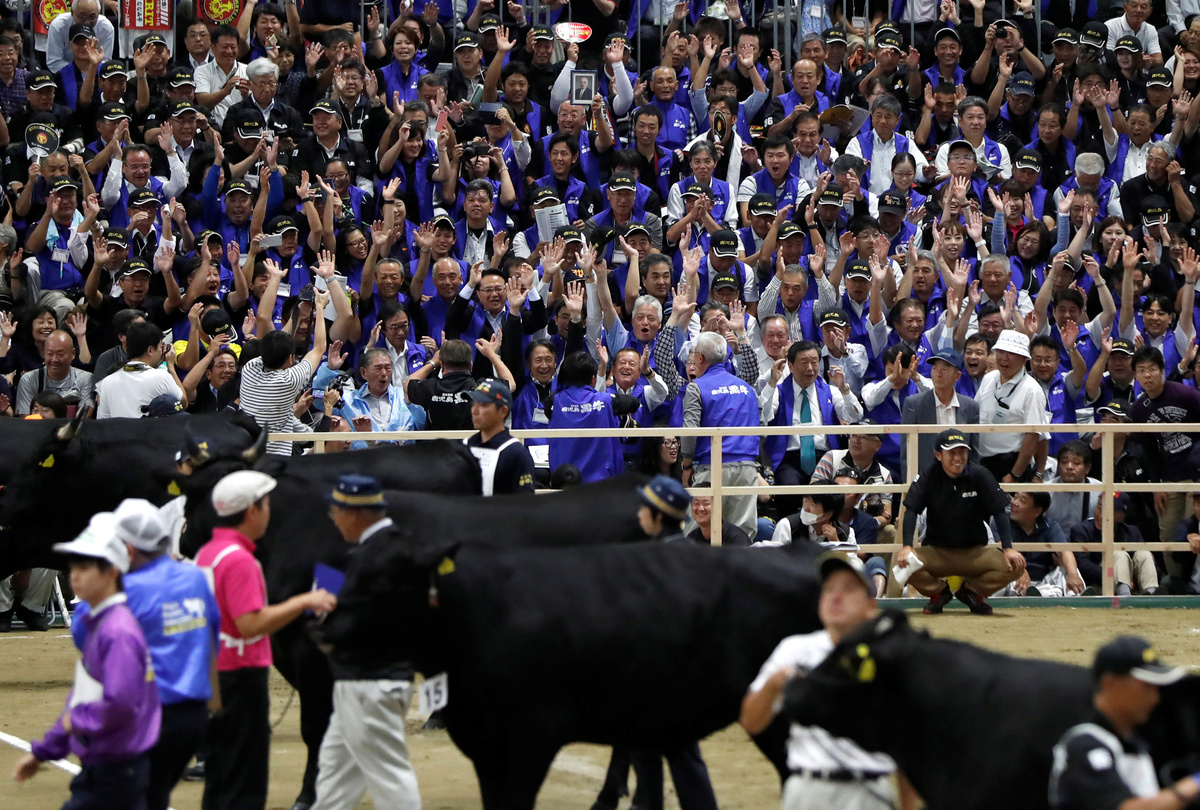
Breeders, supporters and officials from Kagoshima prefecture celebrate after winning a division of breeding cattle category competition at 11th National Japanese Beef Ability Expo, commonly known as Wagyu Olympics, in Sendai, northern Japan September 10, 2017. Picture taken September 10, 2017. REUTERS/Issei Kato
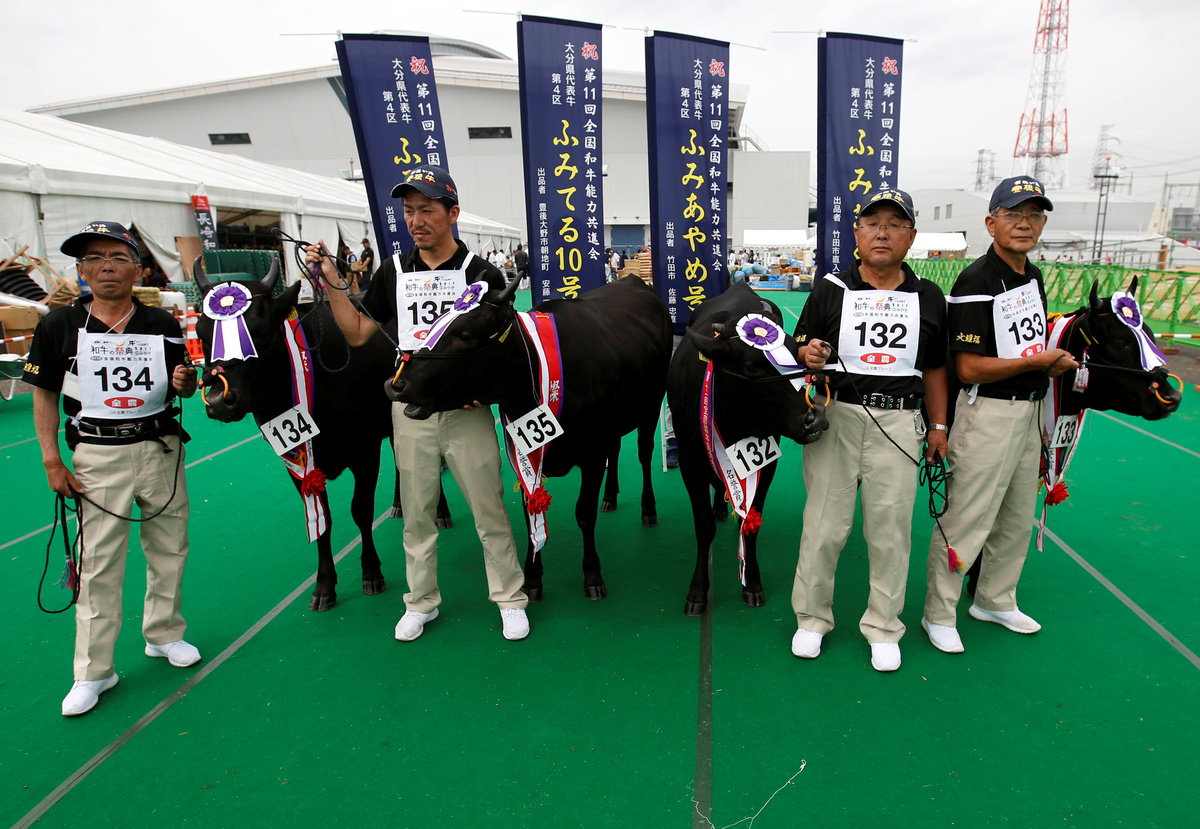
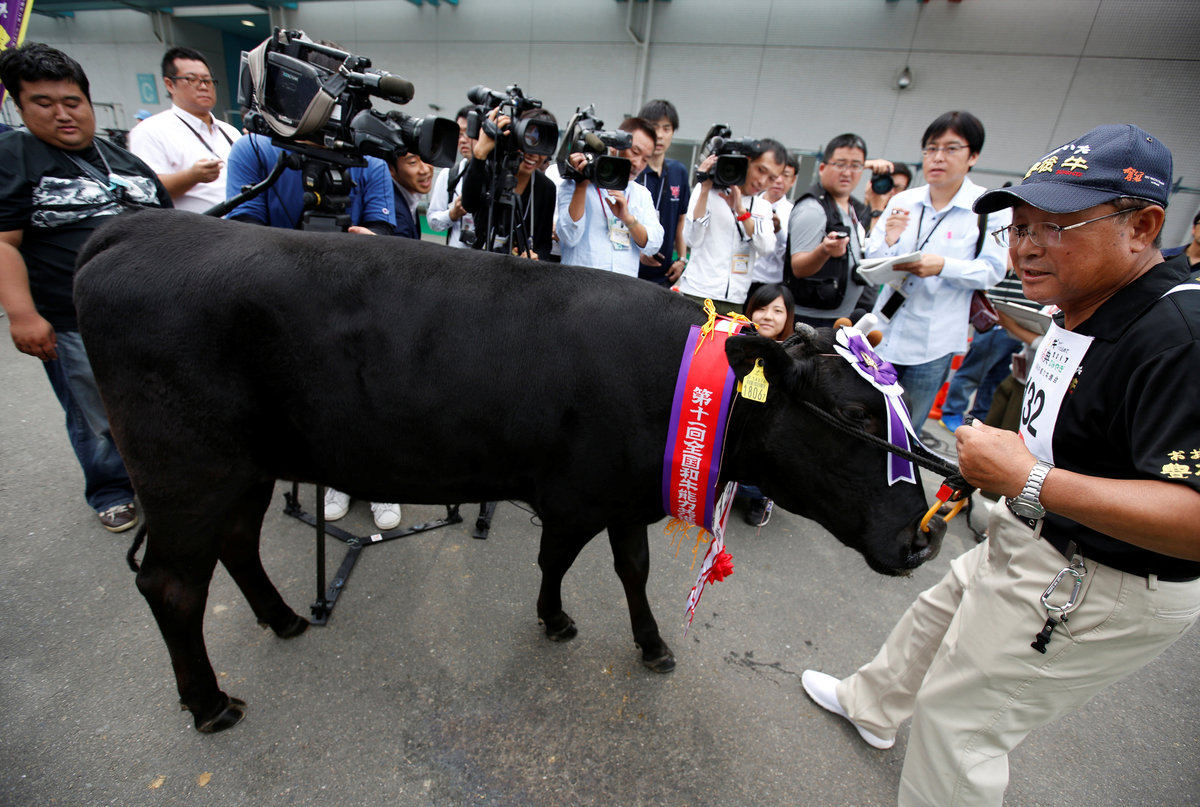
"I really can't believe it, I'm so happy," said 69-year-old Tadanao Sato, who claimed a trophy and bragging rights for nurturing Fumiayame, who won top prize for her beauty and high fertility.
Fertility is judged by the shape of the cow's shoulders, its toned legs, and the "topline", or the flatness of the back.
Beef quality is judged by the cattle's fat marbling and leanness.
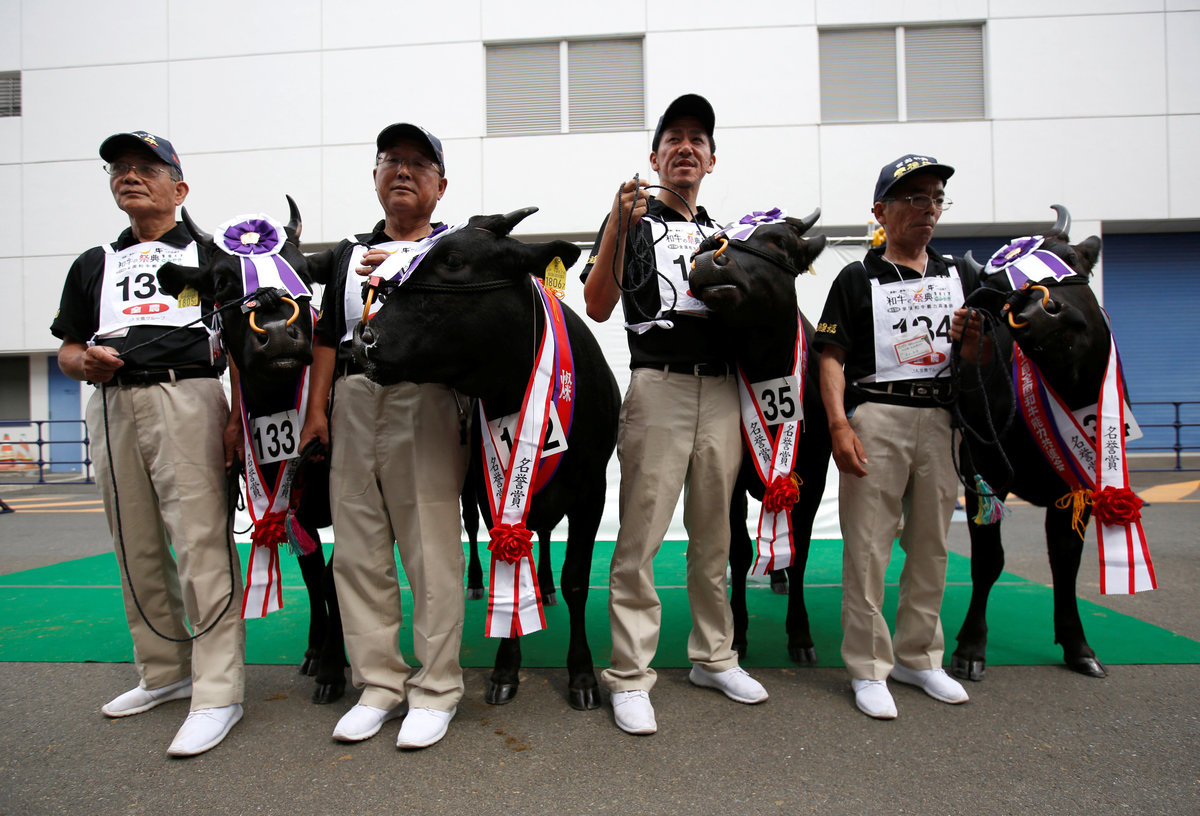
A group of female Bungo cattle from Oita prefecture, Fumiroman, Fumiteru 10, Fumiayame and Fumigiku, are posed for a photograph with their owners including Tadanao Sato (132) during a photo session after captured grand prize of the breeding cattle category at 11th National Japanese Beef Ability Expo, commonly known as Wagyu Olympics, in Sendai, northern Japan September 11, 2017. REUTERS/Issei Kato
Overseas demand for wagyu, which means "Japanese beef", has soared since widespread import bans were lifted more than a decade after an outbreak of mad cow disease in 2001.
In 2016, beef was Japan's top export in the agricultural and livestock category, raking in 13.6 billion yen ($125 million).
"These last few years, the boom in Japanese food, as well as widespread praise for the high quality of wagyu, have caused overseas demand to grow rapidly," said Toru Takano, an official of the National Federation of Agricultural Co-operative Associations.
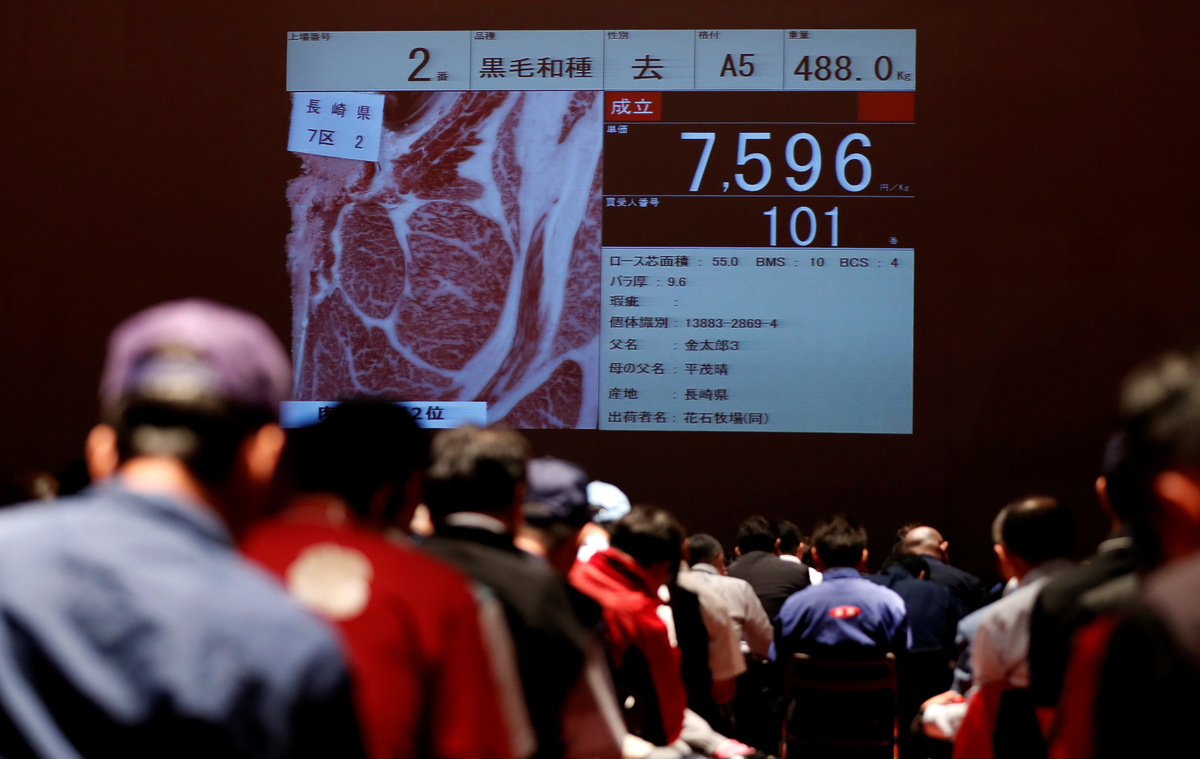
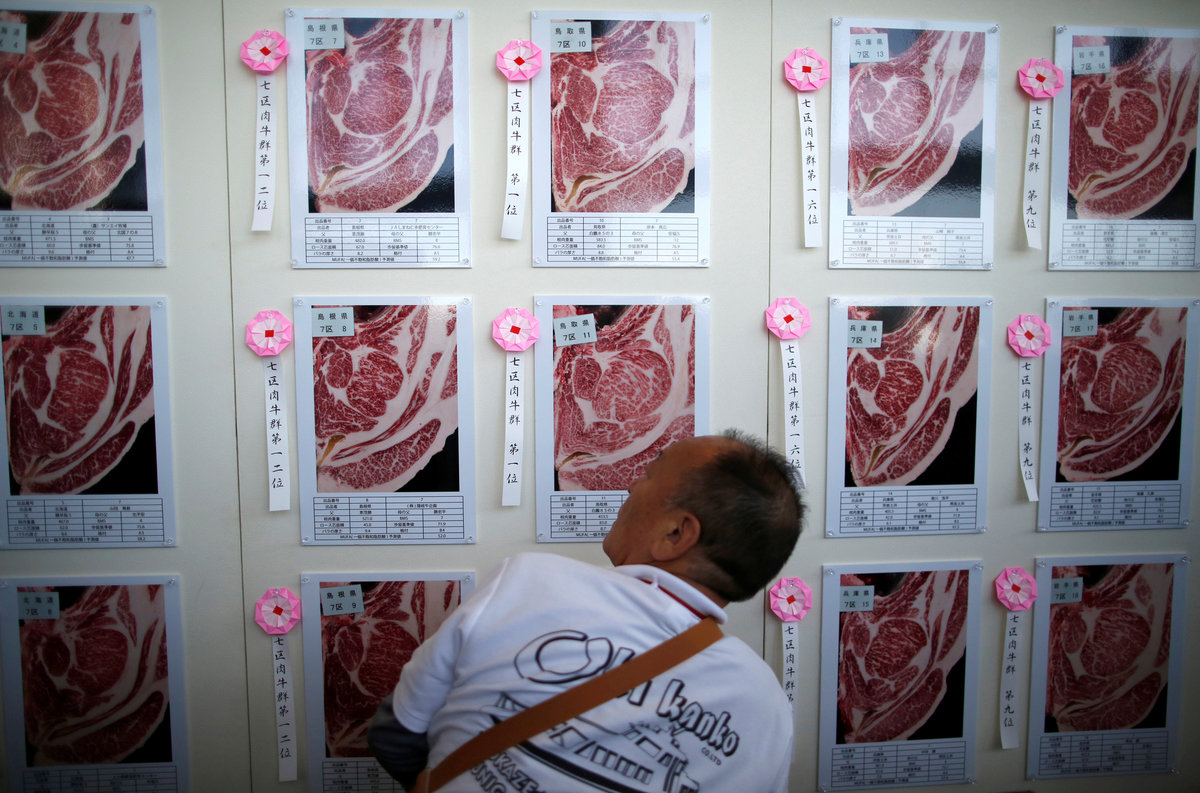
Purchasers take part in a auction for buying carcass of beef cattle at 11th National Japanese Beef Ability Expo, commonly known as Wagyu Olympics, in Sendai, northern Japan September 10, 2017. Picture taken September 10, 2017. REUTERS/Issei Kato
"We have been, and will try bit by bit, to open up wagyu markets overseas."
Though "seed cattle" winners at the five-yearly event, such as Fumiayame, go home to be cosseted and produce future generations of winners, the beef division winners are slaughtered the day after the judging and are promptly frozen and auctioned at the Olympics.
The most expensive beef went for 54,001 yen ($498) per kilo, and the most moderate for 3,241 yen.
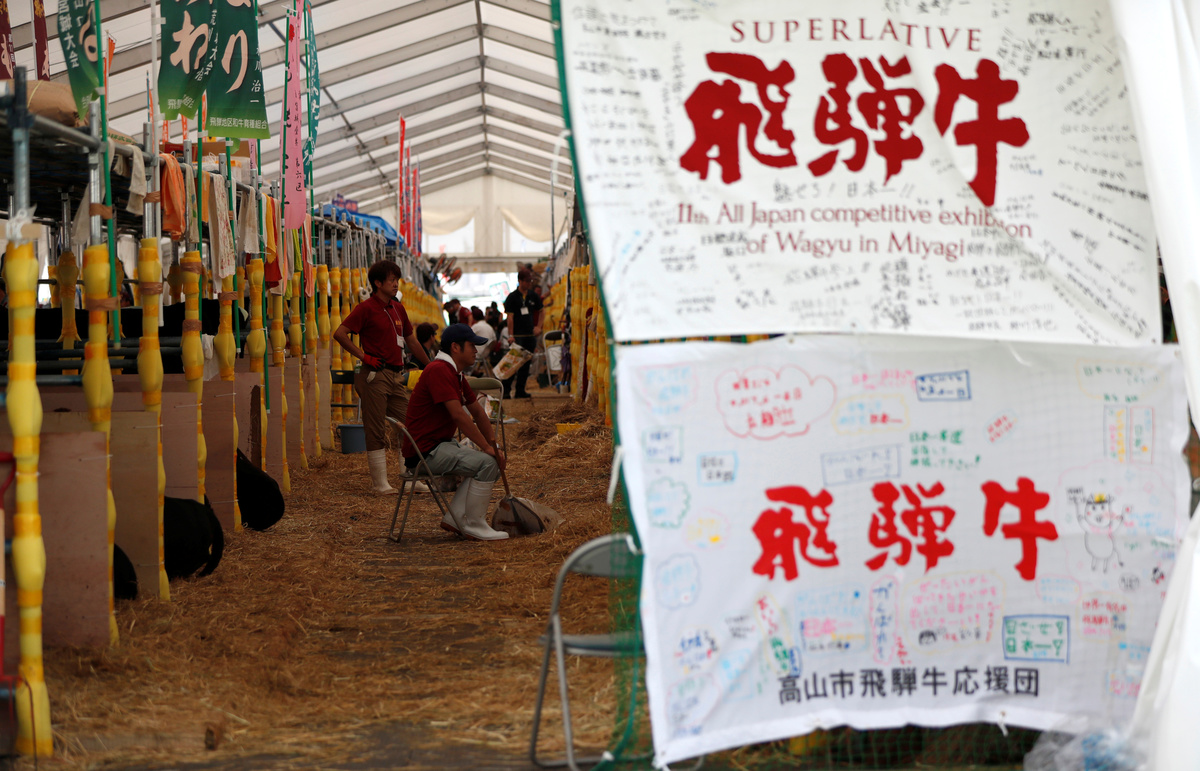
A staff members are seen at a makeshift cattle shed for Hida Beef at 11th National Japanese Beef Ability Expo, commonly known as Wagyu Olympics, in Sendai, northern Japan September 10, 2017. Picture taken September 10, 2017. REUTERS/Issei Kato
($1=108.4600 yen)
(Writing by Chehui Peh, Editing by Elaine Lies and Clarence Fernandez)
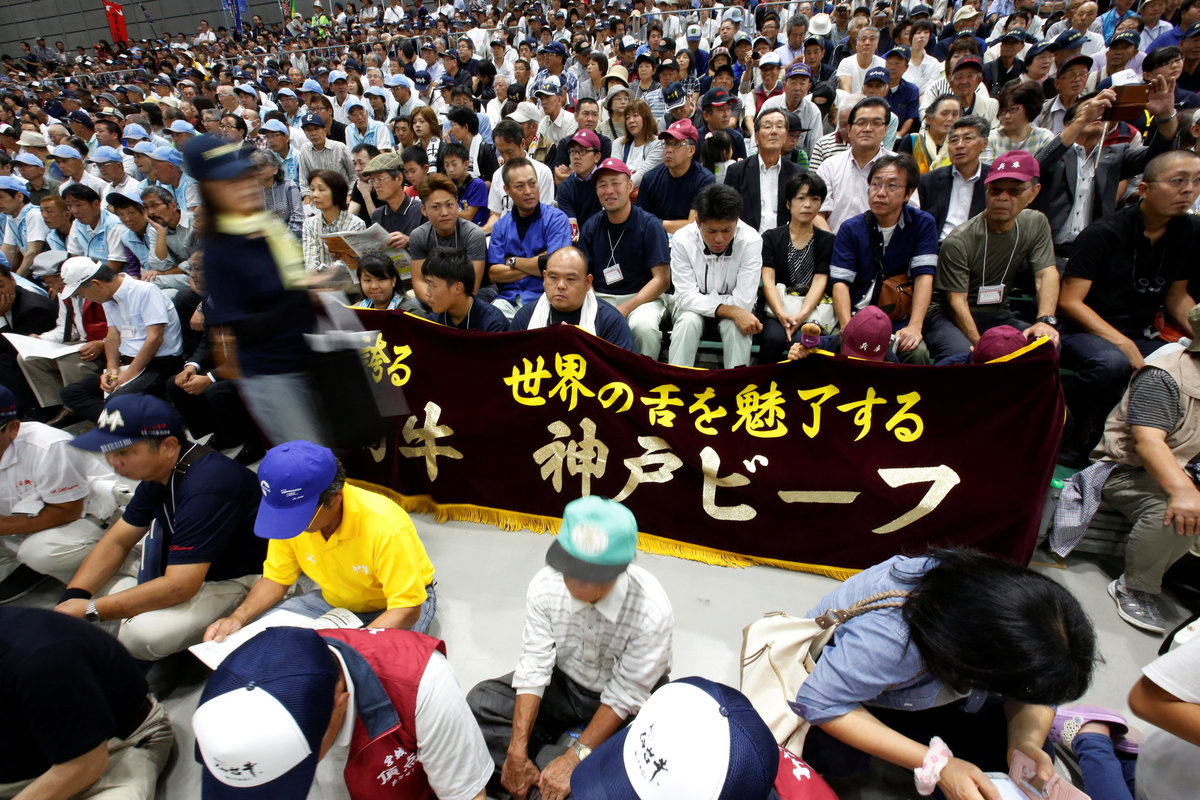
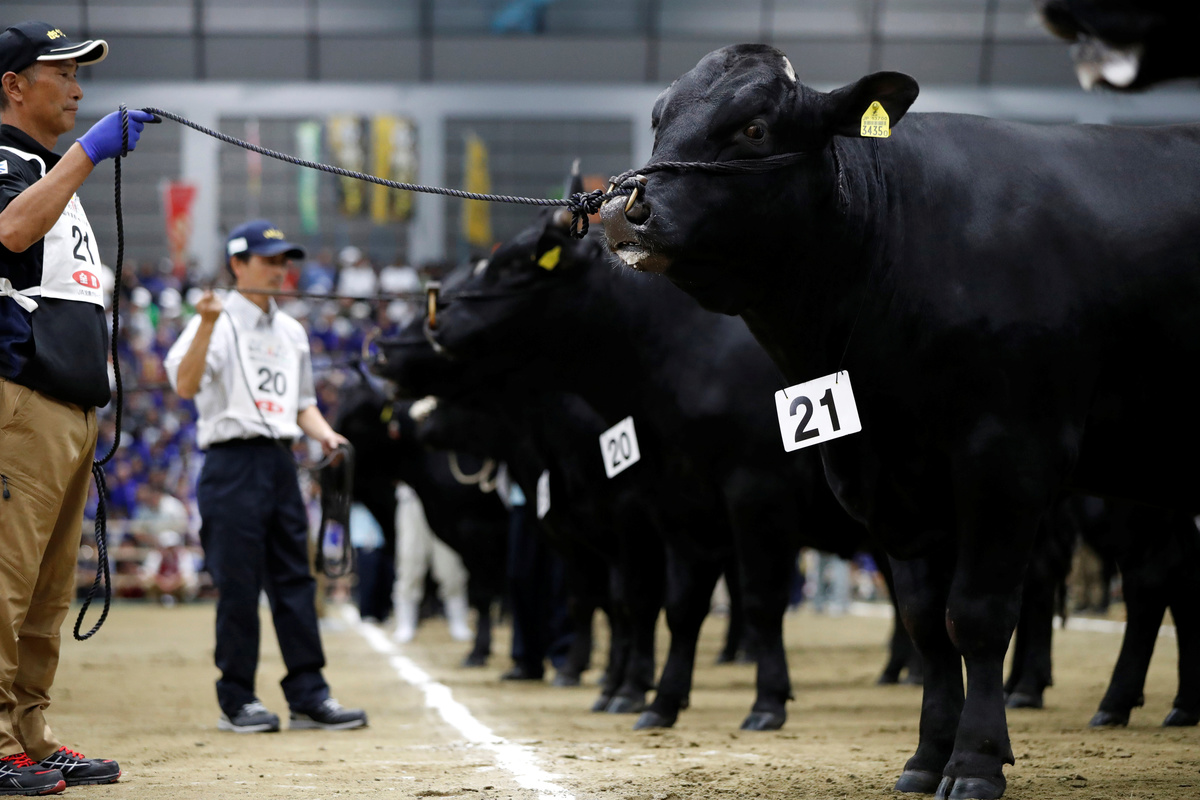
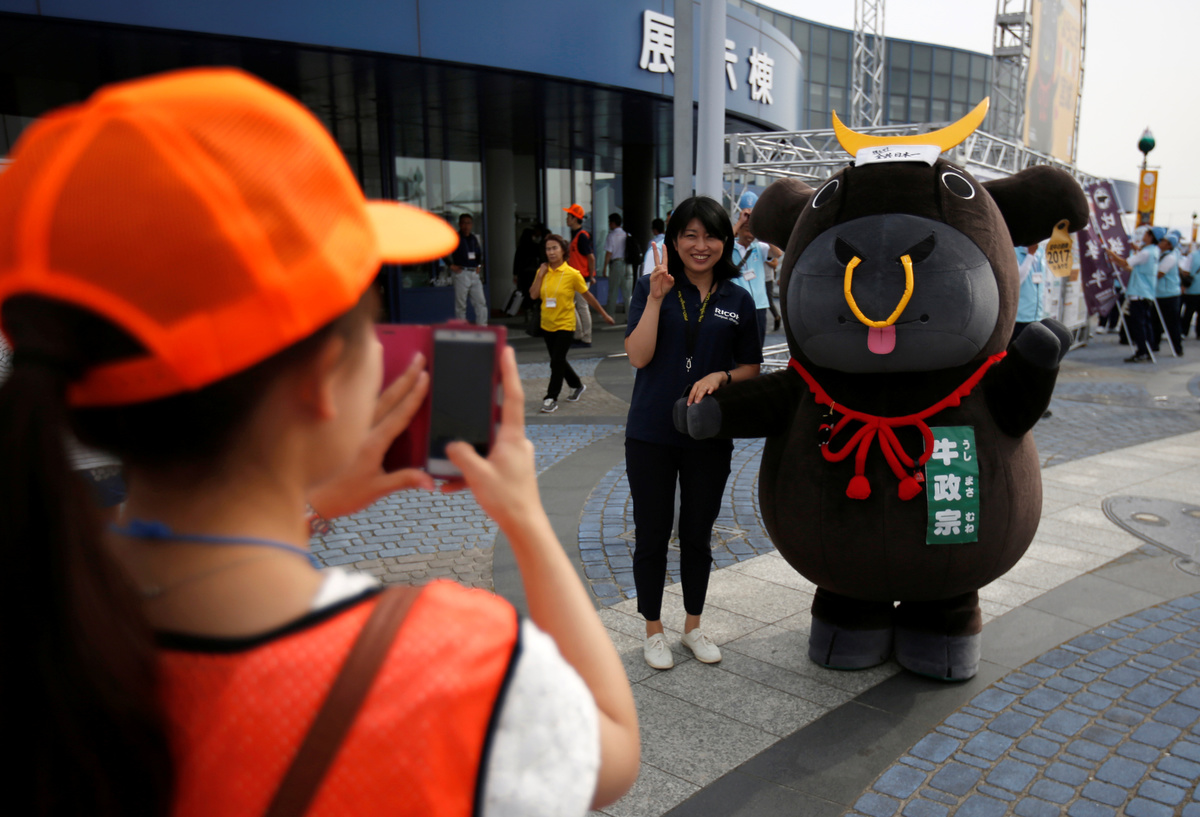
Visitors show off a banner cheering Kobe Beef during a division of breeding cattle category competition at 11th National Japanese Beef Ability Expo, commonly known as Wagyu Olympics, in Sendai, northern Japan September 10, 2017. Picture taken September 10, 2017. REUTERS/Issei KatoA man checks the pictures of award-winning carcass of beef cattle competitions at 11th National Japanese Beef Ability Expo, commonly known as Wagyu Olympics, in Sendai, northern Japan September 10, 2017. Picture taken September 10, 2017. REUTERS/Issei KatoCattle and breeders take part in a competition at breeding cattle category - young bull division competition at 11th National Japanese Beef Ability Expo, commonly known as Wagyu Olympics, in Sendai, northern Japan September 10, 2017. Picture taken September 10, 2017. REUTERS/Issei KatoVisitors are seen at the main entrance of the 11th National Japanese Beef Ability Expo, commonly known as Wagyu Olympics, in Sendai, northern Japan September 10, 2017. Picture taken September 10, 2017. REUTERS/Issei KatoBreeding cattle take part in a competition at 11th National Japanese Beef Ability Expo, commonly known as Wagyu Olympics, in Sendai, northern Japan September 10, 2017. Picture taken September 10, 2017. REUTERS/Issei KatoA visitor poses for a photographer with official cattle mascot Ushi-Masamune at 11th National Japanese Beef Ability Expo, commonly known as Wagyu Olympics, in Sendai, northern Japan September 11, 2017. REUTERS/Issei KatoVisitors are seen at the main entrance of the 11th National Japanese Beef Ability Expo, commonly known as Wagyu Olympics, in Sendai, northern Japan September 10, 2017. Picture taken September 10, 2017. REUTERS/Issei KatoA cattle, breeders and officials pose for a photograph during a photo session after winning a breeding cattle category competition at 11th National Japanese Beef Ability Expo, commonly known as Wagyu Olympics, in Sendai, northern Japan September 10, 2017. Picture taken September 10, 2017. REUTERS/Issei KatoBreeding cattle take part in a competition at 11th National Japanese Beef Ability Expo, commonly known as Wagyu Olympics, in Sendai, northern Japan September 10, 2017. Picture taken September 10, 2017. REUTERS/Issei KatoA group of female Bungo cattle from Oita prefecture, Fumigiku, Fumiayame, Fumiteru 10 and Fumiroman, are posed for a photograph with their owners including Tadanao Sato during a photo session after captured grand prize of the breeding cattle category at 11th National Japanese Beef Ability Expo, commonly known as Wagyu Olympics, in Sendai, northern Japan September 11, 2017. REUTERS/Issei KatoCattle and breeders from Iwate prefecture pose for a photograph at 11th National Japanese Beef Ability Expo, commonly known as Wagyu Olympics, in Sendai, northern Japan September 10, 2017. Picture taken September 10, 2017. REUTERS/Issei KatoAward-winning cattle parade at 11th National Japanese Beef Ability Expo, commonly known as Wagyu Olympics, in Sendai, northern Japan September 11, 2017. REUTERS/Issei KatoA female Bungo cattle Fumiayame from Oita prefecture and her owner Tadanao Sato are surrounded by media after captured grand prize of the breeding cattle category at 11th National Japanese Beef Ability Expo, commonly known as Wagyu Olympics, in Sendai, northern Japan September 11, 2017. REUTERS/Issei Kato
Sign up to read this article
Read news from 100’s of titles, curated specifically for you.