An advisory body to the justice minister has proposed expanding the types of crimes where suspects aged 18 and 19 are tried as adults and revealing their actual names if indicted.
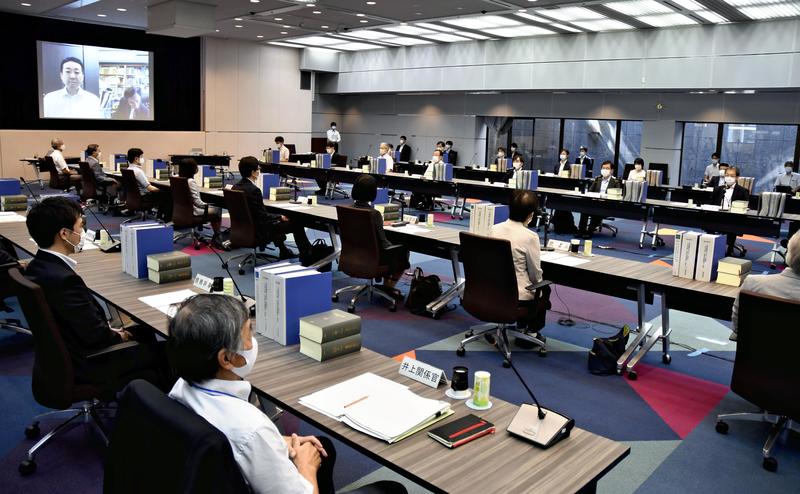
The Legislative Council subcommittee's draft recommendations on the revision of the Juvenile Law were compiled Wednesday.
Under the current Juvenile Law, all criminal cases involving minors, defined by law as people under 20, are sent to family courts. After looking into the environment in which the minors were raised and their previous records of delinquency, the courts decide on how they should be handled, such as sending them to juvenile training schools. Minors over 16 who are suspected of intentionally killing people are sent to prosecutors, in principle.
As 18- and 19-year-olds will be treated as adults from April 2022 under the revised Civil Code, discussion has been underway at the council since 2017 as to whether the Juvenile Law should only apply to those under 18.
In its draft, the subcommittee pointed out that as 18- and 19-year-olds are still in the development stage and have a high chance of reforming themselves, they should be treated differently from people aged 20 and over and those under 18.
While maintaining the existing system to send all criminal cases involving minors to family courts, the subcommittee concluded in the draft that the target of criminal cases involving minors that are sent to prosecutors should be expanded to crimes worthy of the death penalty, life imprisonment, imprisonment with hard labor, or imprisonment for one year or longer, such as robbery, rape and arson.
In criminal cases involving minors, media reports that could identify the individuals in question are prohibited on the grounds of hampering their rehabilitation. However, the draft proposed allowing the disclosure of the name and photos of the face of a suspected offender ages 18 or 19 if indicted.
On the other hand, the subcommittee did not decide on whether to keep those suspected of committing a crime at 18 or 19 within the framework of the Juvenile Law or how to categorize them, deeming it necessary to take into account public awareness and conventional wisdom on the issue. The conclusion was that the issue should be entrusted to the legislative process in the future.
The Legislative Council plans to approve the draft recommendations at its general meeting and propose them to the justice minister. The government aims to revise the Juvenile Law based on the recommendations at the ordinary Diet session next year.
Read more from The Japan News at https://japannews.yomiuri.co.jp/