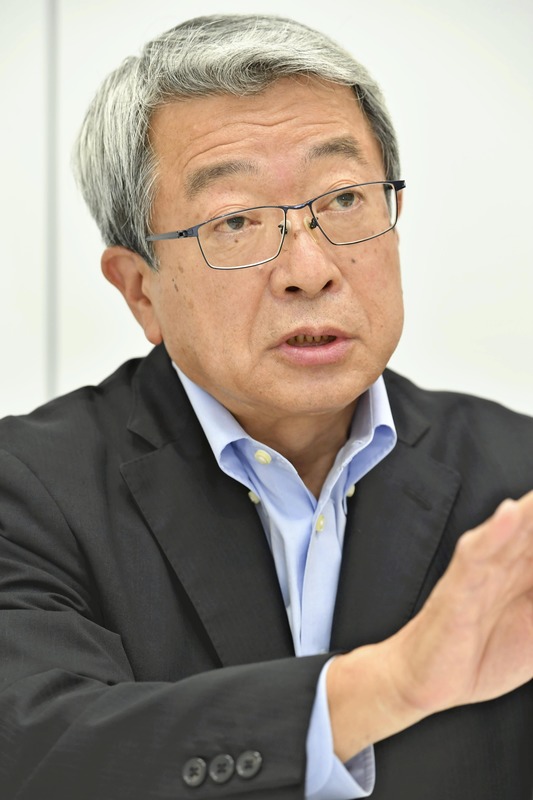
In an age of rapid technological innovation, the security environment in outer space is expected to be constantly under observation. To gain some insight into how Japan is handling the situation and its relation to the alliance with the United States, The Yomiuri Shimbun spoke with Haruhiko Kataoka, a former Air Self-Defense Force chief of staff and current vice president of the Japan Institute for Space and Security.
The Yomiuri Shimbun: How has the security environment in outer space changed?
Haruhiko Kataoka: During the Cold War, outer space was a bipolar structure between the United States and the Soviet Union. They used their respective space systems to monitor each other's nuclear facilities, with a tacit agreement during the tense relationship of "We won't attack each other's space systems."
Nowadays, outer space has become multipolar. More than 60 countries have satellites, accelerating congestion in outer space.
Then came the threat of China's and Russia's offensives in space. The two countries have repeatedly conducted experiments in which they destroy satellites with missiles from the Earth's surface. They have also experimented with so-called killer satellites that approach and attack other satellites in the same orbit. They have already deployed devices that can jam GPS.
With these changes, the tacit agreement has faded away and outer space has become a theater of operations. For this reason, it is important for us to identify the types of satellites, determine threats and monitor space conditions in real time.
Q: The Air Self-Defense Force launched the Space Operations Squadron in May. What are your thoughts?
A: Japan does not currently have the ability to deal directly with these new types of threats. Of course, Japan will continue to develop ground-based radars and optical space telescopes in the future, but Japan on its own cannot grapple with these threats. Therefore, it is necessary to strengthen cooperation with the United States.
In April 2019, the United States announced the joint statement of Five Eyes (the U.S. intelligence alliance with the United Kingdom, Canada, Australia and New Zealand) working together with France and Germany on Space Situational Awareness (SSA).
It is time for Japan to take part in this. It is certain that the United States will welcome Japan's participation in SSA because it lacks a network in the Far East.
In 2023 at the earliest, U.S.-made sensors for SSA are to be installed on the Japanese global positioning satellite of the Quasi-Zenith Satellite System (QZSS). Sharing such equipment is also important. Thus, countries attempting to attack other satellites should come to consider the impact on multiple countries, making it difficult to launch an attack.
GPS, which plays a major role not only in the military but also in social systems and infrastructure, is said to be vulnerable to jamming. The government should present concrete and specific measures to enable the use of QZSS in the event of a GPS outage.
In addition, Japan needs to train personnel well-versed in both outer space and security. The SDF have not done so for nearly 40 years. It also seems to be necessary to clarify the legal framework for interpreting the right of self-defense and the right of collective self-defense when conducting operations in space.
Q: How do you view the relationship between progress in space development and security?
A: First come, first served. Outer space is beyond sovereignty and that is the harsh reality. A senior U.S. official pointed out that it "is the wild, wild west." It could be called lawlessness.
Currently, the range of national security is within the geostationary orbit, at most about 36,000 kilometers above the Earth's surface. However, NASA's Artemis program for moon exploration has emerged. Activities in the universe are expected to expand to include space up to the moon itself and even Mars. If lunar surface and resource exploration and space travel are to take place, it will be necessary to make efforts for each country to secure the safety and resources of its people.
The core of security is the ability to project force (in a place where military operations are needed). The United States has proposed the formulation of a long-term strategy that covers scenarios that could occur in 2060.
From a long-term perspective, Japan should pay attention to how to deploy the SDF in outer space and to develop its spacecraft, astronauts and communication systems. From a security standpoint, this is important for Japan.
Retired ASDF Gen. Haruhiko Kataoka
A graduate of the National Defense Academy, Kataoka, 68, has held positions such as commander of the Air Defense Command. He became chief of staff of the Air Self-Defense Force in 2012, retiring in 2013. He currently is the acting chairman of the space security subcommittee of the Cabinet Office's National Space Policy Committee, vice president of the Japan Institute for Space and Security, and an adviser to IHI Corp.
Read more from The Japan News at https://japannews.yomiuri.co.jp/