The government has said it will lift the state of emergency related to the coronavirus pandemic earlier if the situation improves.
The state of emergency was extended by one month until March 7 for 10 prefectures: Tokyo and neighbors Chiba, Kanagawa and Saitama; Hyogo, Kyoto and Osaka in the Kansai region; Aichi and neighboring Gifu; and Fukuoka.
The government considers it necessary to keep the state of emergency in place because the health care system has not recovered adequately.
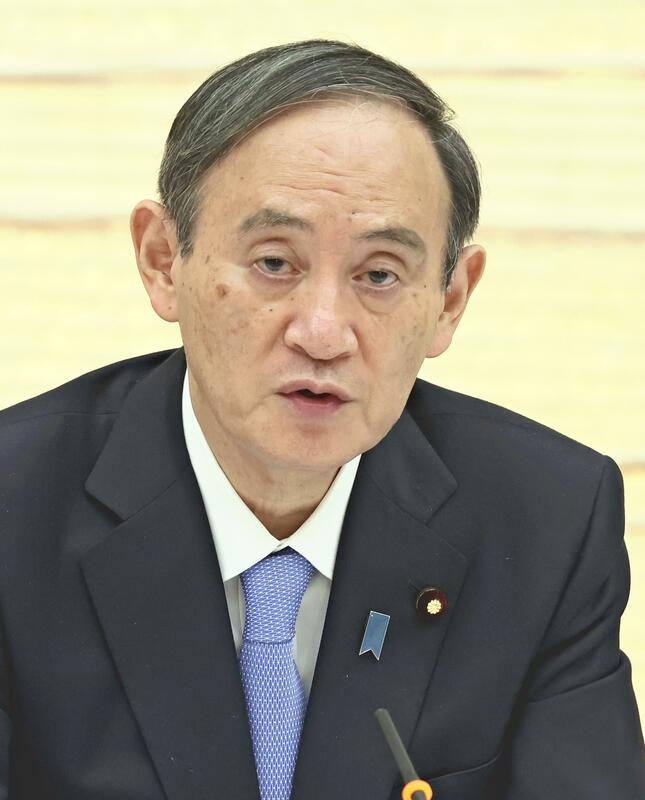
"I sincerely apologize that we could not lift the state of emergency for all areas," Suga said at a press conference on Tuesday evening after a meeting of the government's Novel Coronavirus Response Headquarters.
However, citing the fact that the daily number of new infection cases is on a downward trend nationwide, Suga said, "The impact of the state of emergency has become readily apparent."
Conditions for lifting the state of emergency include the lowering of the hospital bed occupancy rate and the number of new infections.
"It is important to reduce the daily number of new infection cases to below 500 in Tokyo and below 300 in Osaka Prefecture," Suga said.
Suga also mentioned support measures, such as raising the upper limit of monetary assistance for households in financial difficulty due to reasons such as unemployment from the current 1.4 million yen to 2 million yen.
In line with the extension, the government will continue to suspend the Go To Travel tourism promotion campaign across the country and ban all entry of non-resident foreign nationals.
The government's basic coronavirus policy also includes additional measures.
Intensive coronavirus tests will be conducted on workers at nursing care facilities through March in areas with many infected people.
The government will also request that prefectural governments secure beds according to the severity of symptoms and create a system to help patients move to different hospitals for care after they recover.
Read more from The Japan News at https://japannews.yomiuri.co.jp/