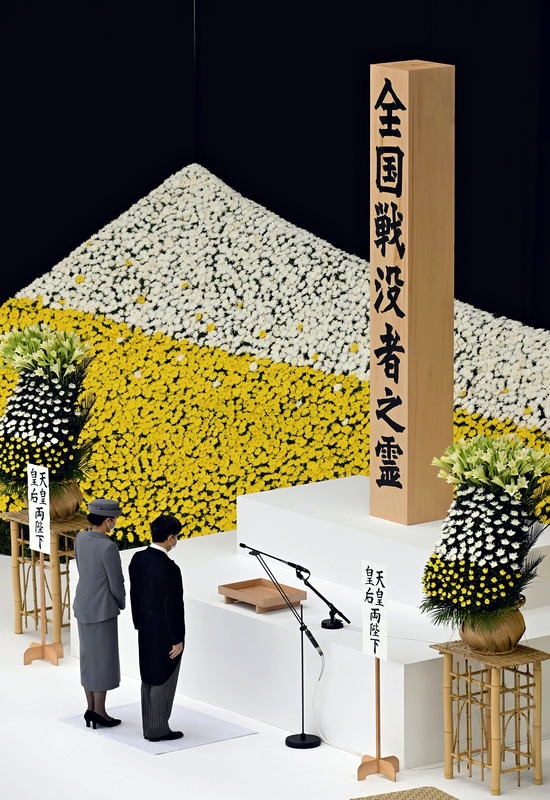
As the nation marked the 75th anniversary of the end of World War II on Saturday, the government-sponsored national memorial ceremony for the war dead saw the smallest-ever number of family members in attendance.
Due to the novel coronavirus pandemic, members of families who lost relatives in the war from 20 prefectures decided not to attend this year's memorial ceremony at the Nippon Budokan in Chiyoda Ward, Tokyo. The number who attended was the lowest ever at about 200.
In his address, the Emperor expressed his condolences to the war dead, while also referring to the pandemic. It is extremely rare for the Emperor to make remarks about hardships unrelated to the war during this memorial ceremony.
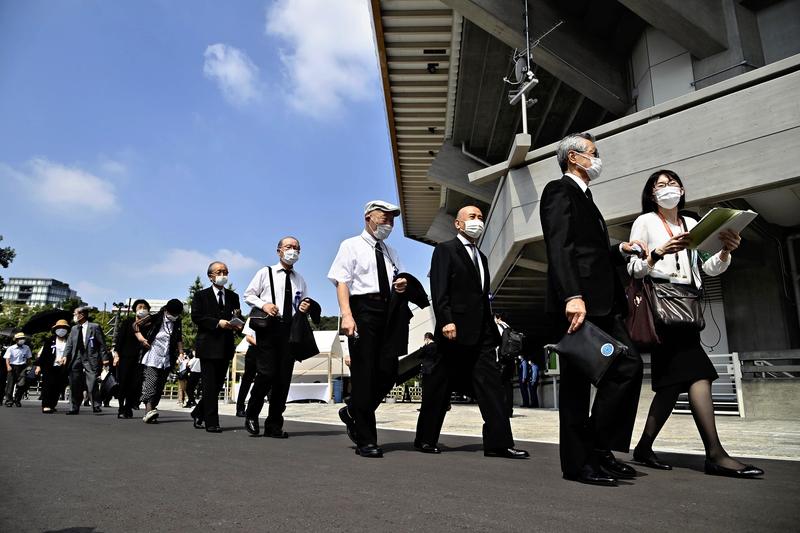
The ceremony started before noon. After Prime Minister Shinzo Abe delivered a speech, all participants observed a moment of silence at 12 p.m. About 5,000 family members usually attend this annual memorial ceremony, but according to the Health, Labor and Welfare Ministry, relatives in 20 prefectures such as Osaka, Nagasaki and Okinawa chose not to attend this year.
The Emperor, who attended the ceremony with the Empress, reiterated the words, "reflecting on our past and bearing in mind the feelings of deep remorse," which he stated last year in his first memorial after assuming the throne. He used the expression "deep remorse" that the Emperor Emeritus had included in an address for the 2015 ceremony marking the 70th anniversary.
The Emperor also said in the address, "We are currently confronted with the unprecedented difficulties" caused by the spread of the coronavirus. "I sincerely hope that we all work together hand in hand to overcome this difficult situation and continue to seek happiness of the people and world peace," he added.
The Imperial couple attended an event held outside the Imperial Palace and the Akasaka Imperial Residence for the first time since February. This was also the first time the Emperor has spoken about the virus in a public place.
As participants in the ceremony included many elderly people, who are said to be at risk of developing severe symptoms if infected, thorough measures against the virus, such as asking attendees to wear masks and disinfect their hands with alcohol, were taken at the venue. The national anthem was not sung and only an orchestral performance was given. To reduce contact among the attendees, this year no arrangements were made to have people hand chrysanthemums to mourners who offer flowers.
For family members and others who were unable to attend the ceremony, the ministry streamed the event via YouTube.
The oldest participant in this year's ceremony was aged 93, and the youngest was 12. No fathers or mothers of the war dead have attended the ceremony for 10 consecutive years, and only one participant was a wife whose husband died in the war. According to the ministry, mainly during the period from the outbreak of the Sino-Japanese War in 1937 to the end of WWII in 1945, about 2.3 million military personnel and employees, including those detained in Siberia after the end of the war, lost their lives and 800,000 civilians were killed.
Read more from The Japan News at https://japannews.yomiuri.co.jp/