Envisioning pandemics of the future, the Environment Ministry has decided to develop systems for collecting household garbage without the need for sanitation workers to touch the trash.
The goal is to reduce the risk of infection among garbage collectors and to reduce the burden on aging local communities. Demonstration projects could start in some municipalities as early as April.
The novel coronavirus pandemic has raised concerns among municipalities and garbage collectors about the risk of infection from collecting household trash.
Piles of bags stuffed with used masks and tissues have been found in garbage collection points around the country.
Workers load trash bags onto trucks by hand, but have no way of knowing which ones come from infected people. There have been more than 80,000 infections in Japan, and many patients with mild cases recover at home.
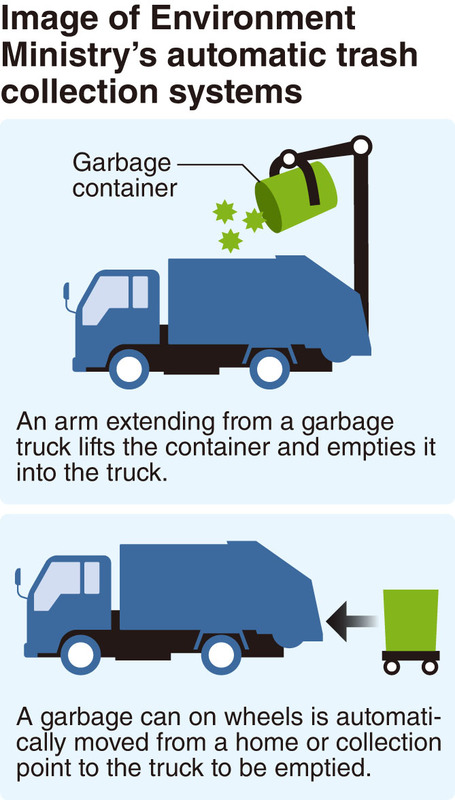
The system the ministry aims to develop envisions installing large trash containers that are shared among multiple residents at a collection point. An arm extending from the garbage truck would pick up the entire container and dump its contents into the truck.
Another method being considered would be to install wheeled mechanisms on the trash cans placed in front of homes and at local collection points. The cans would move autonomously along the road or other pathway to a garbage truck and the contents will automatically be dumped.
These collection methods are already widespread in parts of Europe and the United States.
The central government decided to develop this new system because of lifestyle changes brought about by the coronavirus, which has caused people to refrain from going out.
According to Clean Authority of Tokyo, an association that oversees garbage disposal in the capital, about 126,000 tons of burnable household waste was collected in Tokyo's 23 wards in August, which is about 3% more than the same month last year, which was about 122,800 tons. Year-on-year increases were seen in all months from March to August.
In addition, the burden of collecting and disposing of garbage will grow as garbage collectors and residents age.
Even after the current pandemic ends, another new infectious disease could appear at any time.
"We want to reexamine how garbage is collected to reduce anxiety and risk for workers on the ground in the future," a ministry official in charge of the matter said.
The ministry has asked for about 350 million yen in the fiscal 2021 budget to pay for the verification projects and other matters. It plans to start developing the system next fiscal year.
The ministry plans to collaborate with private companies and select municipalities in places with different garbage collection methods, such as urban areas with many condominiums and farming villages.
To reduce the immediate risk of infection and anxiety among workers, the ministry also plans to create a manual for infection prevention.
Read more from The Japan News at https://japannews.yomiuri.co.jp/