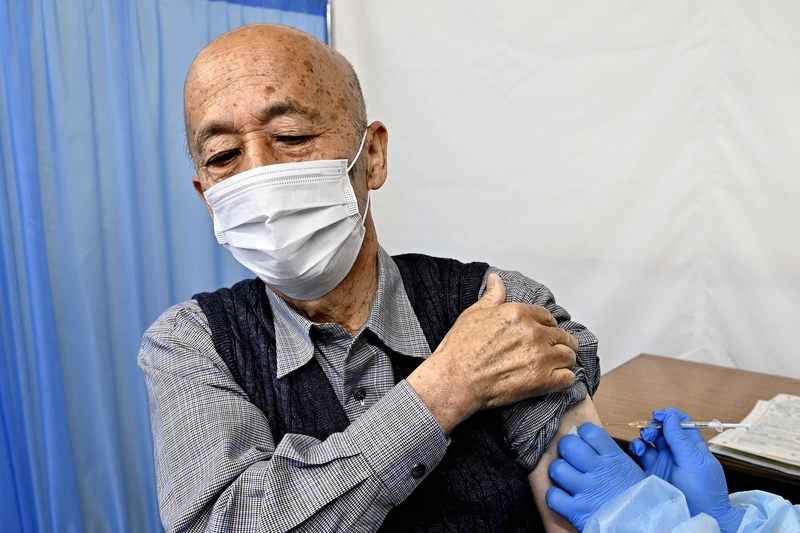
Vaccinations for the elderly against the novel coronavirus began across the nation on Monday.
As the vaccination program has expanded beyond medical workers to include members of the general public, hope is growing that the pandemic will be brought under control. However, the number of infections has increased rapidly in Japan due to the spread of coronavirus variants.
The initial supply of vaccine is small, and efforts must be made to improve efficiency and accelerate the speed of inoculations.
About 36 million people who will turn 65 or older this fiscal year are eligible for the priority vaccinations, using a vaccine manufactured by U.S. pharmaceutical company Pfizer Inc. In principle, the vaccine is to be administered in two doses given three weeks apart.
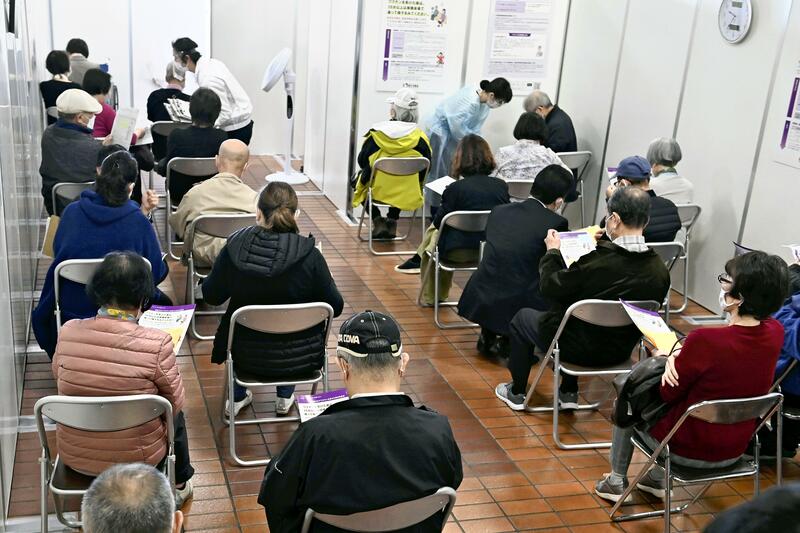
In Hachioji, Tokyo, where the implementation of emergency-level priority measures began Monday, vaccinations started at 9 a.m. at a special venue set up for Hachioji residents on the first floor of city hall. Recipients made reservations on a first-come, first-served basis.
The first group of seven people were vaccinated in their upper arms, after being asked about such matters as their physical condition and allergies.
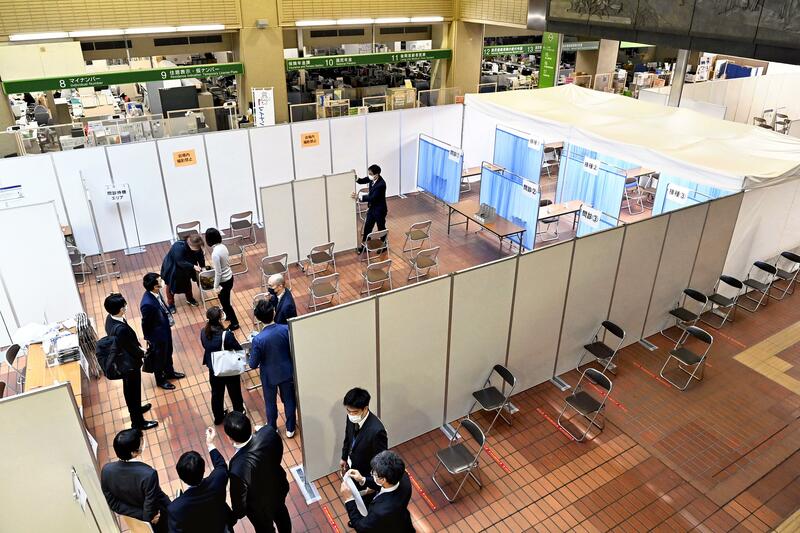
"I didn't feel any pain," said Yoshitaka Akatsuka, 74, a Buddhist priest who became the first inoculation recipient. "I'm grateful that I was able to receive the vaccination early because I often have contact with people."
Vaccine for about 50,000 people was delivered to prefectures during the week starting April 5, and the prefectural governments allocated them to municipalities. The central government plans to distribute vaccine to prefectures every week, gradually increasing the amount.
However, the vaccine is unlikely to reach all municipalities before the week starting April 26. Vaccinations are expected to get fully underway in May. The central government has said vaccine will be supplied for all eligible elderly people by the end of June.
After the elderly are vaccinated, the inoculation program will continue for about 10.3 million people with underlying ailments and about 2 million employees of elderly facilities and other institutions. After that, vaccinations will become available in stages for about 7.5 million people aged 60 to 64 and then for the rest of the general public.
As the safety and efficacy of Pfizer's vaccine in children aged 15 or younger is still under review, the vaccine is currently being administered only to those aged 16 and above worldwide.
Read more from The Japan News at https://japannews.yomiuri.co.jp/