In 2019, Japanese companies have had to respond to shifting economic situations at home and abroad, from the global economic slowdown driven by events such as trade friction between the United States and China, and the national consumption tax rate hike to 10%. We spoke with senior executives in our look back on the past year for the Japanese economy and the prospects for 2020.
U.S.-China factor
The exchange of trade sanctions and retaliatory tariffs between Washington and Beijing has made the prospects of the world economy uncertain. Because of confrontation between the world's top two economic powers, senior executives are feeling the effects.
"China's economic slowdown appears to be affecting even the Southeast Asian economy," said Tatsuo Yasunaga, president of Mitsui & Co.
The International Monetary Fund in October revealed its World Economic Outlook, projecting 3.4% economic growth in 2020 from a year earlier, a 0.1 percentage point revision downward compared with its outlook from July.
Since the United States and China are heavily incorporated into the global supply chain, Japanese companies have had to deal with additional tariffs. Komatsu Ltd. has changed some suppliers, whose parts are assembled at factories in North America, from China to Thailand, Indonesia and other countries. President Hiroyuki Ogawa explained the strategy, saying, "We have been reducing negative impacts from the trade friction by comparing production capacity, foreign exchange and costs by region."
The issues between the United States and China are not only about trade imbalance but also a power struggle in the high-tech field and China's structural issues. Washington added some Chinese companies to its list of businesses facing export controls due to security concerns.
The move "has indirectly restricted Japanese companies' activities," said Jun Sawada, president of NTT Corp. "We don't want to lose our group companies' business with the U.S. administration."
In order to avoid such a situation, Japanese companies are likely to pay close attention to business with Chinese companies down the road.
Although the United States and China reached their Phase 1 agreement at a trade meeting on Dec. 13, many business leaders are wary.
"This is not simply an economic war and [the friction] is expected to be prolonged," said Fujio Mitarai, chairman and chief executive officer of Canon Inc.
"Some clients [in China] are in a tight cash-flow situation," said Yoshihisa Suzuki, president of Itochu Corp. "There is a possibility that we would have the nonperforming loans problems later, even though we have expectations for improving business sentiment in China."
Trade highs and lows
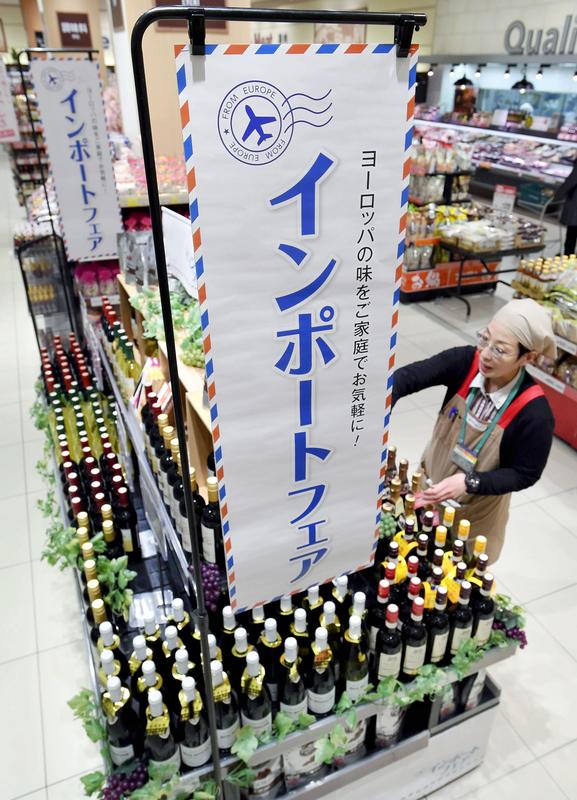
For Japan's trade policy, 2019 was a breakthrough year. While the Japan-European Union economic partnership agreement took effect in February, Tokyo and Washington reached a final agreement on a new trade deal in September. The latter led to the avoidance of high punitive duties that the U.S. administration had considered imposing.
"They achieved a closure of sorts, and it's highly rated," said Tomomi Nakamura, president of Subaru Corp.
In the wake of issues regarding former requisitioned workers in South Korea, the Tokyo-Seoul relationship has deteriorated to its worst point since the end of World War II.
The Japanese government tightened export controls against South Korea in July on three items, including materials needed to produce semiconductors. In South Korea, the boycott of Japanese products has worsened. In October, Japan's beer exports to South Korea dropped to zero for the first time in 20 years 4 months.
"Shipment as well as sales have gone to zero," said Akiyoshi Koji, president of Asahi Group Holdings, Ltd. "We are facing an age in which it is difficult to make predictions."
Consumption decline
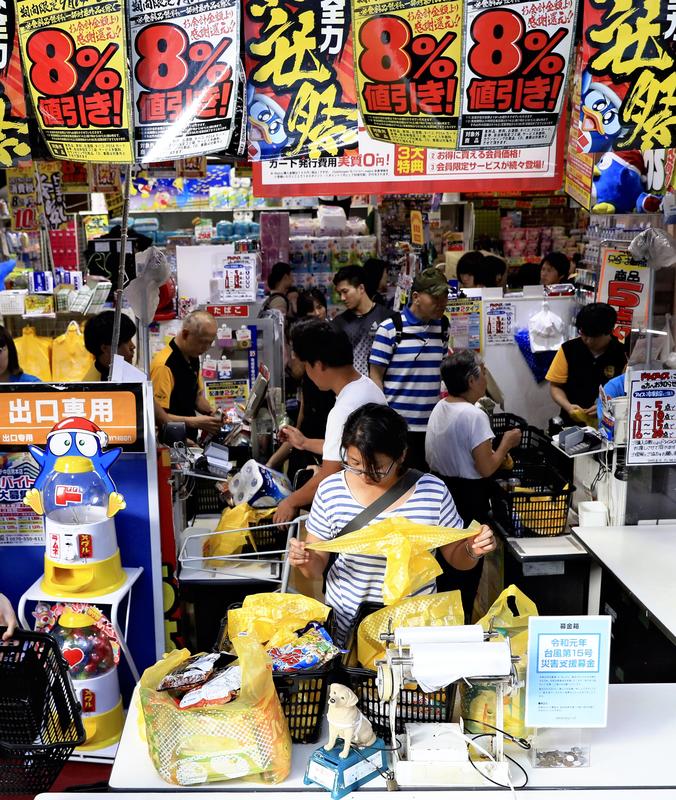
In Japan, there were concerns over a decline in consumption triggered by the consumption tax rate hike in October. In preparation for the increase in the consumption tax rate for the first time in 5-1/2 years, the government introduced a reduced tax rate system for some food and beverages and certain other items at 8%. The drop in consumption stemming from a rise in last-minute demand before the tax hike was apparently limited.
"It's not a reason for the harsh business environment," said Takaharu Iwasaki, president of supermarket operator Life Corp.
In department stores, however, there was a drop in consumption after last-minute demand for high-priced goods such as brand-name items. According to the Japan Department Stores Association, total sales of the nation's department stores in September rose 23.1% from a year earlier, but this dove in October to minus 17.5%. As the figures in November were less than in the previous year, "We can see a similar trend as that during the previous [tax hike]," said Ryoichi Yamamoto, president of J. Front Retailing Co. adding that he believes "it will take one year before the negative repercussions cease."
Boost from Tokyo Games
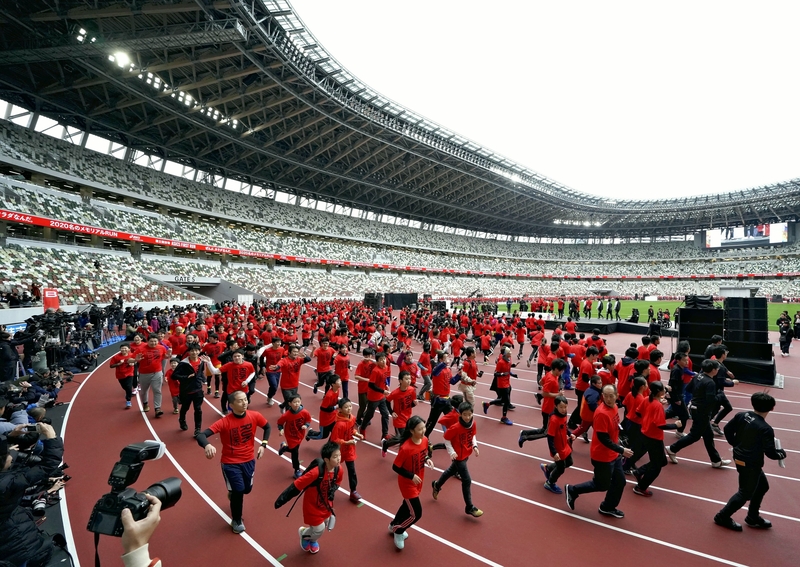
The 2020 Tokyo Olympics and Paralympics are likely to be a key to boosting the Japanese economy next year. During the Tokyo Games, the number of visitors including games officials and domestic and foreign tourists in Tokyo is estimated at about 10 million.
Accordingly, the lodging industry is expected to see high demand.
"Using our vast experience with treating customers in the industry, we have raised the level of quality of our hotels compared to hotels abroad," said Takashi Goto, president of Seibu Holdings Inc. "We will show the attractiveness of the areas around the train lines."
Mitsui Fudosan Co. has worked hard to revitalize the Nihonbashi district. "For a more internationally minded Japan, the Tokyo Games will be one of the fruits of our labors over the last few years," said President Masanobu Komoda.
"Because Japan's brand power has increased, it is not expected that demand will reduce unduly after the Games," said Shinya Katanozaka, president of ANA Holdings Inc.
Read more from The Japan News at https://japannews.yomiuri.co.jp/