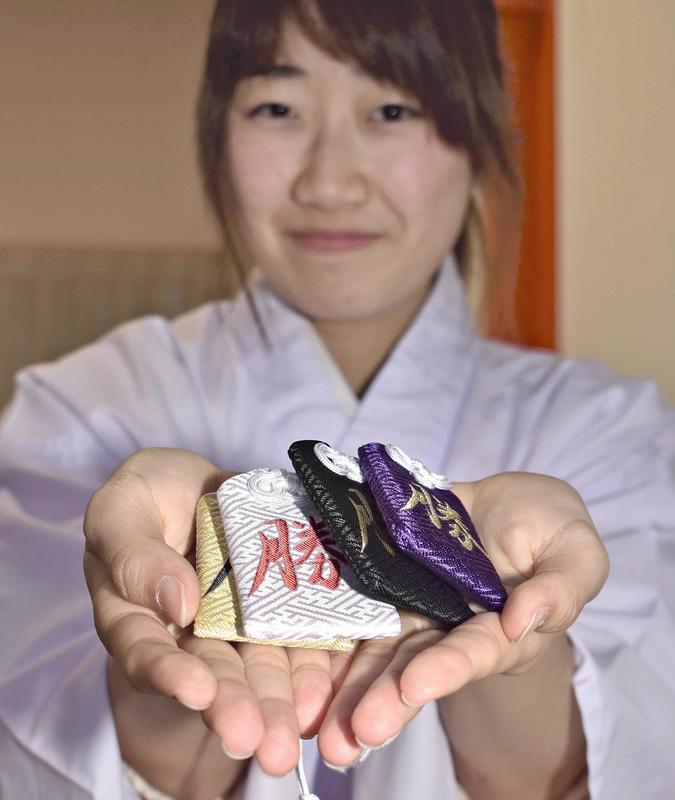
OTSU -- With the main entrance exam season just around the corner, unique good-luck charms are increasingly popular at temples and shrines in Shiga Prefecture. Many people have visited long-established places of worship, praying for their wishes to come true.
The designs and benefits of good-luck charms differ among temples and shrines, and visitors can enjoy choosing their favorite ones. Here are some examples of Shiga Prefecture charms popular with students who are preparing for entrance exams.
Praying for victory
Tarobogu shrine in Higashi-Omi is said to have been visited by Prince Shotoku, famous Buddhist monk Saicho and legendary commander Minamoto no Yoshitsune. Enshrined here is the son of the sun goddess Amaterasu Okami -- his name is said to symbolize victory, incorporating the meaning "I definitely won, I won, I won a victory clearly and speedily, just like the sun rising in the morning."
Tarobogu is now seen as a place to pray for victory, with many athletes visiting from across the nation, including sprinter Yoshihide Kiryu, who holds Japan's record in the 100 meters and hails from Hikone in the prefecture.
The popular Kachimamori (good-luck charm for victory) and Kachimamori strap are available in a variety of colors. The Kachimamori is priced at 800 yen (7 dollars) and the Kachimamori strap at 500, yen according to the shrine.
"The shrine enshrines the deity of victory, so I hope people will win what they're aiming for by carrying the good-luck charms with them," said Negi Shinto priest Yasushi Hirata, 52.
Marking the time
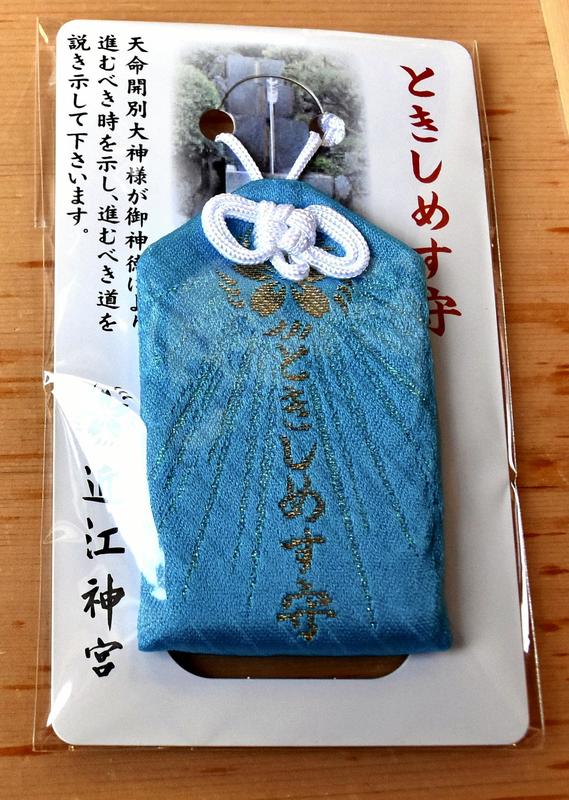
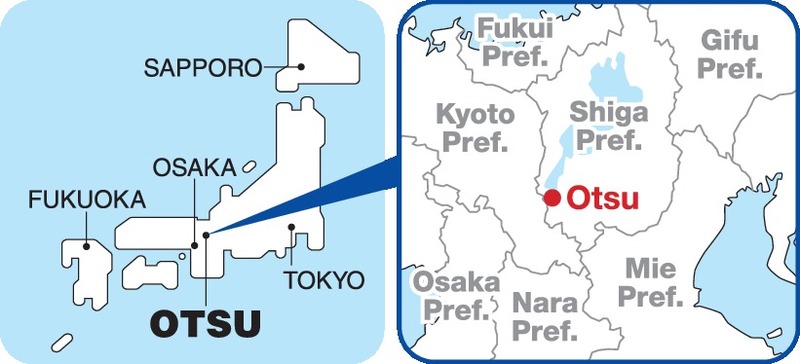
The Toki-Shimesu Mamori (time-indicating good-luck charm) is popular at Omi Jingu shrine in Otsu, which is known as an iconic site of the traditional karuta card game.
This is a charm for decision and progress, and takes its name from the story of Emperor Tenji, who is enshrined at Omi Jingu, using a water clock for the first time. Priced at 1,000, yen the charm is said to show people the time to move forward and what path they should take. It is only available at Omi Jingu.
Good-luck charms for students who are preparing for entrance exams, priced at 500, yen are also popular.
Negi Shinto priest Kenji Iwasaki said, "With the guidance of the deity of time, I hope people will move forward toward their goals."
Success cards
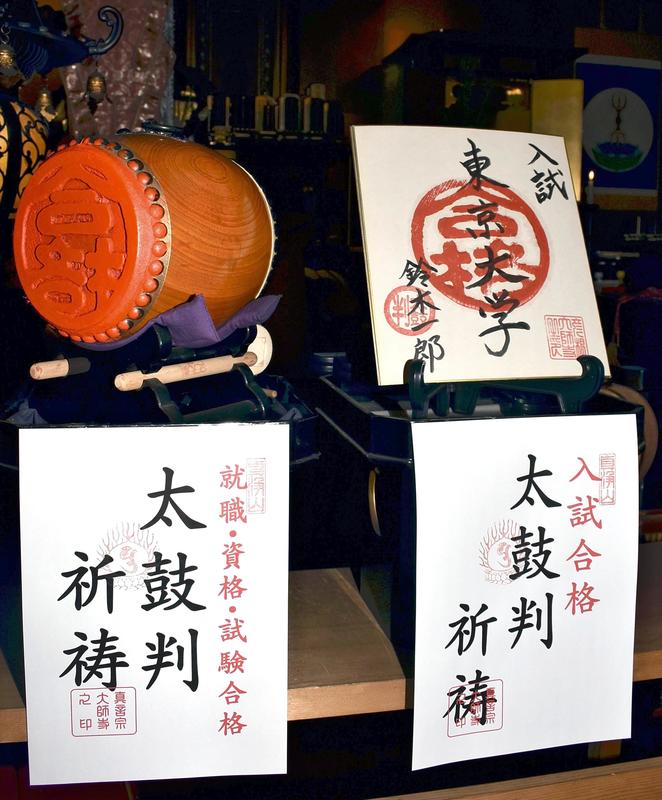
At Daishiji temple in Hikone, visitors can offer a prayer called Taikoban Kito for 5,000 yen. They write the name of a school they want to get into on a card measuring about 30 centimeters by about 30 centimeters, after which a seal about 25 centimeters in diameter is used to stamp the Chinese characters for gokaku (success) on the card. The card and a good-luck charm are given to the supplicant.
Prior reservations are not required.
The temple enshrines Kukai, a Buddhist monk who excelled in poetry and calligraphy, so many students preparing for entrance exams visit the temple, as do their parents, to ask for success in their studies.
Temple priest Ryutoku Kurokawa, 65, said, "I hope students will look at the cards they wrote on and be encouraged to do their best."
Read more from The Japan News at https://japannews.yomiuri.co.jp/